How to Band a Red-Cockaded Woodpecker

First, peep the cavity to make sure the young woodpeckers are in fact still in there, and have not had some horrible fate befall them, like being eaten by a snake. They will probably think that what you are about to do to them will be pretty horrible, but they’ll get over it.

You’re about to snatch them from their home, the only place they have ever seen in their entire lives, jostle them around, pull them out into the bright light and put some colored bits of plastic and aluminum on their tiny legs. You will then put them back into their cavity without eating them, but they don’t know that yet.

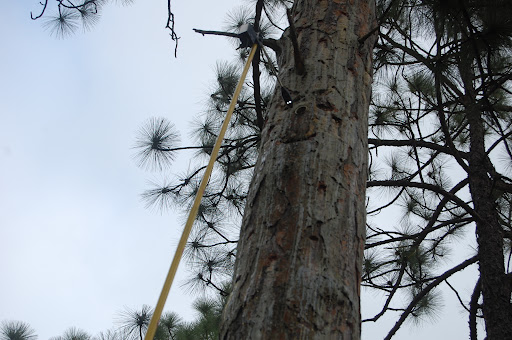
Peeping the cavity with the peeper, a camera on a telescoping pole. 


Next, you assemble your equipment: a climbing harness, short lengths of rope (to go around the tree), ladders, and your banding vest with a nestling pouch, gloves (to keep your hands from becoming encrusted with sap during the climb up), and corn starch (to de-stickify your hands so the baby RCW’s don’t adhere to your fingers). A hat or bandanna to keep the sap out of your hair is also a good idea.
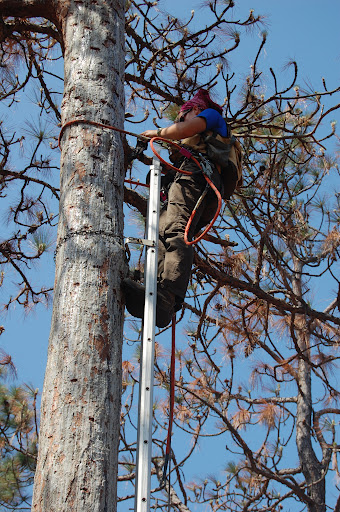
Set the ladder against the tree, put your rope around the tree and attach it to your harness, and begin climbing. If the cavity is taller than 10 feet (the height of one ladder) you will have to use multiple ladders. This can be done by climbing to the top of the first ladder, and then having your ground crew (or your boss, who is watching you from the ground to make sure you don’t mess up) pass you up the second, which attaches to the top of the first. Each ladder has a chain that is wrapped around the tree and secured, so there is no danger of the ladders getting tired and deciding to head down to the ground without you.
Climbing up the tree.


The rope is attached to your harness and is wrapped around the tree. As you climb the ladder, move the rope up the tree with you.
At the cavity, getting ready to take out the nestlings.


Climb to the cavity and remove the nestlings (easier said than done. Let’s just say it’s like blind fishing). Put them in the nestling pouch around your neck. Be sure to sling it over your shoulder for the climb down so you don’t accidentally bump the nestlings against the ladder.
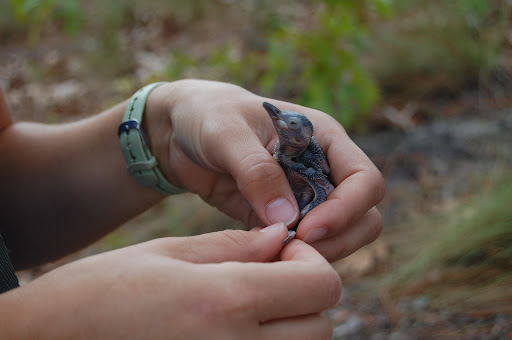
8 day old red-cockaded woodpecker nestling. 

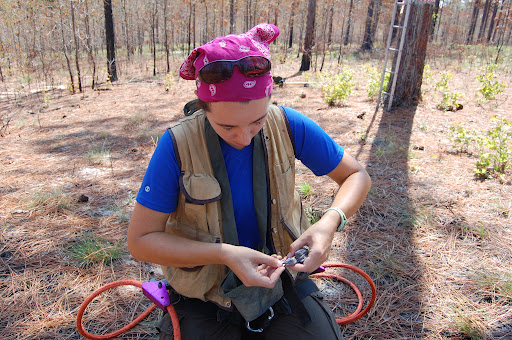
Once safely on the ground, let the banding commence! On the left leg, each bird gets an aluminum band with a unique number and a colored plastic band. On the right leg, each bird gets a unique color combination of plastic bands (such as striped, dark green, orange– not a combination I’ve used so far, but I’m sure it’ll be used someday). This allows for identification of the individual without having to catch the bird and read the tiny number off the aluminum band. It’s much easier for both observer and observee if the biologist can use a spotting scope to read the color combinations from a distance.

Making sure to put the correct combination of bands on the chick is important, because those bands are not exactly easy to remove if they’re on in the wrong order.
Putting on the colored bands.
Banding. 
Climb back up the tree and plop the nestlings back into the cavity. Then climb back down, un-chaining the ladder as you do. Then gather up everything, put it in the truck, and head off to the next tree to climb.
Left leg with dark green colored band and aluminum band. 
Putting the babies safely back into their cavity. 
Oh yes, and don’t forget to have someone take lots of pictures of you during the whole process. That’s the whole point of this process, to have pictures of you doing something cool. Studying an endangered species is just a minor detail. 

Getting Buzzed by Common Nighthawks

Common Nighthawks are all over the place here at Carolina Sandhills National Wildlife Refuge, and I see them just about every day while I’m out peeping RCW cavities. They’re neat birds to see, and they have a fairly distinct, simple call:

Contrary to their name, Common Nighthawks are not hawks, but instead are in the same family as Whip-poor-wills (another really neat bird). These birds are generally most active at dusk and dawn, flying around snapping up insects while on the wing. I find that quite impressive, as my hand-mouth coordination isn’t always very good. Sometimes I have problems getting food to my mouth while seated at a table, and my stir-fry isn’t trying to fly away from me. I think I would starve if my broccoli and quinoa made me chase them down every day for dinner.

However, the males make another, much more unusual sound (as males are wont to do). It’s part of a display they perform during the breeding season, which is going on right now. Instead of having fancy plumes like a peacock or doing a special little moonwalk dance like red-capped manakins, Common Nighthawk males impress the ladies with aerial exploits, or by diving. Starting from what Cornell’s All About Birds refers to as “a moderate height,” the males dive straight for the ground, pulling up when they are about 2 meters, or 6-ish feet, off the ground. That’s pretty close to the ground, if you think about it. I’m 5’9″, which would put that just above my head. If one was diving at me, I would definitely cover my head and duck.

Not content with just an impressive dive, the males also have to make a weird noise, described as a buzzing or booming sound. This noise comes at the bottom of the dive, and is actually made by the air rushing through the male’s wingtips. Male nighthawks dive to impress the ladies and youngsters and to be macho and threatening to intruders, be they avian or human.

Most of the time the nighthawks are diving far enough away from me that I don’t mind or notice, but I’ll admit the other day one did make me jump. It was fairly close, though I couldn’t see exactly where because of the pines all around. Being startled while holding a very expensive piece of field equipment is never a good idea, especially when that field equipment is extended up 20+ feet in the air as you are pulling the camera out of a woodpecker cavity… However, this story ends well and nothing bad happened, except I decided to write a blog post about it. Which I tend to think is good instead of bad, though you are entitled to your own opinion.

Here are some cool videos I found on YouTube, after much time spent in diligent research. There are actually more nighthawk videos than I thought there would be, and of all those videos I chose two that I thought were quite good.

Enjoy!
This video doesn’t show the Common Nighthawks in diving action, but it does have excellent pictures and recordings of their calls. (The video is from Cornell Lab of Ornithology, so what do you expect?)
And here’s another video that someone took of a Common Nighthawk buzzing by.
It got pretty close!
Aren’t birds awesome?

How to Peep a Red-Cockaded Woodpecker

Currently, I am an intern at the Carolina Sandhills National Wildlife Refuge, located near McBee, South Carolina. I spend my days working with the biologists to study red-cockaded woodpeckers, an endangered species. These are pretty awesome birds, and it is very exciting to spend every day running around in the pines looking at a bird species that many people have never seen.

A bad picture of an adult Red-cockaded Woodpecker.

Here are step-by-step instructions for how to peep a Red-Cockaded Woodpecker (RCW for short):

1). Assemble your equipment. This includes a peeper (see picture) and battery, a massive 4-wheel drive government truck, a map, a compass, a notebook and a pencil. Water and food are also advisable, because you will be out all day. Also a radio or cell phone so when you get lost you can call someone.

  • Note: everything will become covered with sap from the pine trees. Everything. It does come off, eventually.
A peeper. It is leaning on a RCW cavity tree, marked with white paint and a numbered metal tag. There is another RCW tree in the background.
This thing is a beast. I have yet to come up with an appropriate name. I have also yet to get stuck, though not for lack of trying. Apparently I am not very good at choosing places to turn around. 4-wheel drive rocks. Hard.

2). Using your map, locate and drive to your first cluster of RCW cavities.

  • Note: the scale on the map is not what one would call accurate. Nor are the trees placed on the map in their exact locations in relation to the road or the other trees in the cluster. Sometimes the trees will not be on the map at all. All of the cavity trees are marked with a stripe of white paint at about chest height, but this does not necessarily make them easy to find, especially when the turkey oak has grown up to exactly the height of the stripes. In this instance you will make an educated guess as to what direction to go in and head that way. You will probably be wandering around in the woods searching for trees for at least 20-odd minutes. You may not find some of the trees until you have given up and decided to head back to the truck. Also: It is helpful to remember where you left the truck, so you can find your way back at some point. The compass comes in handy for this.
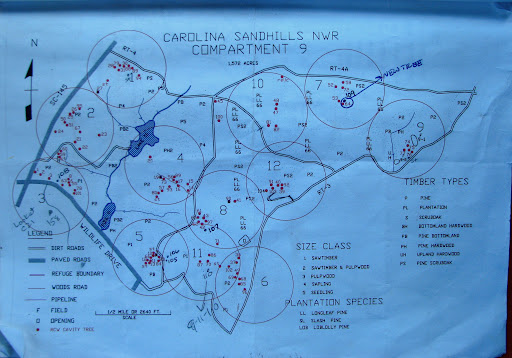
This is compartment 9. There are 21 total compartments, with usually around 12 clusters (the red circles) of RCW cavities in each compartment.
  • You will not find all of the trees, even when you are standing exactly where the tree should be according to the map. As previously mentioned, the map is occasionally wrong about tree placement, or omits trees altogether. Frustration levels directly correlate with the humidity/temperature and blood sugar levels. Foul words will emit from your mouth.
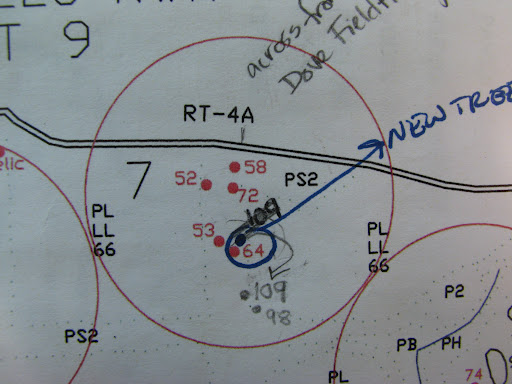
I hate cluster 7. Hate. With a passion.
I was searching for tree 109, which it turns out is not in front of tree 64, as shown on the map, but instead a good quarter-mile behind it, right next to tree 98, which was also not on the map. I penciled them in after I eventually found them on Friday. When you stand in front of tree 64, where tree 109 should be, you can see all the other trees, but not 109 (because it’s actually a quarter-mile behind you, hidden in the pine plantation). The first time I went looking for tree 109 it was late in the afternoon, I was hungry, and I was this close to kicking a tree or throwing myself on the ground and having a minor temper-tantrum. But that would hurt, and I’m not a fan of poison ivy, so instead I went back to the truck, turned on the A/C, and blasted the radio. Carry On Wayward Son by Kansas does wonders.
  • Also note: foul words will frequently emit from your vocal chords, so perhaps it’s a good thing that you’re sent out alone to find the RCW trees.

3). Once you have arrived at the first tree to peep:

  • First bang on the bottom of the tree with a stick, so that if a RCW is in the cavity it will vacate so you can stick in the camera. As the agitated RCW parent flies out of the cavity, assure them you will be quick and not hurt their babies/eggs. Continue talking to RCW’s in area for duration of time at tree. Again, it’s perhaps a good thing you were sent out alone in the woods.
  • Next, extend the telescoping pole with the camera up to the cavity and stick the camera in the hole.
  • Note: if the hole is 20 feet or lower, it will be relatively easy and you will feel overconfident of your abilities to peep. If the cavity is 20 feet or higher, it will be much harder to get the camera into the cavity. It will also be windy, especially if the cavity you are trying to peep is 30+ feet. The sun will also be shining directly into your eyes as you look up at the tree to direct the small, fist-sized camera into the woodpecker cavity. If you are really lucky, it will be both windy and sunny, and the cavity will be slightly higher than 35 feet, which is the total length of your telescoping pole, so you’ll have to lift the whole thing to get it up that few extra inches.
  • Also, the higher and more difficult the cavity to reach with the peeper (i.e., branches in the way you have to maneuver around) the greater likelihood the battery in the camera will die by the time you get it into the cavity. The battery will only run out of juice once you’ve extended the peeper, not while on the ground when it would be easy to change. Some of the batteries will last a day and a half, others will not. They all look the same, and there is no way to tell how long the battery will last. However, it will always run out at an inopportune moment.
  • Also note: the peeper is a $3,000 piece of equipment, which costs more than all of the possessions you brought with you, including your car, laptop, and rock climbing/camping equipment. So while you are stumbling around in the woods looking for RCW trees, don’t hit it on anything, or drop it, or let it get wet when it rains, and when you’re driving around on the bumpy “roads” on the refuge, make sure it doesn’t jostle around in the truck. The $1.87/hr you make ($75/week, 40hrs/week) for this internship will not go very far towards a new one. So be careful.

4). The wireless camera on the end of the pole will transmit an image to the LCD screen at the peeper base, where you are. You will probably have to jiggle the antenna around in order to get a clear image of what is in the cavity.

5). Write down what you see in the cavity (chips, eggs, nestlings, flying squirrels, RCW’s, nothing) in your notebook.

Adult RCW on eggs, refusing to budge out of the cavity so I can see how many. Not cool dude, not cool.
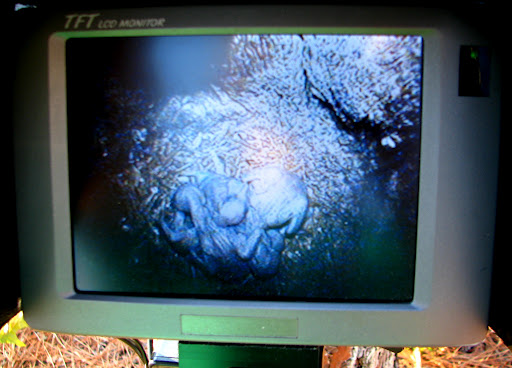
Three RCW fledglings. Baby woodpeckers are not cute, they are featherless little blobs with giant heads and they flail about helplessly, trying to hide under each other when you stick the camera in.

Below is a video I took of some flying squirrels all piled up in a RCW cavity. I’ve only ever been able to see three at a time, but I’m sure they pack themselves in pretty good. I guess the ones on the top are the low guys on the totem pole, because they’re the ones that would get picked off first if someone tries to reach in there for a flying squirrel snack during the day.

Four RCW eggs in a cavity.

6). Pull the camera down, and get your hands covered in sap. Somehow throughout the day you will get sap on your hands, shirt, pants, shoes, notebook, pencil, water bottle, steering wheel, and sunglasses. Periodically worry about it getting into your hair and having to cut it out/shave your head. Then decide that this might be the way to go, as it’d probably be pretty cool (temperature-wise, not in any other -wise) in the summer.

7). Drop your pencil in the poison ivy/oak growing everywhere around base of tree (this step is optional, and highly probable).

8). Gather up all your things, variously forgetting the battery, maps, beating stick, and pencil at different trees.

  • Note: the peeper is not exactly heavy, but throughout the day starts to weigh more and more. When you have extensive hikes, it is recommended to switch shoulders, unless you prefer to cultivate a permanent bruise on just one shoulder. Your shoulder will most likely be tender for the next 10 weeks of the internship.

9). Once in the truck, buckle in the peeper for the ride to the next cluster.

10). Forget you probably have poison ivy all over your hands and rub your face/eat lunch without washing hands.

11). Repeat until 4 p.m., when you’re done for the day.

This is pretty much how I spend my days. Even when I’m lost, hot, sweaty, covered in sap and being bitten by flies, I still can’t get over how lucky I am to get to do things like this. Being a field biologist (or intern) is the best job ever!

Spring in Ohio

Last week I was in Ohio. Primarily I was there to eat chocolate and ham at my grandparent’s house for Easter, but I also had time to take some pictures of all the beautiful blooming things before I left again for parts unknown. By ‘parts unknown’ I mean South Carolina, which is where I am right now for a 12 week internship. I wish I had more time at home to relax and snuggle with my fur babies (as my friend Angie calls them), but I’m excited to play in the woods with red-cockaded woodpeckers!

Bogie and Jasper joined me for my stroll in the woods
Storm clouds are rolling in
Jasper has fantastic whiskers, don’t you think?
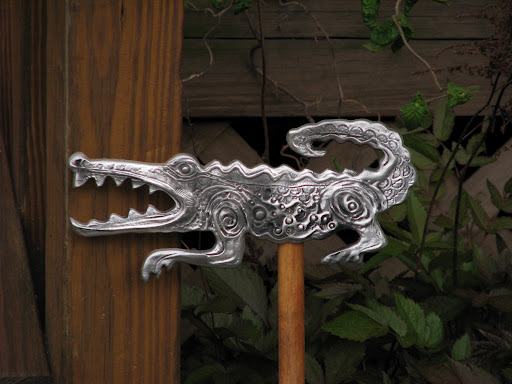
There ARE gators in Ohio!
The gator and the cat (below) were done by Don Drumm, who is a fantastic artist and a really nice person:
We love our kitties.
Don Drumm, the artist who made this, goes to our church. I talked with him on Easter, and he told me to marry rich. It’s just as easy to fall in love with a rich man as a poor man, he said. I told him I’ll work on it.
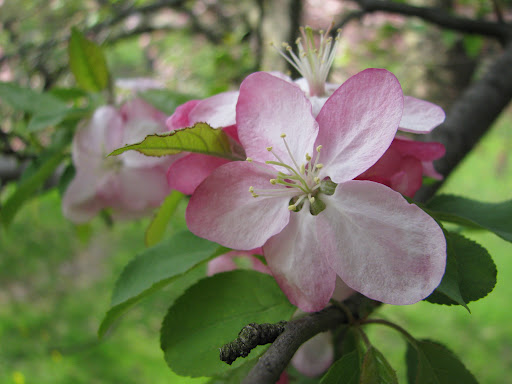
Note: climbing apple trees in rubber boots one-handed (because the camera is in your other hand) is slightly difficult.
Sometimes Jasper and Bogie even let me sleep in my own bed too. They let me have the little sliver left over by the wall and hog all the covers. It’s very cozy in my twin-sized bed, but generally no one falls off.
It snowed one day! I missed most of the cold this winter, so I guess one day of snow in April is okay… I  got to wear my down jacket!
White-breasted nuthatch at the feeder

Merritt Island: Heart and Soul

Part of my soul lives in the mountains. The steepness, the rough and smooth edges, peaks sharp or rounded, a barren summit or a wooded grove on the hillsides, the view, and the breath of fresh air that carries a special taste of true nature. I feel free of the weights I wrap around myself, the ones I didn’t realize were there.

“Mountains inspire awe in any human person who has a soul. They remind us of our frailty, our unimportance, of the briefness of our span upon this earth. They touch the heavens, and sail serenely at an altitude beyond even the imaginings of a mere mortal… They are cruel, dangerous, and possessed of a beauty one can never grow weary of.”
~ Elizabeth Ason, from The Exploits and Adventures of Miss Alethea Darcy

Part of my soul lives in the desert, in the barren rock. When I look out into the wide-open space and gaze at a rock tower rising up into the sky, I just am. Everything is quiet, and I’m just there. The starkness absorbs all the internal moaning and rattling, and all that’s left is the rock, the dirt, the sun, the endless sky.

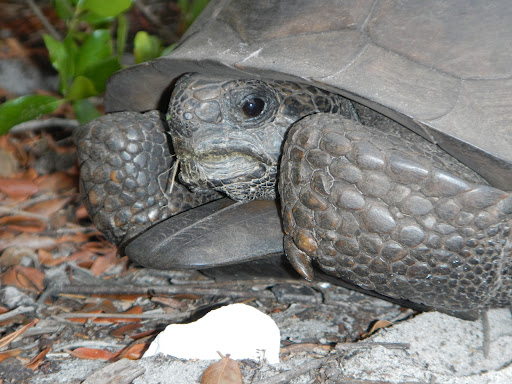
Gopher Tortoise, Merritt Island NWR 2012

These places speak to me, resonate with me deep inside, and I feel a special sense of completeness when I am there. They feel right, like walking around your childhood home in the middle of the night. You know the exact number of steps without counting, the placement of each table and chair, so that even in the dark you can find your way without tripping. My soul can live in the mountains without tripping all over itself in confusion. Sometimes I feel that I am laying on the floor in the dark, waiting for someone to turn the light on and notice me, quietly moaning. I tend to feel that way most often when I’m stuck in boring, flat places, probably because I find it easier to have adventures when I’m in the desert or the mountains.

When I was heading down to Florida and Merritt Island, I was not particularly looking forward to my time there. Florida is flat, hot, buggy, boring. Coming from a cross-county road trip, camping in Utah and Wyoming and rock climbing in Colorado, Florida was not where I wanted to be heading. And, well, I found that Florida is flat, hot, buggy, and boring. But, to my surprise, I loved it anyway.

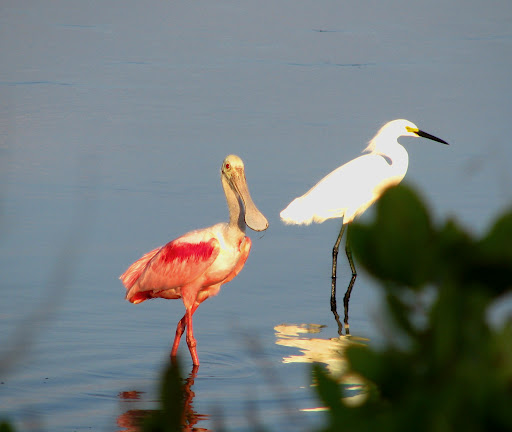
Roseate Spoonbill and Snowy Egret
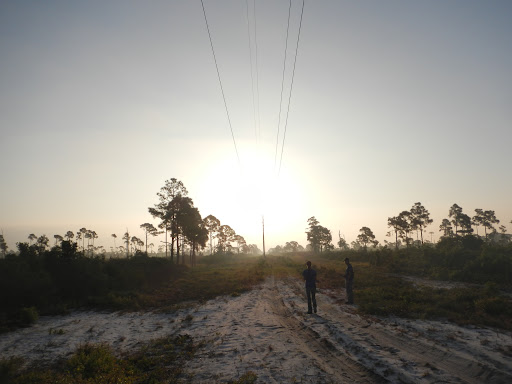
Heading into the sunrise to look for Scrub Jays

I leave bits of my heart everywhere, tucked in with the people and places I go. Quite a bit of my heart is in Ohio, but there are pieces in other states and countries too, in places I have and have not been, in places only seen by those I love.

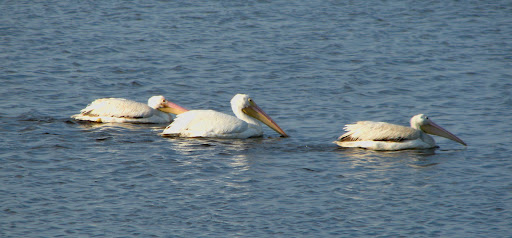
White Pelicans
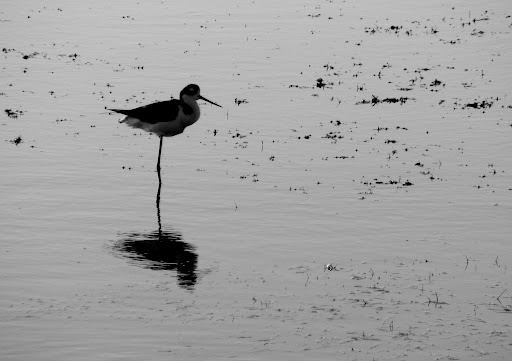
Black-necked Stilt
Playalinda Beach, Canaveral National Seashore

And part of my heart is at Merritt Island. There are some places you stay and you know you are home, even if it’s just for a short while. This is one of them. No matter where I travel, I will always remember that place, that time, those people. Especially those people 🙂

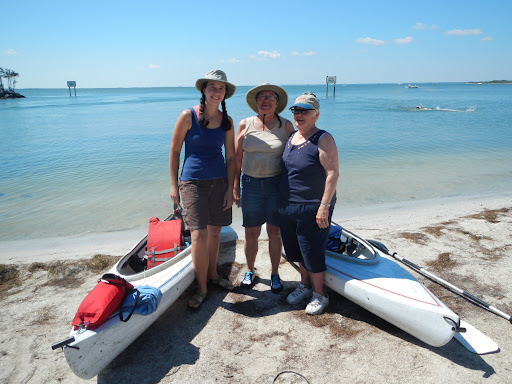
Me, Betty, and Connie (refuge volunteers) after kayaking with dolphins and manatees at Merritt Island NWR
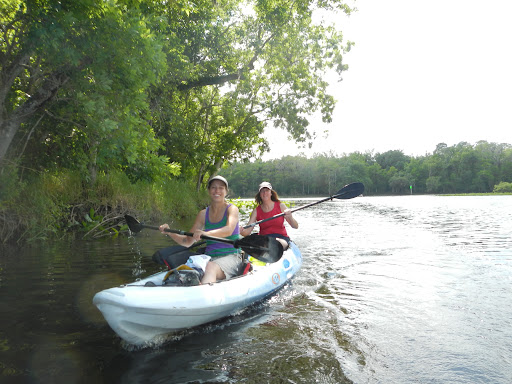
Meghan and Angie kayaking at Blue Springs State Park
Patrick. Blue Springs State Park
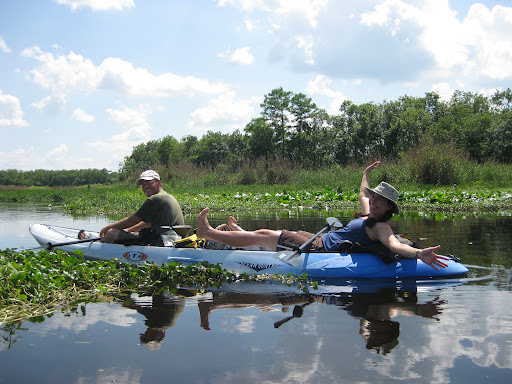
Patrick and I are expert kayakers, can’t you tell? Blue Springs State Park

Kayaking with manatees

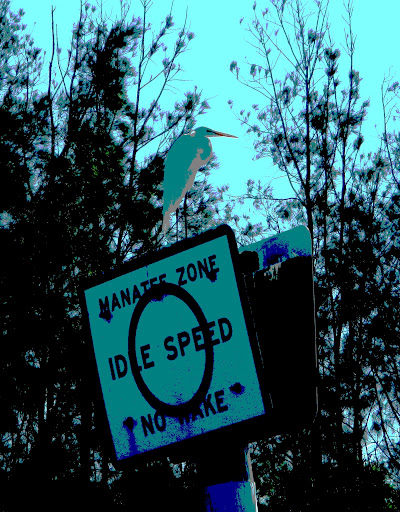
Great Egret on the lookout for idle manatees.
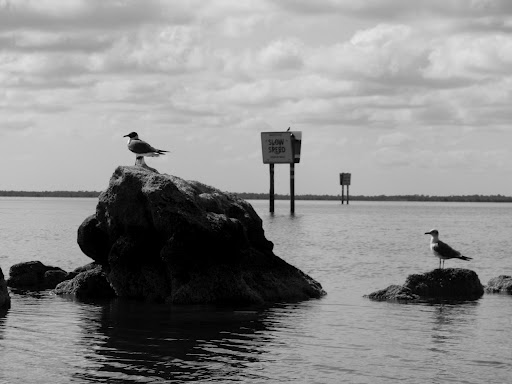
No manatees over here.

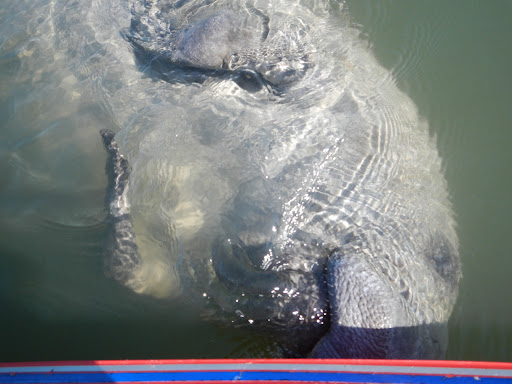
Monday I finally took a kayak out to Bair’s Cove boat ramp, the notorious manatee hangout. Those manatees are a brassy  bunch, they just swim right up to you and shove your kayak around like they own the place. I believe there was some, ahem, bedroom activity going on, which is why they were so active this morning. There was a lot of twisting and possibly some shouting going on by the looks of it.

Barbara Manatee (manatee, manatee) / You are the one for me (one for me, one for me) / Sent from up above (a manatee from heaven) / You are the one I loveYes, that is a Veggie Tales song, sung by Larry the Cucumber.  It gets stuck in my head every time I see a manatee, which is not as often as I would like.
I’ve got your nose!
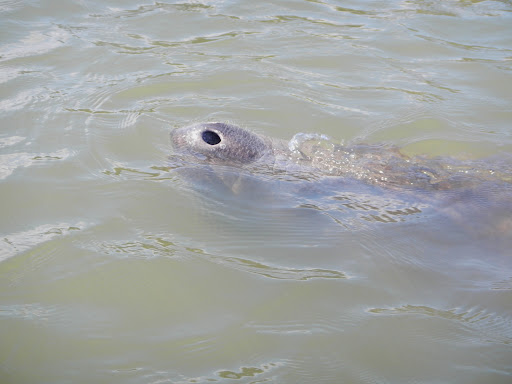
Manatees can hold their breath for up to 20 minutes (according to myfwc.com) but typically surface to breathe noisily every 3 to 5 minutes.
To see my video of some manatee action, click here:
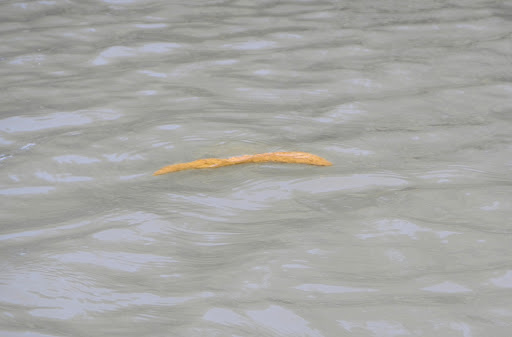
Manatee poo floats. And is very smelly. (Max, this picture is for you).

Manatees can grow to be up to 12 feet long, and I think I may have seen a few that were indeed that large. It’s a bit disconcerting to see the real big guys floating around passively under your kayak and then realizing that, if they decided to get at all frisky, you would be taking a dip. But then you could say that you were attacked by a manatee, so it’d probably be worth it.

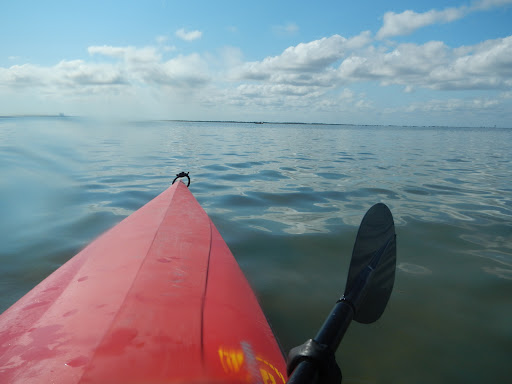
I’m going that-a-way
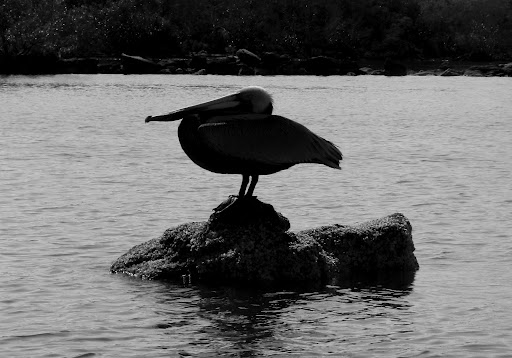
If I was a Brown Pelican I’d stand on that rock too.
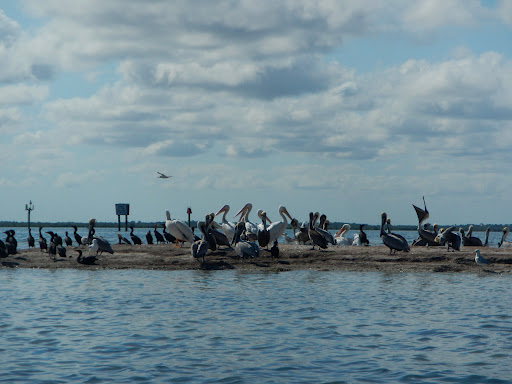
Sing a joyful noise, all ye pelicans!

Shoreline

Florida, 2012
North Carolina, 2011

One

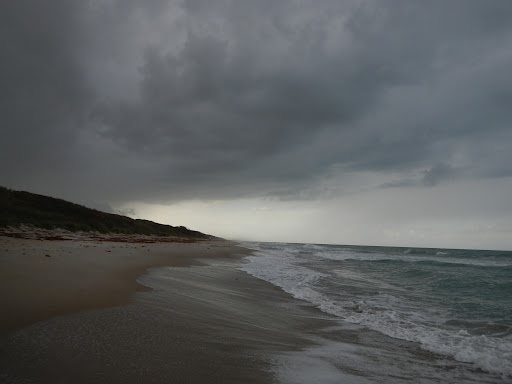
                Pounding, pounding. The dull wet slap of my feet in damp-packed sand at the edge of water. Waves, irregular intervals, stretching for my toes. I run, leap, quick. Along the edge of life, where motion and stillness collide, I stop and breathe. Deep prana, look out over the ocean, exhale. I see my self, a dolphin, leap from my soul out into the blue and I know peace. The waves grab but always release. I run but I always stop. The sand is cool on my feet, the waves rough and loud. Quick, graceful, jump, gone.
Florida, 2012
Kelley’s Island, Ohio, 2009
North Carolina, 2011
Two
                On the edge of my world I study the creatures that reside there, riding the edges of existence. These birds, equally at home on air, water, or land, fascinate me. How they dominate these three elements is mystifying, as I only manage a shaky grasp on one. I watch them run in and out along the shoreline, probing quickly between waves, periodically leaping into the air as one and circling around my head, guiding by instinct until they are clear of the potential danger I pose. Eyes squinted against the sun and wind, I watch as they land down the beach and resume dodging waves. The longer-legged sandpipers have no need to scurry in and out of every wave, but the stubby-legged sanderlings run to avoid a cool dousing. Occasionally, one small piper misjudges and must take to the air in a small flustered bundle of dripping feathers, peeping until it again settles back into rhythm with the constant motion of the waves.
                I feel so apart from these natural rhythms, though I wish to be a part. But I know, in an hour or so, that I will turn around and walk back to my car, drive back to civilization. I have nothing against modern conveniences, but at times I wish I could be more like these shorebirds and span different worlds with such ease. Being able to transition so smoothly between two extremes, like a bird between air and shore, would be like slipping into a second reality.
Florida, 2012
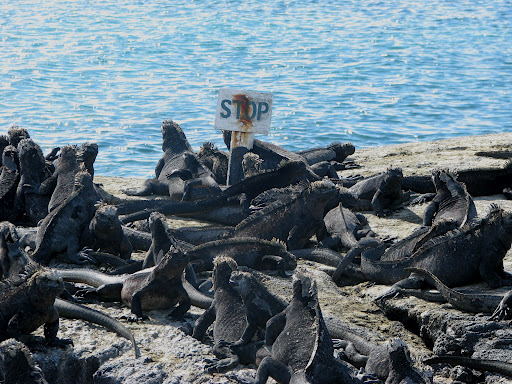
Galapagos Islands, 2008
Florida, 2012
Three
                I want to dance barefoot in the sand, spinning until the dunes and sea blend together in a swirl of color and I fall winded on the soft sand in a heap, inhaling the damp air, waiting for the world to right itself around me.
Costa Rica, 2009
North Carolina, 2011

What is a Public Use Intern?

I suppose some of you may be wondering what it is exactly that I’m doing here in Florida. Well, here are a few pictures:

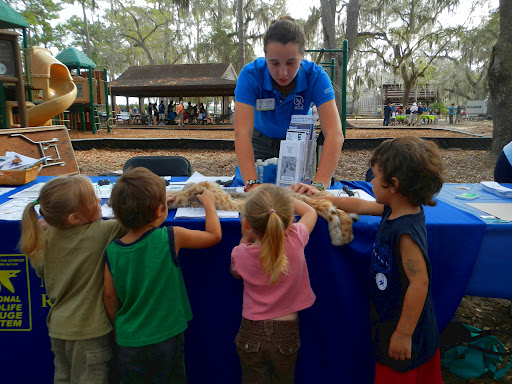
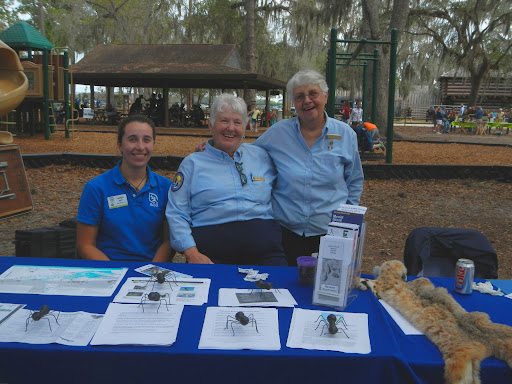
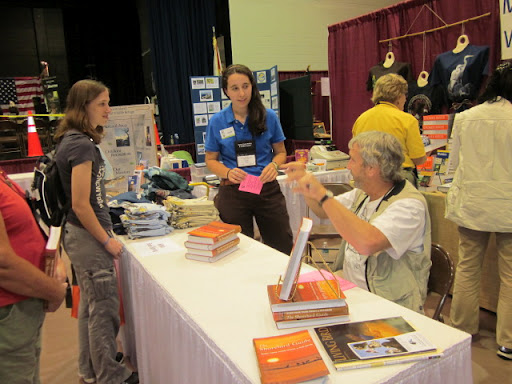
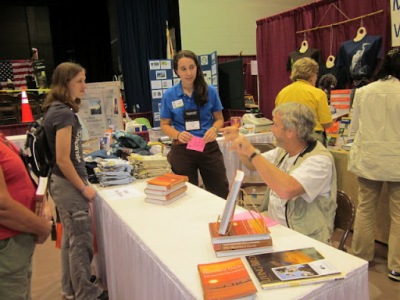
Sometimes I get to help out at festivals, which are quite fun. We set up a booth and people come by and we tell them about the refuge and some of the awesome animals we have here. The kids get to make a stamp bookmark, and I usually have them touch the bobcat and otter pelts and compare them.

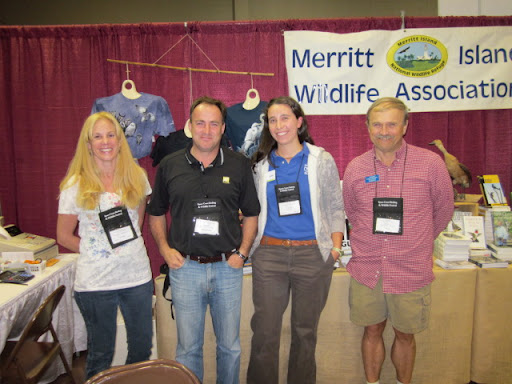
Here I am with Connie and Joann, two of the volunteers, also known as the Festival Extraordinaire Ladies.  They’ve got the festival gig down pat. They have also adopted me as a grandchild, though I told them that no one can measure up to the wonderful Grandma I have who sends me cookies in the mail (Thank you Grandma Cindea! I love you bunches!!)

Yes, those are giant ants on the table. No, they are not real, no, we don’t have ants that big on the refuge, and no, they’re not for sale. Everyone comments on the ants, that’s what really brings people over to our table.

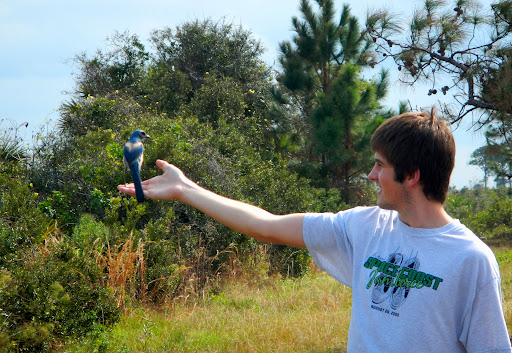
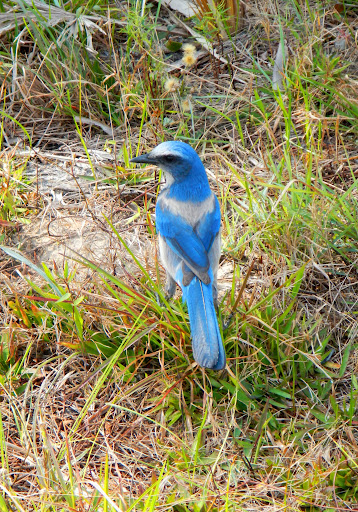
Sometimes I help with school programs and we get to hang out with Florida Scrub Jays. They are very curious, and will come land on your head or hand if you hold it out, looking for peanuts. The biologists have trained them to enter traps in order to band them for monitoring purposes. The traps are baited with peanuts, so the jays get a treat for their hassle.

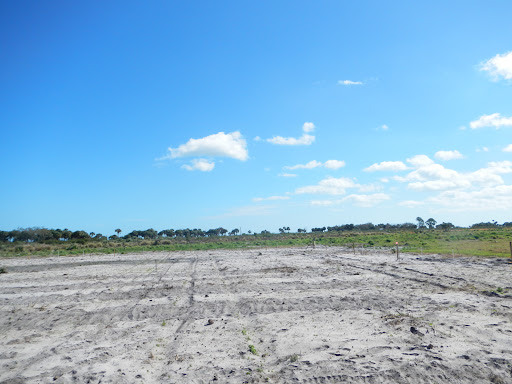
Sometimes I’m allowed to go out with the biologists and do fun biology things, like help restore scrub habitat. As Mike, the head biologist, was explaining to me when he kidnapped me and forced me to help him fill a spray tank, no one has been really successful at restoring scrub, which is a problem for wildlife managers trying to help the scrub jays and other species that depend on scrub habitat. The area we were working in used to be a grapefruit grove, but they are trying to make it

For us, this meant planting seeds in the hot sun in a quarter-acre plot. It was actually quite fun, and there were scrub jays hanging out nearby watching us, and lots of fun birds flew overhead. Also, a man on a motorcycle rode by blaring “Uptown Girls,” which I then got stuck in everyone’s heads (going on a week now).

The field we planted with scrub plant seeds.

Here we all are hard at work. This is what most of the morning looked like, hanging out in a barren field and contemplating the scrub.

Sometimes I hobnob with famous birdy people. Here I am at the Space Coast Birding and Wildlife Festival with two other Merritt Island NWR volunteers and Richard Crossley (in the black shirt). He was the keynote speaker at the festival this year, and because I was helping to sell his books I had the chance to hear him speak and got him to autograph my copies of his books, The Shorebird Guide and The Crossley ID Guide (came out just last year). We chatted for a bit, he’s a fun guy. Also takes fantastic pictures of birds.

Same birding festival, different day, with Kevin Karlson. He is a co-author of The Shorebird Guide, and also autographed my copy. Another fantastic photographer and birder, and also fun to talk with.
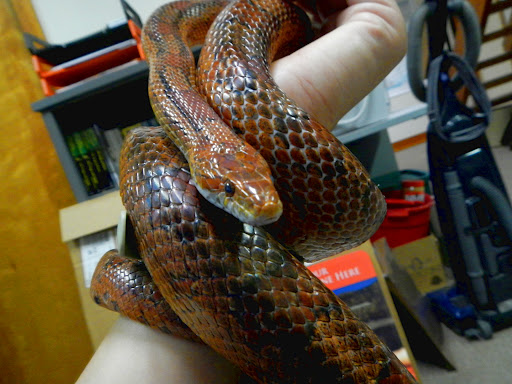
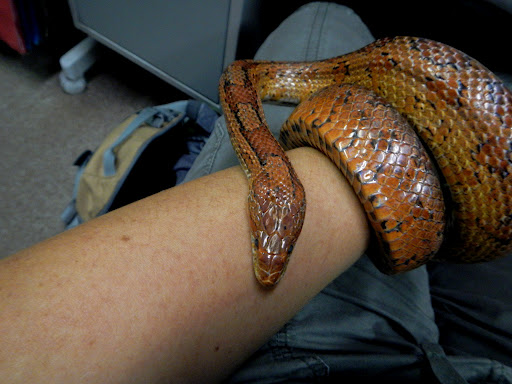
Sometimes I hobnob with snakes (this happens a lot, actually). This is Buddy, our education snake. We hang out together a lot, he’s my bud. The other day I had him out at the Visitor Center, showing him to some of the visitor. Buddy decided he wanted to crawl into my shirt, and did so, going up my right sleeve. He was across the front of my chest before I noticed, so I tried to pull him out via the front of my shirt. He was having none of that, and kept aiming for my other sleeve, like he was going to crawl all the way through. This doesn’t really bother me, but I’m aware that quite a few other people are not fond of snakes and the idea that I would even hold him is disturbing, so I tried to excuse myself from the people I was talking to so I wouldn’t bother them too much. I also wasn’t entirely sure I would be able to get him out of my shirt without taking it off, so I figured I probably should do that in the privacy of the back office, or the restroom. The people I was talking with didn’t seem to mind, in fact the woman starting taking pictures of me with a snake up one sleeve and part of his mid-section out the front of my shirt, his head moving back and forth under my shirt on my other shoulder.

I should have asked her to send me a copy, I’m sure it looked pretty funny.

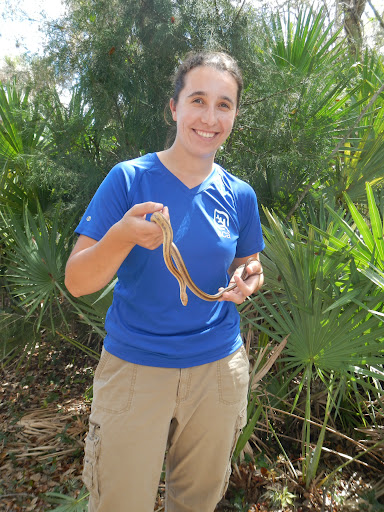
This is a yellow rat snake we fished out of the trashcan so it wouldn’t bother the visitors. After the photo op, we released it back into the palmettos.

Rat snakes are generally very docile creatures, and all of the ones I’ve handled have been quite friendly. They generally like climbing around my person and going through my hair and belt-loops, which can be interesting, having a live snake-skin belt. This is one of Buddy’s favorite activities when I’m not paying attention. He also likes to go through my braid or pony-tail, so I have to undo my hair to get him out.

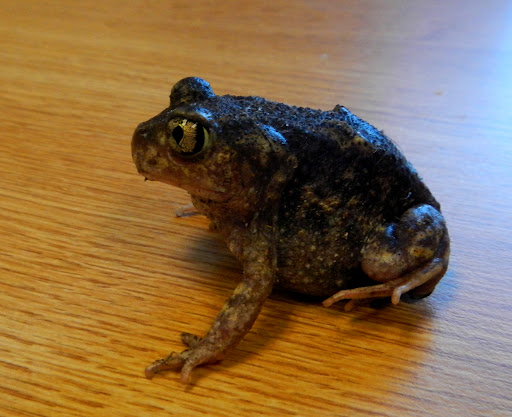
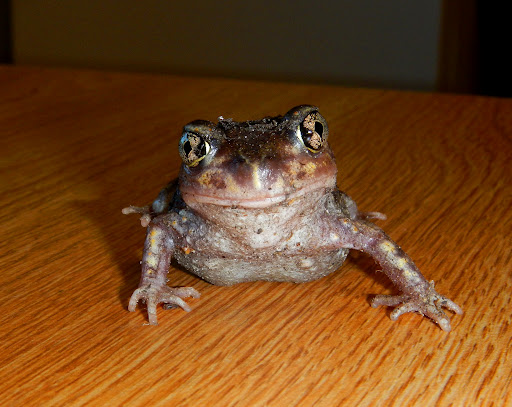
If you didn’t have enough of the creepy-crawly, here are some toad pictures! This is a spadefoot toad that one of the biologists brought to show us. He found it in the fire garage, and  thought that might not be the best place for a toad to live.

Only a few more weeks left here in Florida, so I’ll try to get more pictures up soon!

Defecating River Otter “Made My Day.”

Defecating River Otter “Made My Day” Says Young Woman
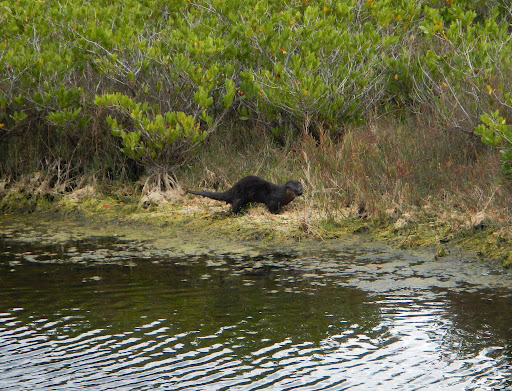
Merritt Island NWR, FL—Friday, February 10, 2012: a day that will live in infamy. Well, at least to one young woman. It was on that day that Lauren A. Smith, age 24, saw her first river otter (Lontra canadensis) in the wild, along Black Point Wildlife Drive in Merritt Island National Wildlife Refuge. “I was so excited, I’d only seen them in zoos before!” she gushed.
Resting for the big event
The river otter in question spent a few minutes poking around the edge of the impoundment before it lifted its tail and defecated. It then scampered off into the bushes, but not before Smith managed to snap off a few pictures. “This is why I always carry my camera with me, you never know when you’re going to see a pooping otter,” she said.
Lifting the tail
Smith is a Public Use intern at Merritt Island National Wildlife Refuge, located near Titusville, Florida. Smith, a zoology and English major who graduated from Ohio Wesleyan University, has always loved animals. “I’ve known since 5th grade that I wanted to be a zoologist and work with animals,” she said. “The other kids were going around saying, ‘I want to be an astronaut’ or ‘I want to be a ballerina.’ No one even knew what a zoologist was.”

A birder and ornithologist, she jumped at the chance to internship at Merritt Island. “People come from across the country to see the birds here,” she said. “There are fantastic opportunities to see some fantastic birds.” She admits there was an additional consideration in her internship choice— “Spending the winter in Florida was also pretty appealing.”

Taken from the backseat, before Sam opened the truck door to let me out. That is Sam’s hair and beard in the rear-view mirror, not mine.
Merritt Island NWR is a pretty appealing place to a number of animals, including river otters. River otters are found in many of the wetlands areas of Florida. Ranging over large expanses, up to 50 miles, river otters unfortunately often end up as road kill. They can be active both during the day and at night, and are often found hunting for food along water edges.
Playful hunters, river otters will catch and eat a variety of critters found in the marshes including minnows, catfish, crayfish, mollusks and frogs. Because they have very high metabolisms, an adaption to help them keep warm in the water, they must consume at least 15% of their body weight every day.
Otters can range in weight from 10 to 31lbs, males typically weighing more than females. They have webbed feet and short, thick, brown fur to help keep them warm while in the water. While swimming, they close both their ears and nostrils.
Time to head back to the bushes
“I absolutely love working at the refuge,” says Smith. “Any place where you have the chance to see painted buntings, roseate spoonbills, scrub jays, gopher tortoise, bobcat, and alligators every day can’t be all that bad, right?” she adds with a smile.