Rainstorm

Written during my field job at the H.J. Andrews Experimental Forest, near Blue River, Oregon, May-July 2010. All pictures were taken in the Forest. 

IMG_4492

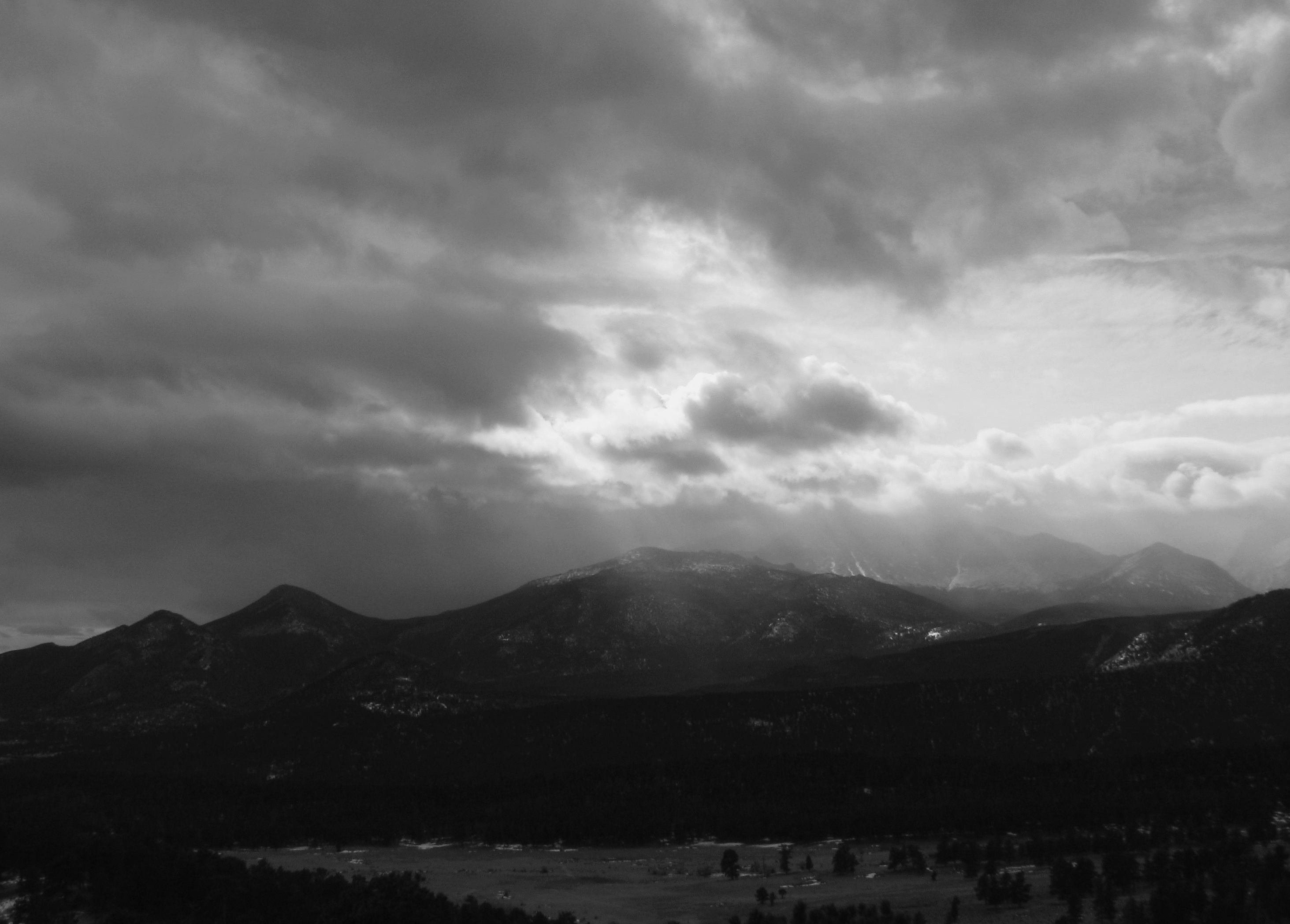
View from top of the ridge.

A thunderstorm brews in the mountains, and the air is a constant exhalation through the cedars and pines, keeping them on their toes. The sound is a mountain stream, glacial melt-waters rushing away to their destiny. The light is expectant, dim, setting the stage. Something mighty this way comes.

Clouds roll with gentle thunder, starting softly and picking up speed and sustenance, a small rock starting the avalanche. Now the rain, a fine mist that moves in sheets, drifting among the swaying trees. The agitated buzz of a rufous hummingbird zips away, seeking shelter. There is a nervous excitement to the air, a taste of expectation on the wind.

IMG_4007

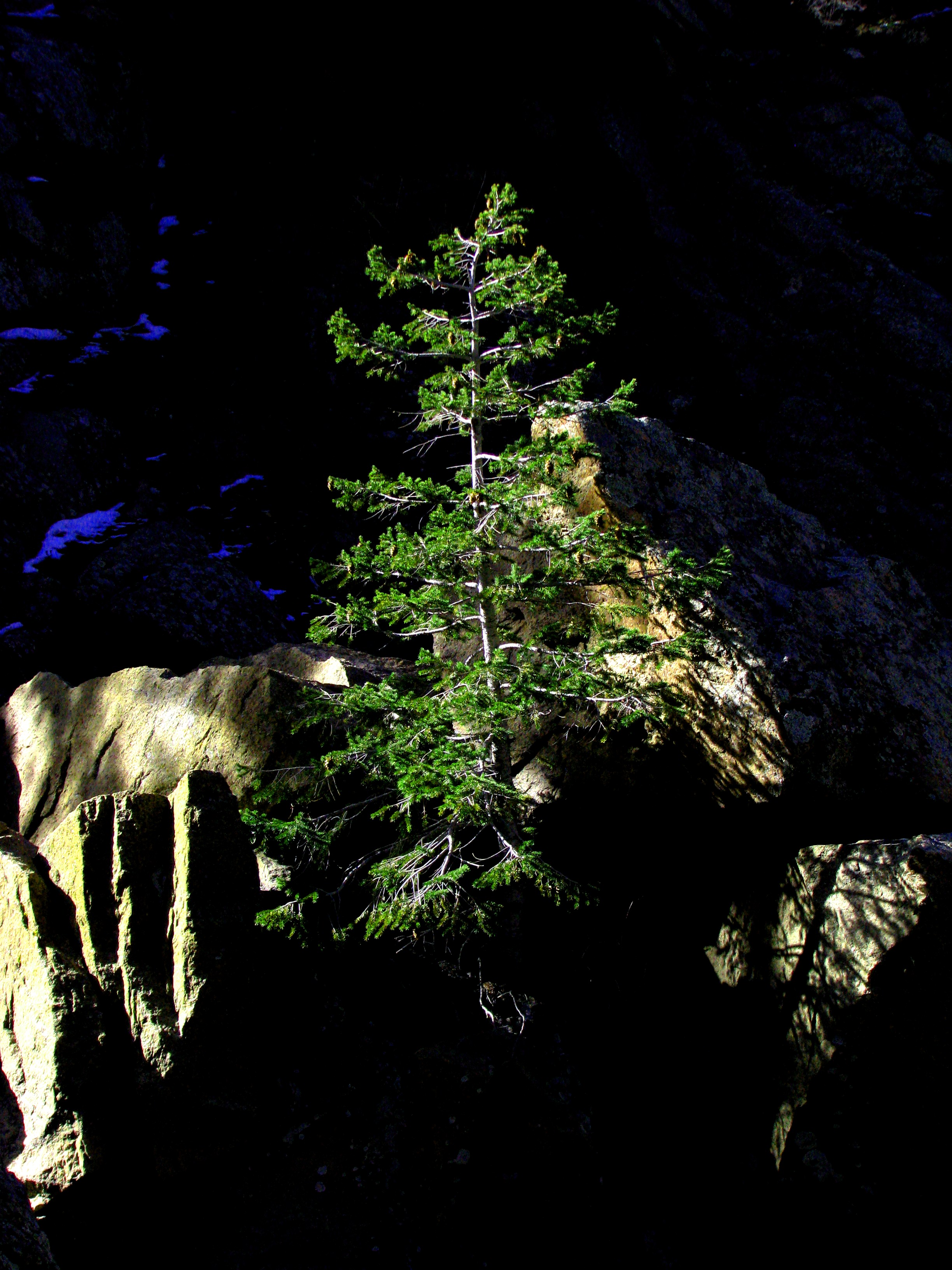
Though there is violence about, an almost peaceful quality pervades. The trees sway gently but will not fall, not today. They are supple, mighty beings; they lean into the winds with their own definition of grace. The relentless grace of the mountain forests, of steady rain. An angry grace, defiant, compliant. A peaceful grace of trees who have weathered a thousand rains, who will weather thousands more. These trees, soothing movements among suspended droplets, silently dampening bark slowly darkening.

IMG_3683

A Stellar’s jay’s harsh clatter disrupts the hypnotic quality of the rain and the wind and the trees, and the storm flows on.  Wind and water, flowing through the sky, soaking the trees and making them dance, to the accompaniment of tympanis, low drum-rolls in the mountains.

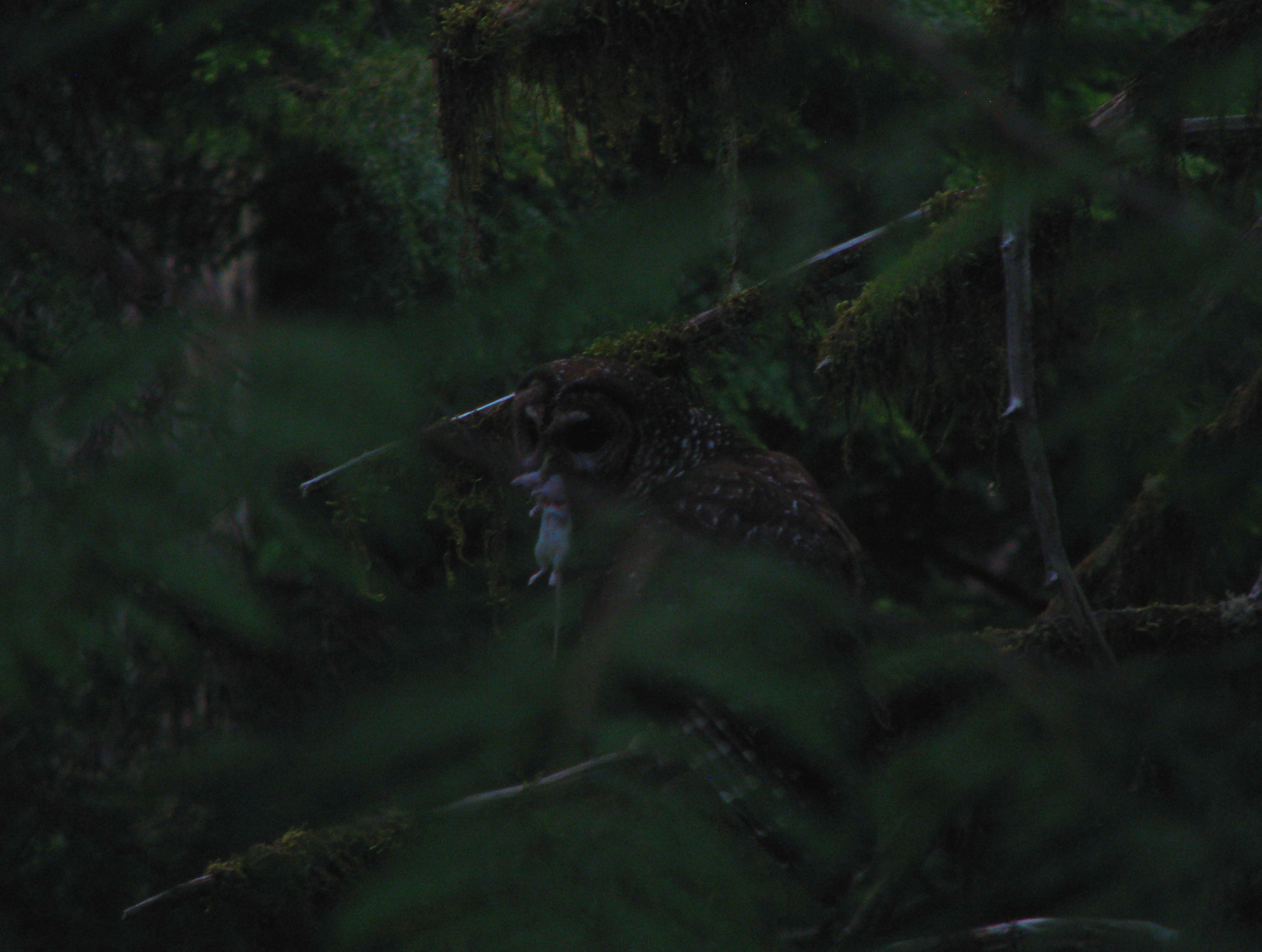
spotted owl with mouse

Penguins with Mikayla

The other day Mikayla, one of my honorary little sisters, and I decided to make penguins out of Sculpey clay. For some reason I was telling her about how I used to make these for all my friends in high school, and she decided we needed to go out to Michael’s RIGHT NOW and make them. So we went, and did, and it was just as much fun as I remembered.

DSCN4881

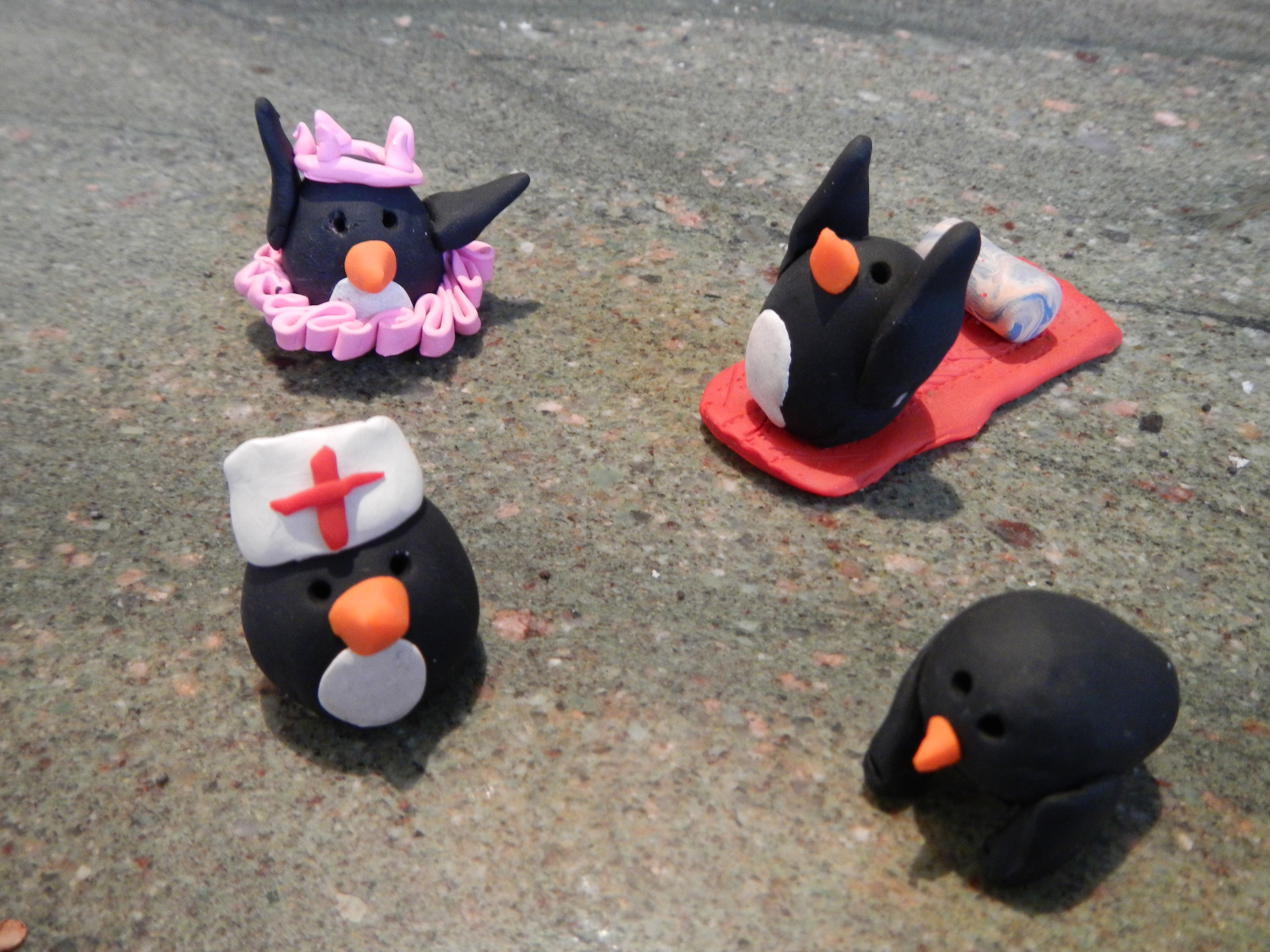
Skier, snowboarder, penguin on sled, three penguins in winter hats

DSCN4892

Nurse Vav, ballerina, yoga Ashley, and push-up Will.

DSCN4894

Bouldering penguins

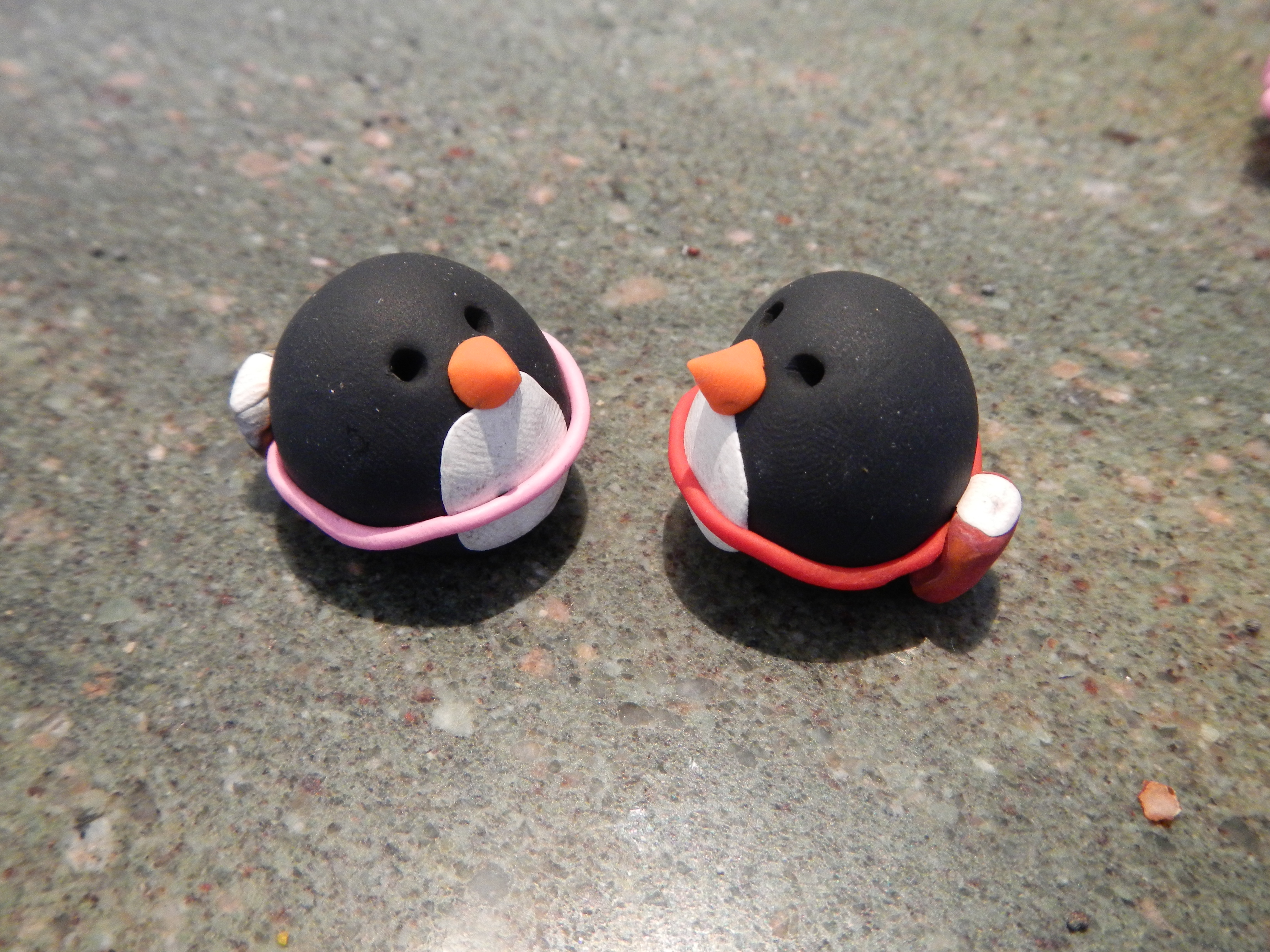
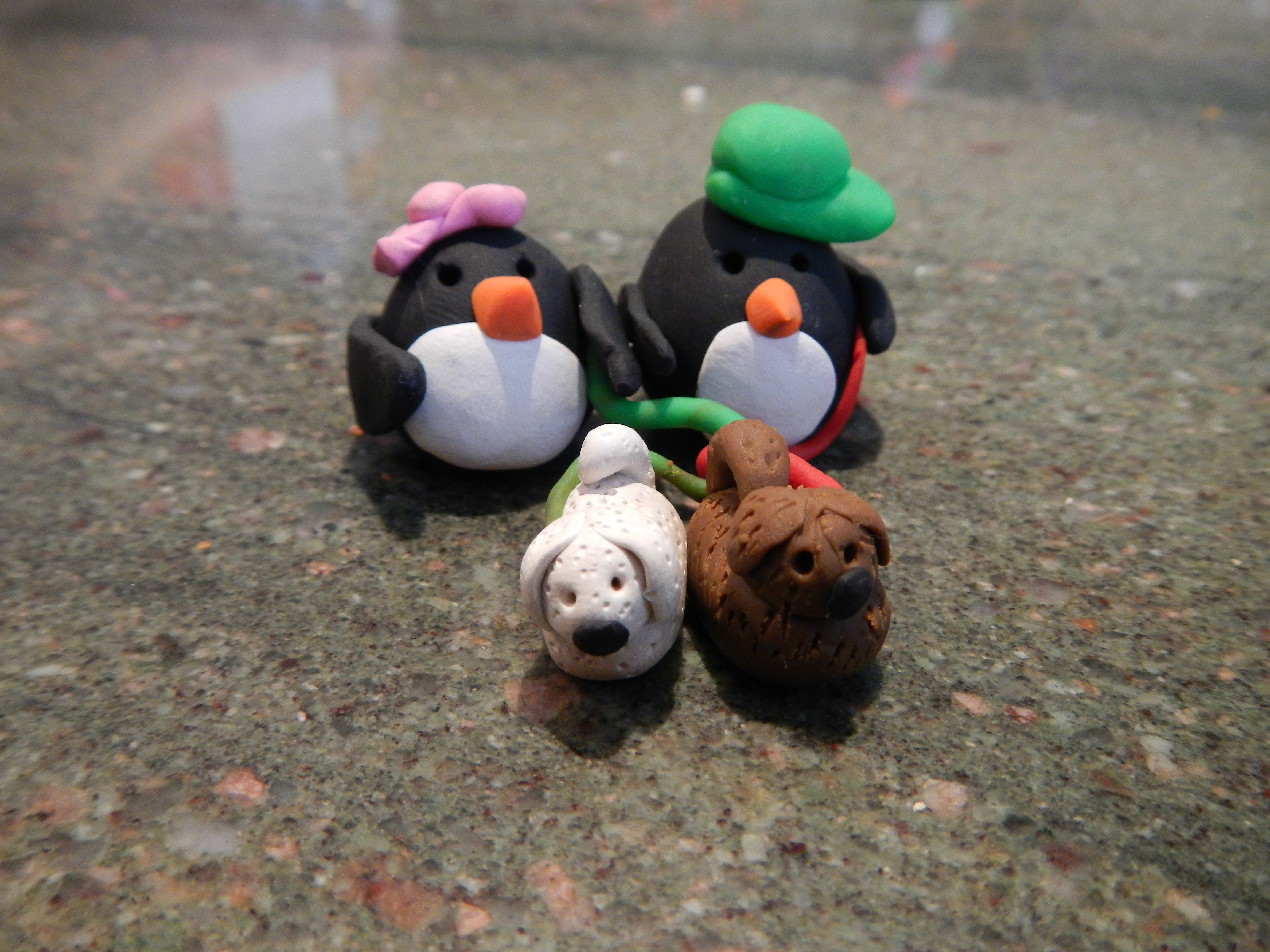
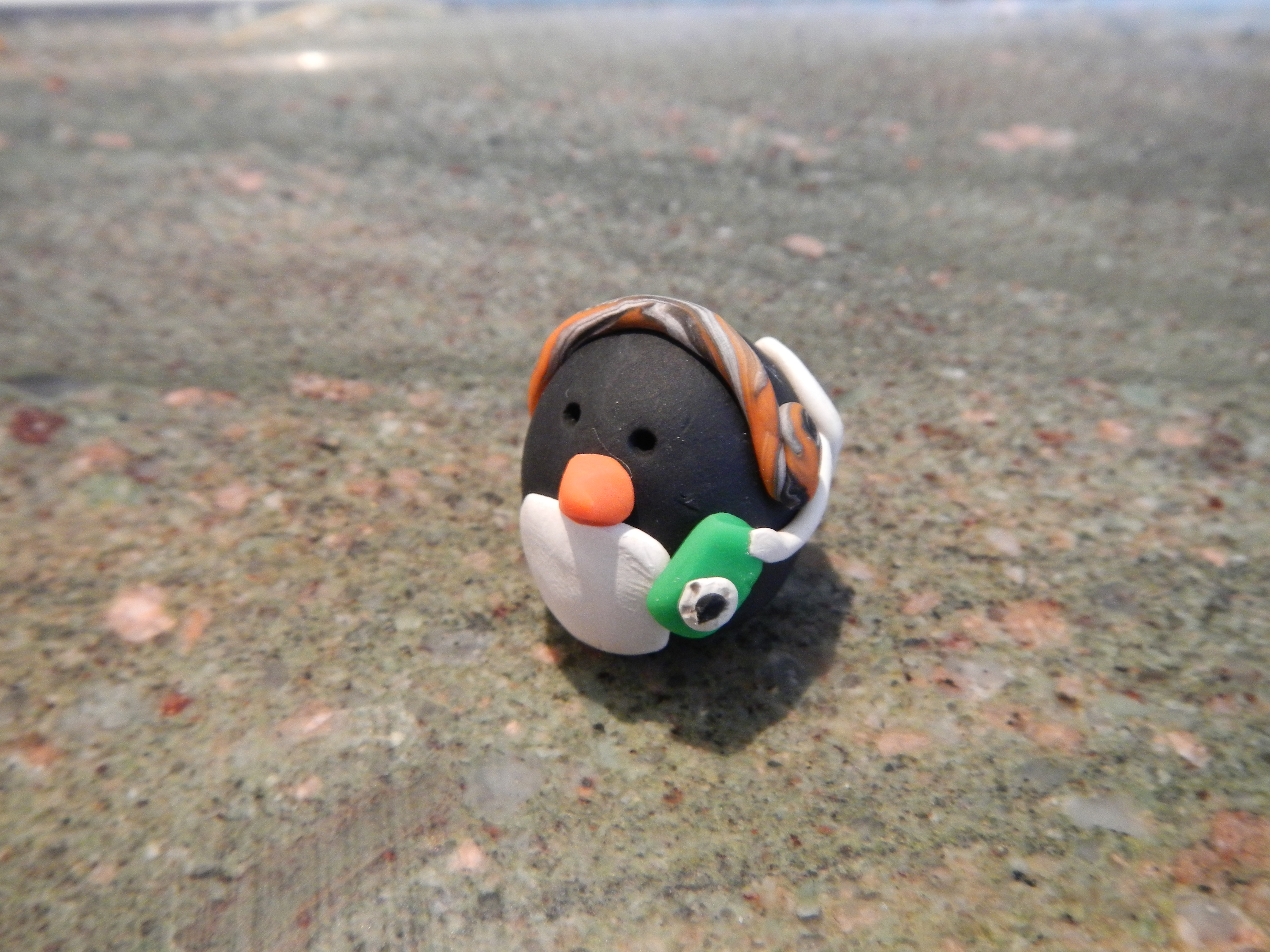
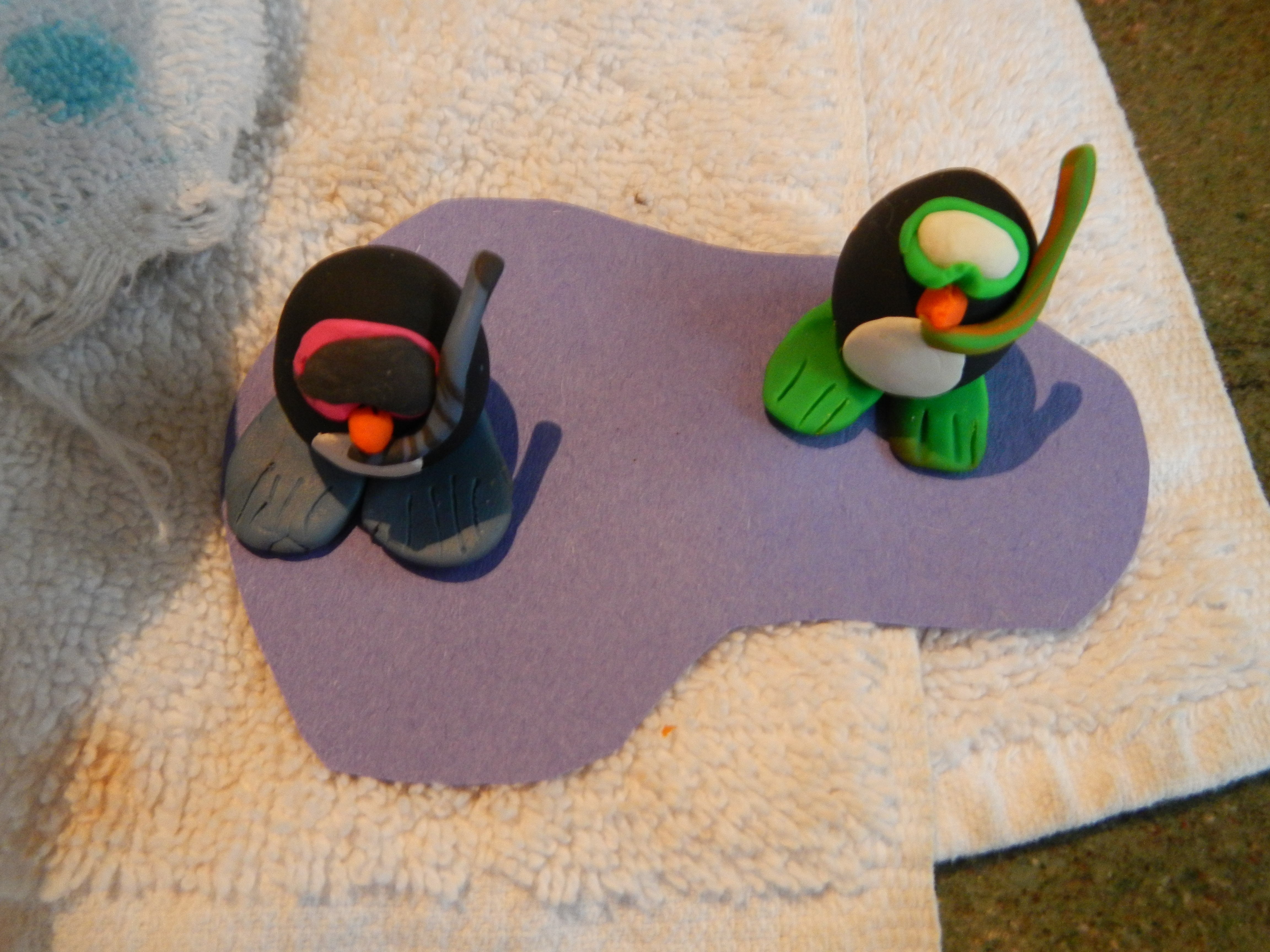
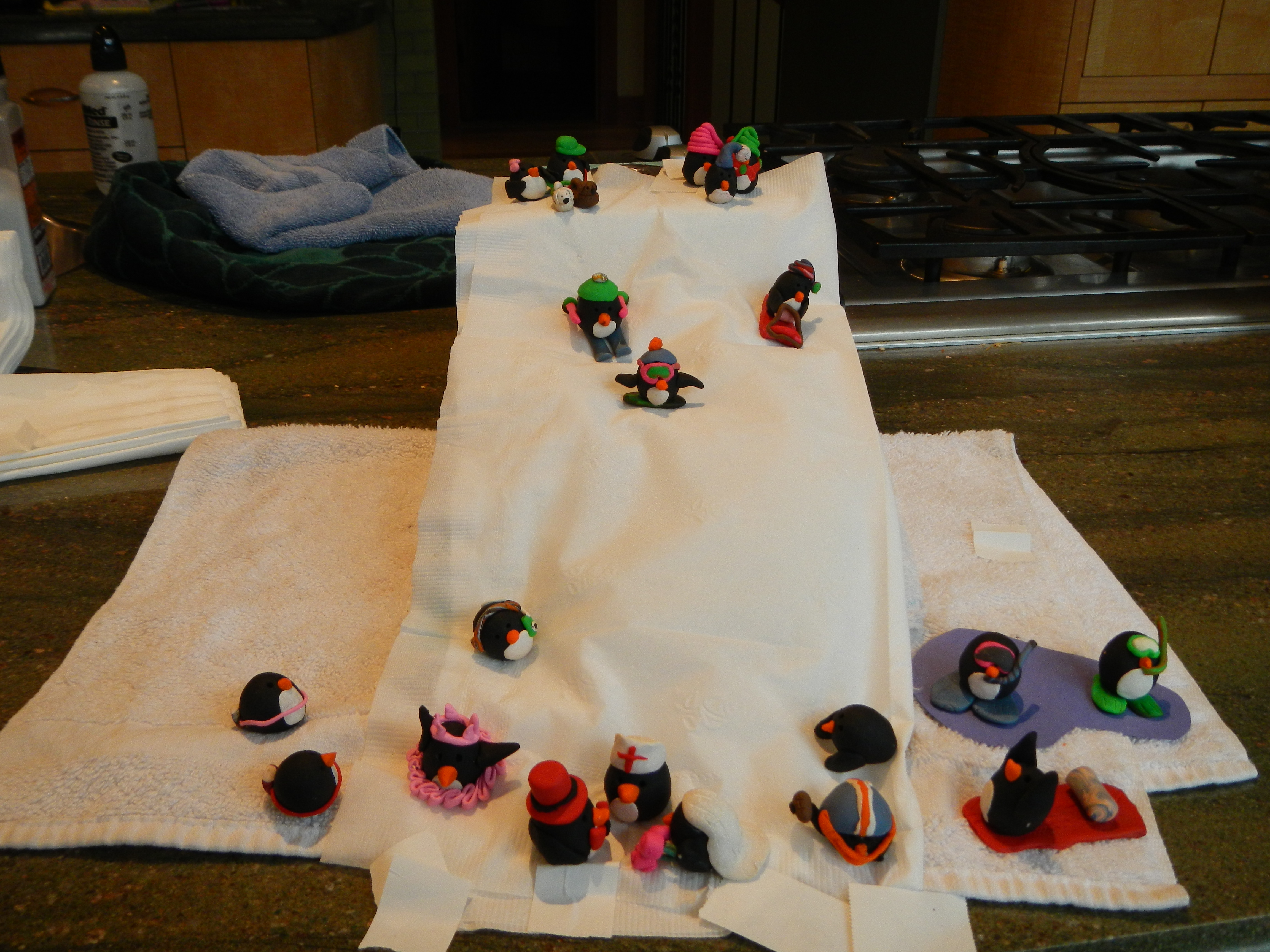
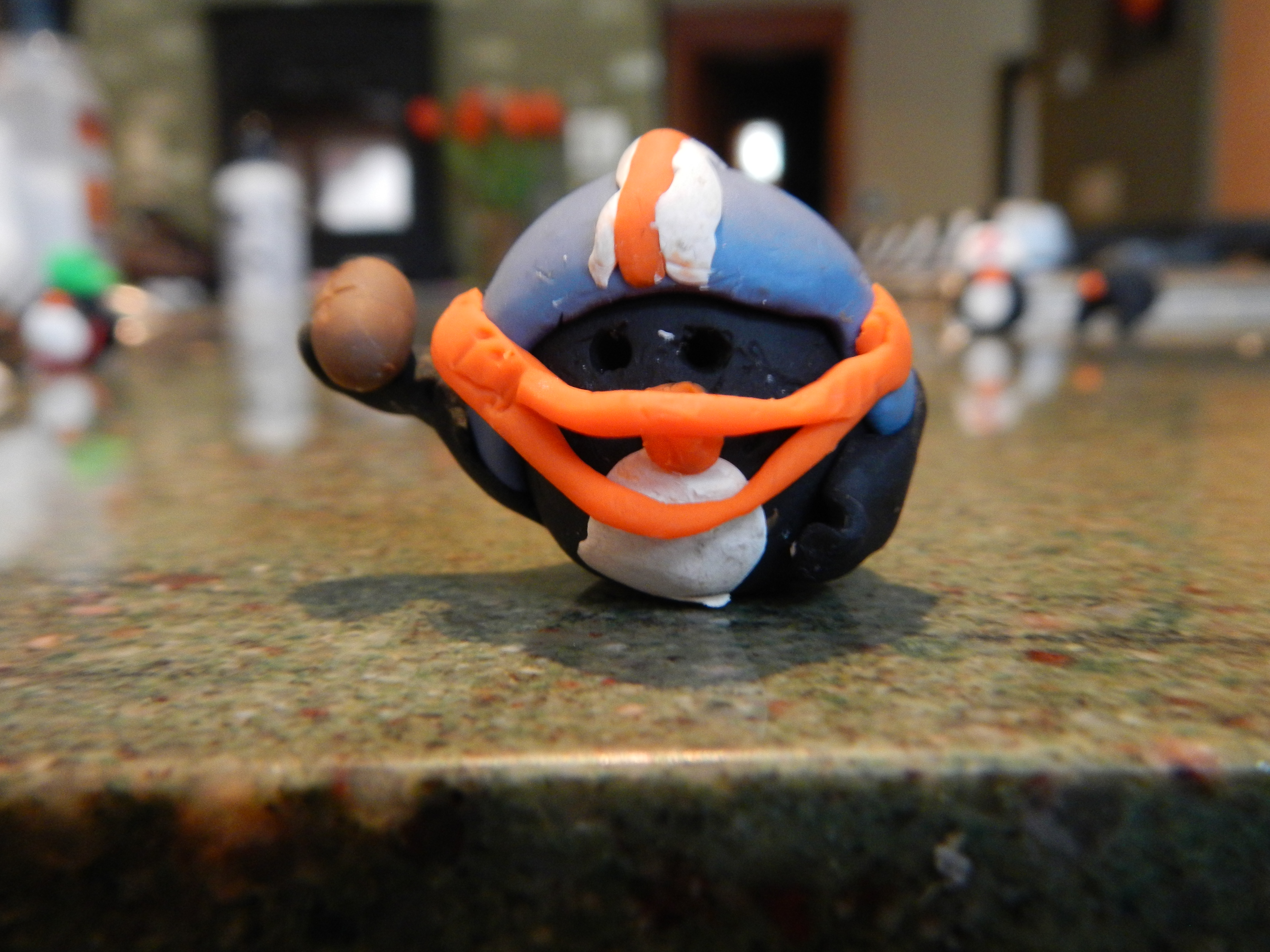
We made: a skier, a snowboarder, a sledder, a nurse, a ballerina, two snorkelers, two rock climbers (boulderers actually, since they only have chalk bags), a yoga-er in mountain pose on a mat (complete with bolster), a penguin doing push-ups, a penguin listening to an iPod (complete with Beats headphones, which Mikayla currently covets), a Bronco’s player throwing a football, three penguins in a variety of winter hats, a couple walking two dogs (modeled off Chip and Buddy, the Seigal family dogs), and a couple renewing their wedding vows (anniversary presents for Mr. and Mrs. Seigal, their wedding anniversary is on Feb. 14th).

DSCN4883

Note the heart tattoo on Mr. Top-Hat, that’s Mikayla’s touch.

DSCN4886

Walking Buddy and Chip, complete with tangled leashes.

DSCN4884

Ipod-listening penguin

Can you spot them all?

DSCN4897

Pair of snorkeling penguins

DSCN4908

Staging of all the penguins. Apparently being a nurse means you can marry people… or penguins.

DSCN4889

Denver Broncos. This was all Mikayla.

Mikayla decided I need to change my name to Lauren Smith-Seigal (or possibly Smeigal), since I now live in their house. She also doesn’t understand why I am looking for a job, or why I wouldn’t want to live here in their house with them forever. You should have heard the fuss when I told her I was applying for a field job up in Estes Park for the summer, you’d think I was going to Antarctica and never coming back.

I told her I’ll live here for the rest of my life as long as she wipes my butt when I get old, and she promptly replied that Ashley (her older sister) would take care of that. I should probably add that Mikayla is 11, and Ashley is 15.

Good to know that I’ve got my future taken care of.

Don’t go back to sleep

I found this poem on the wall of the Denver Airport, just outside baggage claim, while I was on my way out after dropping off my sister for her flight back to Ohio. I stood there and read it twice through, the black letters stuck on the plain white wall, with people collecting their bags and waiting and moving all around me.

It’s a poem by the 13th century Persian Muslim poet named Rumi, who was also a jurist, theologian, and Sufi mystic (according to Wikipedia). I find it particularly meaningful at this moment in life, and I think it’s a wonderful way to exit into whatever awaits you in the world outside the airport.

light through the clouds

Walker Ranch Loop, Colorado, 2013.


The breeze at dawn has secrets to tell you.

Don’t go back to sleep.

You must ask for what you really want.

Don’t go back to sleep.

People are going back and forth across the doorsill where the two worlds touch.

The door is round and open.

Don’t go back to sleep.

~Rumi


pine by waterfall

Walker Ranch Loop, Colorado, 2013.


And, clearly, this poem is about hobbits, and is pretty much the entire plot line for The Hobbit: An Unexpected Journey.

“People are going back and forth across the doorsill where two worlds touch/ The door is round and open”– Obviously, this refers to when the dwarfs come to Bilbo’s hobbit hole to begin their quest.

“You must ask for what you really want”– when Thorin Oakenshield is reluctant to ask Elrond to read his map. Also when Bilbo finally comes to his senses and asks to come along with the dwarfs.

“Don’t go back to sleep”– telling Bilbo to sign the contract and go with the dwarfs and not to just stay asleep in his safe, cozy, boring hobbit hole. Movie quote: Bilbo- “I just need to sit quietly for a moment.” Gandalf- “You’ve been sitting quietly for far too long!”  Also could be a reference to when the dwarfs are sleeping in the mountains and are captured by the goblins.

“The breeze at dawn has secrets to tell you”– sounds like something Gandalf would say. Something he actually does say: “Home is now behind you. The world is ahead.”


I saw the new Hobbit movie with my brother and sister just before I came out to Boulder, which is why I’ve hobbits on the brain. And on that note I think Radagast’s sled is awesome. I would totally put up with birds nesting in my hair and pooping down my face if it meant I had a sweet sled pulled by giant rabbits. As long as the birds weren’t American Robins, or turd birds as we call them (their scientific name is Turdis migratorius, hence turd, from Turdis). Those things are gross, and they make a huge runny mess all over the place when you’re trying to band them. Wrens would be ok, or a small family of warblers, or hummingbirds. Those are all cuter, smaller, and seem neater.


squirrel on flagstaff

Walker Ranch Loop, Colorado 2013.


I now suggest a listen to “Into the West,” sung by Annie Lennox, from the soundtrack of The Return of the King. I find it fits quite well with this poem, and is a very lovely song. One of my favorites, along with “Concerning Hobbits” on the soundtrack for The Fellowship of the Ring. Howard Shore is brilliant, and the soundtracks make excellent work/study music.

Black Balsam

written in North Carolina, 2010. 

Memorial Day in the Mountains

It is listening that puts the world right again. When I listen to the wind, gently rustling the grasses, a feeling of peace pervades my being, as if I am absorbing the motes of tranquility that float in the air.  Occasional large flies and bees drone past, overlaying the background murmuring of grasses with percussive buzzes. An eastern towhee calls, moving further and further away, a penny-whistle of startling clarity. Crows caw dryly from among the mountains behind me, harsh sounds against the omnipresent breeze. They ride this wind, watching over places I’ll never see. But here, up on the top of the world, everything that I can see is enough.

I’m sitting on a rocky outcrop at the top of Black Balsam, a mountain just off the Blue Ridge Parkway in North Carolina. The rock under my hand is dark, shot through in some places with quartz, in others sprinkled with bits of mica that shine in the almost-setting sun. The rock is rough but worn, and I wonder how many years have passed since it first felt the warmth of daylight. More than I can fathom. Thousands of feet have passed this way, but this evening the perch and view are mine alone. My rock is an island surrounded by waves of bristling golden grasses, a bald above the tree line. Exposed to the world and the elements, I sit and breathe. The crickets have begun, their sounds the string section hidden among the dried grasses. The towhee still calls, now beyond the far ridge. It has found a partner and the two duet quietly, eventually fading into silence.

I like the mountains

I open my eyes and look up into the pure blue that is the sky. There are clouds, small puffs of cotton over distant mountains, too far away and wispy to be of concern. The moon is a translucent orb, suspended in the lightest blue above the darker mountain-defined horizon. All around me, as far as I can see, are mountains. Their smoothly rounded profiles deceptively hide distance and rock, making the world look soft. I imagine tracing their shapes with my hands, but it takes more than touch to know a mountain.

I glance up and a kestrel flies toward me, the only moving creature I can see. It disappears below the crest behind me, only to climb high again before eventually disappearing, a black speck absorbed into the sunlight and the blue of the sky. I wish to follow, but my mind is drawn back by the large, startling green katydid that lands on my bare leg. It takes a few hesitant steps on feet so small I can’t feel them before wiping its antenna and hopping clumsily away. It lands on the rock nearby, and as I watch it scrapes a wing against its back leg, beginning a solo not intended for my ears. I move closer but it leaps madly away, just out of reach. I don’t try to follow. I look back up at the moon and at my shadow on the grass, which remains still no matter how the grasses dance in the wind.

I sit and listen to the moon and the mountains, and, sometimes, I think I understand what they say.

I like the mountains

Monument Valley Morning

“Beyond the glittering street was darkness, and beyond the darkness the West. I had to go.”

— Jack Kerouac, On The Road

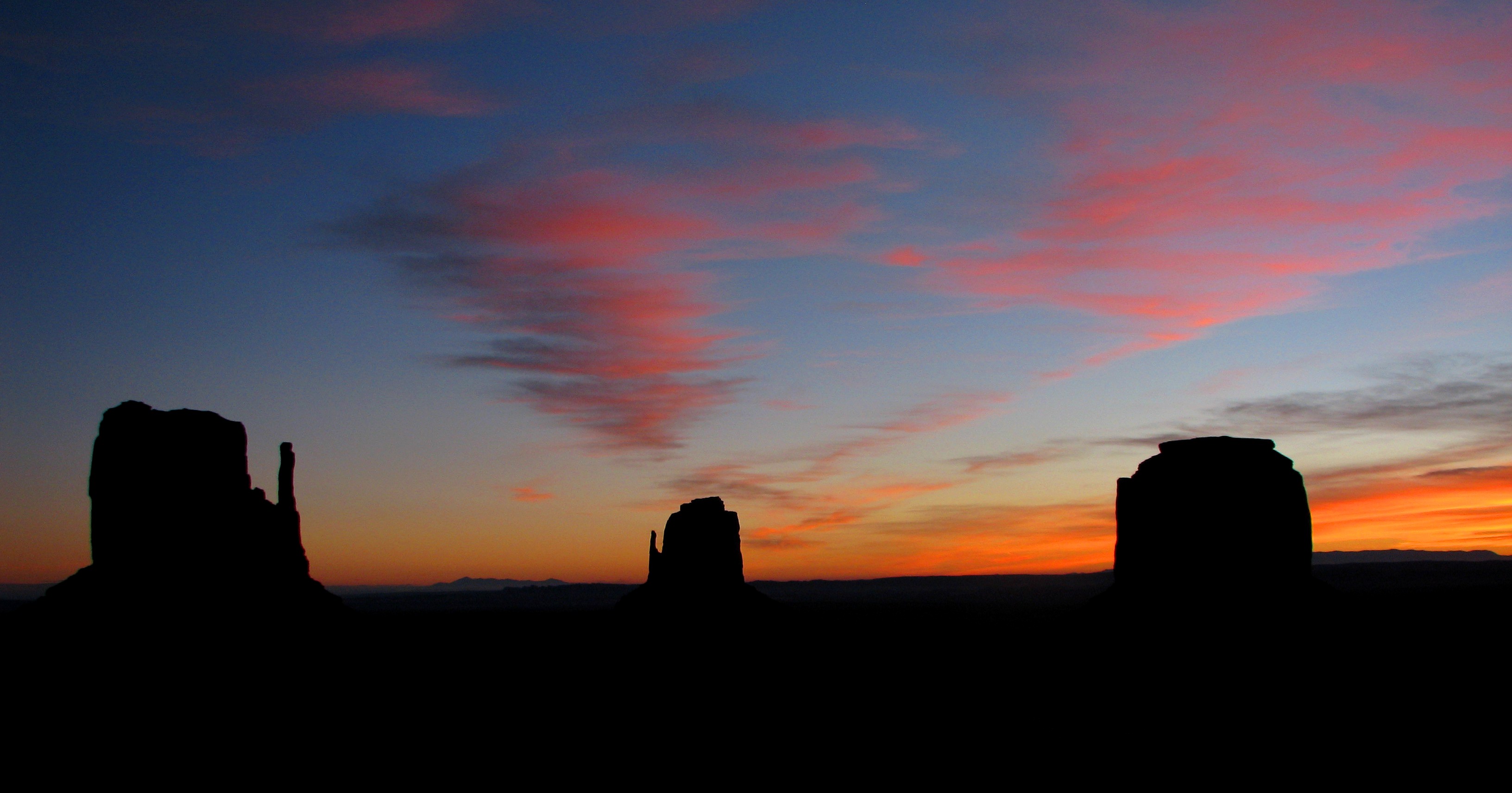
dawn mittens dec 2012

Mittens Formation, Monument Valley, AZ. December 2012.

I slept in the car last night, in spurts, bundled in my sleeping bag in the front seat while Max lay out on the ground next to the car. We were off the main paved road, on a dirt track that might have eventually led to someone’s house. The stars were brilliant, and sometime in the middle of the night I awoke to the moon shining brightly through the windshield, just below the rear-view mirror, incredibly glowing and bright for such a medium-sized sliver, just barely bigger than skinny.

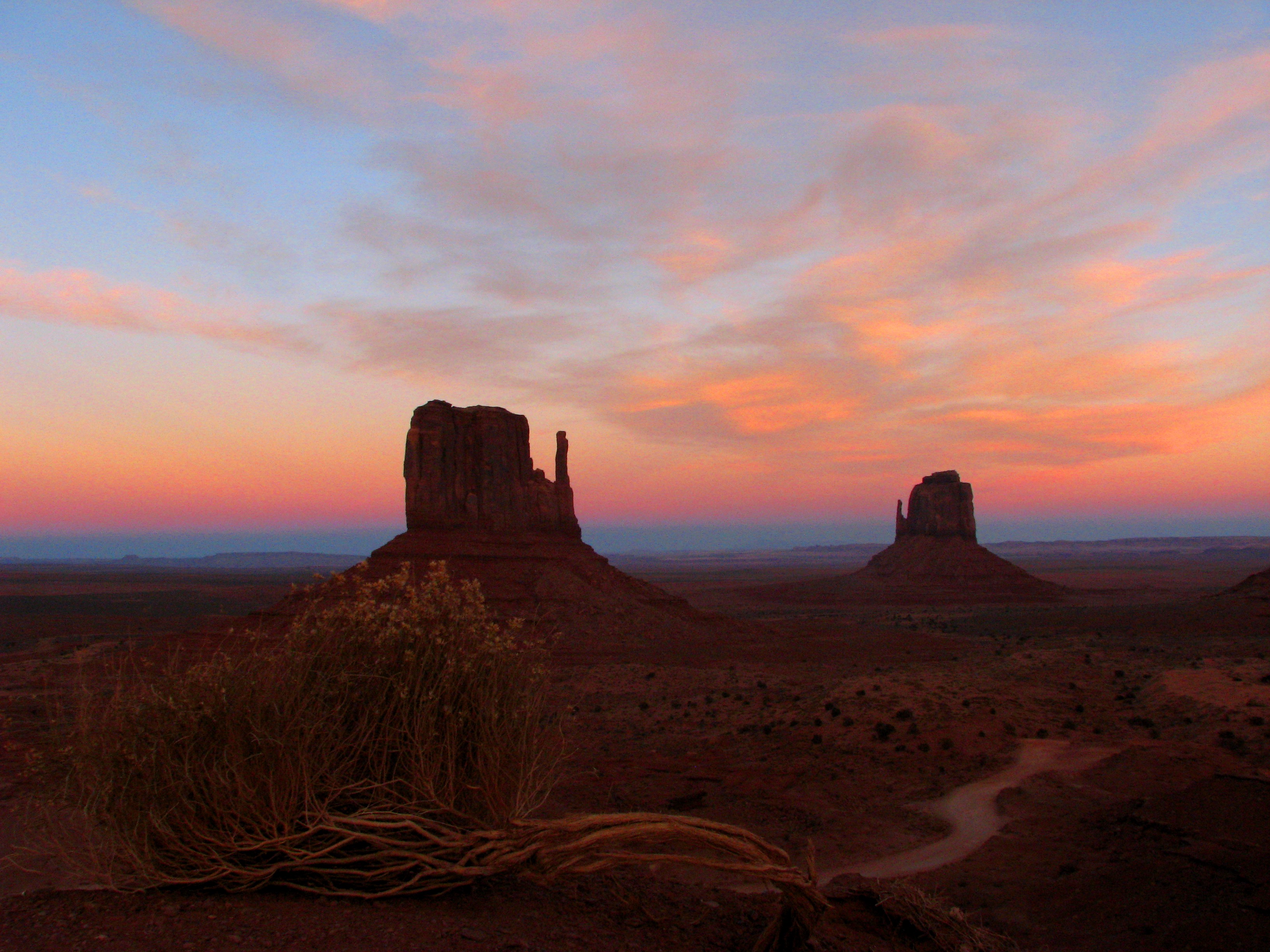
sunrise mittens dec 2012

Monument Valley, AZ. December 2012.

I don’t know where the moon is now, the street lights in the parking lot befuddle and seemingly keep the natural world at bay. We are sitting outside of the the hotel/restaurant/gift shop run by the Navajo tribe, who own this land around us, Monument Valley.

There is light now on the horizon, bringing the Mittens into dark profile. A grayish burnt orange that fades gradually into blue that gets darker and darker to merge into the stary night, the transition. There are charcoal smears of clouds, like the artist rubbed the sky with a dirty hand, smearing part of the dark outline of rock into the new start of day.

Max has his camera set up at the overlook, taking long shots of the stars fading away and the sky gaining color. I’m sitting in the car, mostly still in the sleeping bag, swaddled in my yak wool shawl, writing by light of the parking lot lights and watching out the window. I haven’t decided yet if I need to experience this outside the comfort of the car. It’s cold out there, not conducive to writing since I can’t manipulate a pen properly while wearing my thick ski gloves.

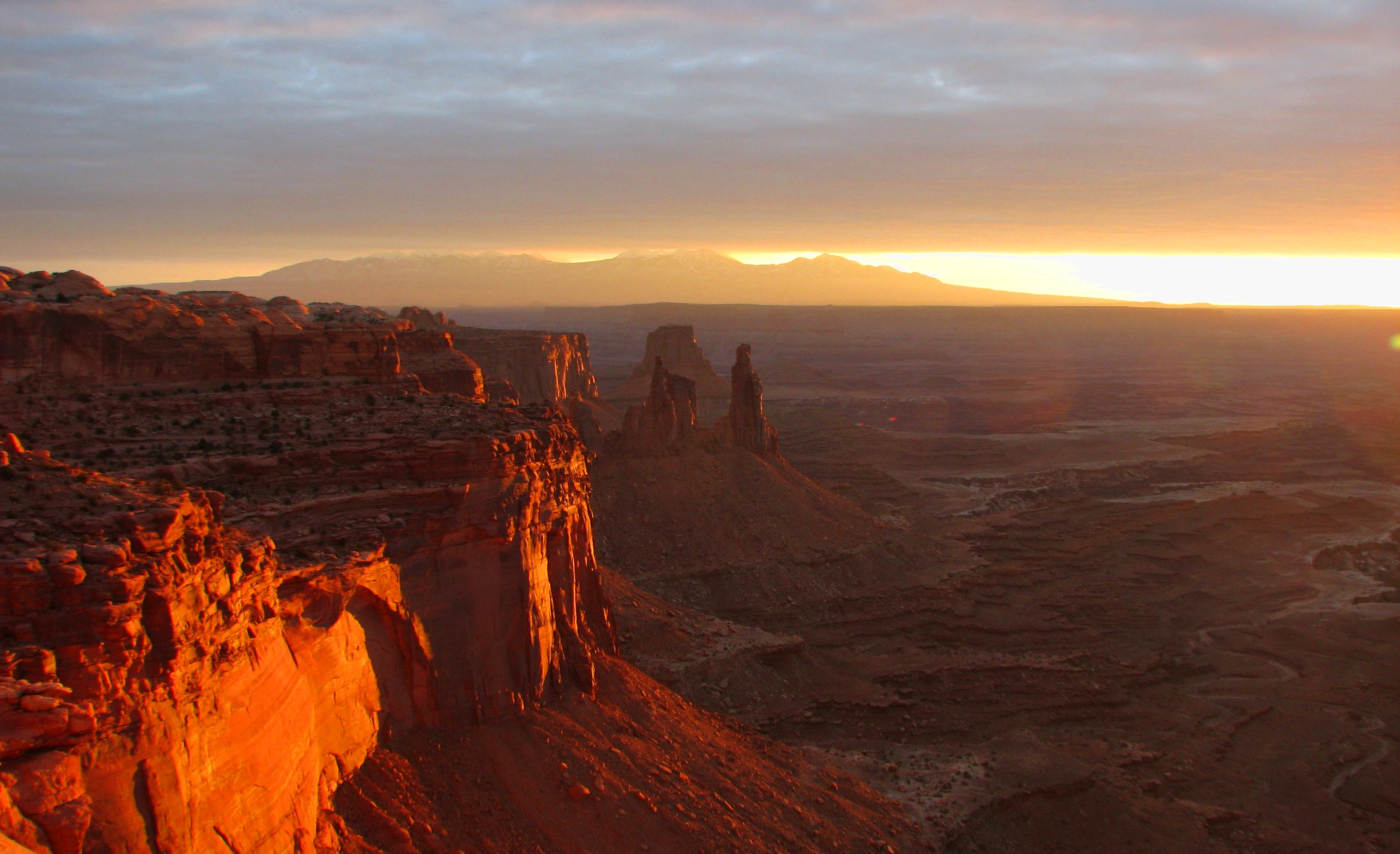
mesa arch dec 2012

Mesa Arch, Canyonlands National Park, Utah. December 2012.

Now, stretching out from the initial orange peeking over the horizon, the distant mountains and horizon are a soft, deep purple with touches of a lighter pink nearest the sun. Minute by minute the light and colors seem to change, or the clouds move just slight enough to be noticed. Almost imperceptible when watched, but every time I look up after writing a sentence or two I can see just that much further, just that much more color.

Now there is no doubt that day is on the way. The whole sky is lighter, not just the horizon in the east, the stars faded back into the unseen. It’s just about light enough to see, to be able to navigate without stumbling over an unseen rock or bush. It’s the transition, when one should be sitting with a warm thermos of coffee, bundled in flannel and wool and thick denim, standing beside a dusty beat-up truck, savoring the first meditative sips of day, the quiet-still cold before the sun rises completely to shine down on everything that needs to be done or fixed or attended to.

This time of day is full of the best promises, the ones about to be fulfilled. Dusk is also full of promise, but of the promise of tomorrow, of the future, because the stars and moon are too distant to give anything real or immediate. But the sun rising in the morning brings the promise of life, of warmth and light, of food and sight.

sunrise mesa arch

Mesa Arch, Canyonlands National Park, Utah. December 2012.

It is officially day now, light enough to see everywhere, and light enough to realize I’m hungry, and for my thoughts to begin to spread out in all directions, tracing around and over the rock formations, settling among scraggly juniper bushes, burrowing in the soft reddish dirt. It’s harder to see things, to see things equally, when the light comes up and shines on everything. It gives you the chance to focus, to choose. When the dark chooses for you, it’s easier.

mesa arch sunrise

Mesa Arch, Canyonlands National Park, Utah. December 2012.

A Walk Through the Backyard

On the deck, just outside the sliding-glass door, there are red specks in the snow, either cayenne pepper flakes or blood my younger brother Eric says. Mom puts pepper in the bird seed to keep away the squirrels, and it works. Our cat Jasper caught a dark-eyed junco from the feeders yesterday, played with it on the deck just outside the door. I wish I was strong enough to have gone out and ended its misery. But I’m not.
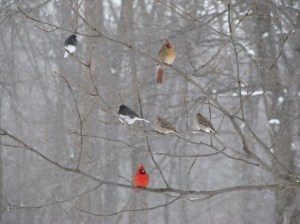
Northern Cardinals, Dark-eyed Juncos, House Finches

Northern Cardinals, Dark-eyed Juncos, House Finches

In my ski jacket, knit hat, scarf, mittens, wool socks and boots, I’m sufficiently bundled to take this walk. It’s 26°F outside. Cold, with a subtly biting breeze.   I wish it was snowing. The sky is a bright muted gray, a shade brighter than depressing. I’ve left the dog, an elderly yellow Labrador retriever named Bogie, sleeping on my bed upstairs. I head out alone.

When I first step out of the garage, I hear birds. Close by, I hear the chirrup cheeping of house finches in the brambles, the tapping of a downy woodpecker on a hickory tree, a white-breasted nuthatch deeper in the woods, calling. In the distance there is a crow, brittle cawing muffled by the snowy trees. I hear black-capped chickadees, a cheery dee-dee-dee-dee in the higher branches, maybe 12 feet off the ground. A tufted titmouse flies from the birdfeeder on the deck to a nearby tree, watching me. I see three blue jays, higher up than the chickadees, in the bare branches of an oak. There are woodpeckers, I don’t know what species but probably downys, tapping on trees in three different directions around me. My legs are getting cold, so I keep walking. Haven’t made it past the driveway yet. The snow makes a crisp muffled sound underfoot. I walk towards our barn, which is just in front of the woods behind the house.

In the big pine tree just in front of the barn, maybe 200 feet from the house, I find a family of black-capped chickadees, four birds hopping from branch to branch, just off the ground and then up, higher, midway up the tree, 20 feet up, and then back down, down to where I could reach, five feet off the ground. I walk in the tracks Mom, Eric, and I made with our cross-country skis three days ago. The track edges are soft from the most recent snowfall, just yesterday.

As I walk pass the barn, I look through the tree line to the Medzuich’s yard. They have a horse now, wearing a blanket coat, grazing in a small paddock in their front yard, which is in line with our backyard. Between their yard and the road is a stand of tall pines, easily 70 feet tall. Barred owls regularly show up in these pines, sometimes waking us in the night asking ‘whoo-cooks-for-you, whoo-cooks-for-you-all?’ In high school, I was late for my evening dance class more than once because I was mesmerized by a staring barred owl, sitting midway up a pine on the edge of the stand. I remember when their property was a field, where corn and wheat grew. I remember before there was a horse, a house, a driveway.  Eight years ago? Nine? It doesn’t matter.

Behind our barn, colored the classic red of all barns, there are stacks of logs covered in snow, waiting to be split into firewood for next year. The summer after my senior year of high school, when I couldn’t find a job, my dad paid me to paint the barn. It was miserably hot, and the paint would dry on the brush and in the tray before I could get it on the walls. Dad and Eric will use the home-made Frankenstein-looking log splitter, which they bought from the former neighbor across the street, Mr. Barth, to turn the huge log rounds into kindling and pieces suitable for the furnace and wood stove. There are holes in the siding of the barn, where a northern flicker tried to make a cavity or look for insects in the treated wood. Dad wasn’t happy about that. Below the holes, the siding on the back corner of the barn is cracked from where Eric ran into it with the tractor. Dad wasn’t happy about that, either.

I hear a noise and look up to see tundra swans, flying overhead in a check-shape formation; one leg of the V is longer than the other.  I count 28. Before this year, I’d never seen flyover tundra swans, not here in the backyard. They spend the summer in the Arctic, and these overhead are heading to the East Coast for the winter. The pond behind our house isn’t big enough to tempt them to land. I wonder if they can even see it, surrounded by the tall hickories, oaks, ash, tulip poplars, and maples that make up the woods.
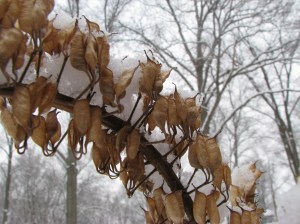
IMG_1570

I take a few more steps and leave the yard, striding onto the path that goes through the woods behind the barn to our small pond. There are sprays of dirt here and there, where squirrels have been digging for buried caches of hickory nuts. In the woods are shorter oaks with pale, shriveled leaves that shiver in the wind.

A dead squirrel is on the path. There are bits of fur in piles, scattered in a foot radius around the body. The tail has been ripped off and the body is twisted into a ball. At first inspection, I though the head was gone, but it’s just curled into the stomach, as if the dead squirrel was trying to sleep. The cold wind blows, making the oak leaves rustle. Crows, two or three, call from the direction of the pond, further off in the gray trees. There is urgent woodpecker tapping behind me, Morse code I don’t understand. The body is frozen hard; I nudged it with my boot. It is a large squirrel, with brown and gray fur, probably a fox squirrel. Any tracks around the body are hidden in the trampled snow of the path, so I have no idea what did this squirrel in. Hawk? Or mammal? And why was it left, not finished off? A squirrel tail can’t be filling. In the cold, you need all the food you can get. It can’t be easy to be a predator in the winter. I get cold again, and move on down the path, further in the woods towards the pond.

My footprints from yesterday contain fresh deer tracks. There are deer tracks everywhere, in paths leading off into the trees, straight lines winding on unknown business. Yesterday I saw two deer bounding away, deeper into the woods behind the pond. Eventually, if you keep going in that direction, you reach the highway. Miles away from our property, but not as endless as I once thought.

I stop and place my bare hand on an oak tree. The bark is soft and corky, and not as cold as I thought it would be. If I push hard enough, in just the right way, I feel I could press my hand inside. Is it warm in the center of a tree? A blue jay calls, once, twice, three, four times. Where are the others? If a tree had a mind, what would it think about?
IMG_1567

Even though I am in the woods behind our house, yard, and barn, I can still hear cars as they pass on the road in front of the house, which is only about 3/4ths of a mile away. No matter how hard they try, the birds can’t drown out the sounds of the traffic. I keep walking along the snowy path in the woods, past a deer stand nailed up in a tree. It belongs to the Reininger’s, the neighbors that live behind us, back in the woods. There are inches of snow on top, and it hasn’t been used in years. The deer don’t even try to pretend to be frightened too much anymore.

I continue along, following the path through the trees. There are squirrel tracks in the snow, bounding from tree to tree. The snow is shallower in the woods than it was in the yard, here only a few inches deep, ankle deep. I stare out at the trees, and I hear birds calling. White-breasted nuthatches, crows, black-capped chickadees, dark-eyed juncos. Without meaning too, I note the species, direction, distance. My bones are getting cold. My mind is spread flat on the ground, surrounding the trees like snow cover. Each inhale makes the rims of my nostrils ache. My cheeks feel rosy, red, and raw.

I cross over a trickle of water, a streamlet draining from the lower ground behind the pond to the ravine deeper in the woods, and there are grains of hoarfrost in frozen footprints. The path takes a slight incline up to the pond from here, a mountain if you’re Eric on cross-country skis, five steps to the top. For anyone else, the elevation change of roughly three feet is barely noticeable. Looking up, a black-capped chickadee does aerobatics in the tiny thin bare branches of a nearby ash tree. Three of its friends and family are nearby, watching. I can hear the scrape of the snowplow on bare pavement as it drives by on the road.

The pond is finally frozen solid, with an opaque under-layer to the ice, hoar-crystals on top, looking white and deceptively stable. Once, when we were little, at least a couple feet shorter than we are now, Eric and I fell through the ice by the dock. The ice was solid, but not strong enough to hold our combined weight when we stood next to each other. I pulled him out. I might have been in elementary school, and he’s four years younger. I remember it being cold. The water was dark, black, I couldn’t see my feet hit the bottom.

Leaving the pond behind, I take the path back through the woods, towards the barn, yard, and house, towards the warmth. I’ve never counted how many steps it takes, but I’ve been this way thousands of times. My body knows how long it feels to walk from the pond to the yard, to the house. I measure the distance in body-time, in heartbeats and breaths. Now there are blue jays in the big pine in front of the barn, which fly away once I see them. The feeders on the deck are empty but swaying, something scared the birds off. Me? They’ll return soon enough to eat their cayenne pepper-laced seed. In the garage, I stomp the snow from my boots and head inside.
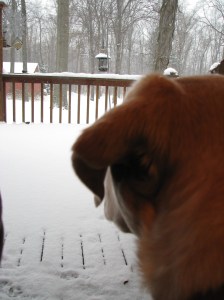
Bogie looking out across his domain

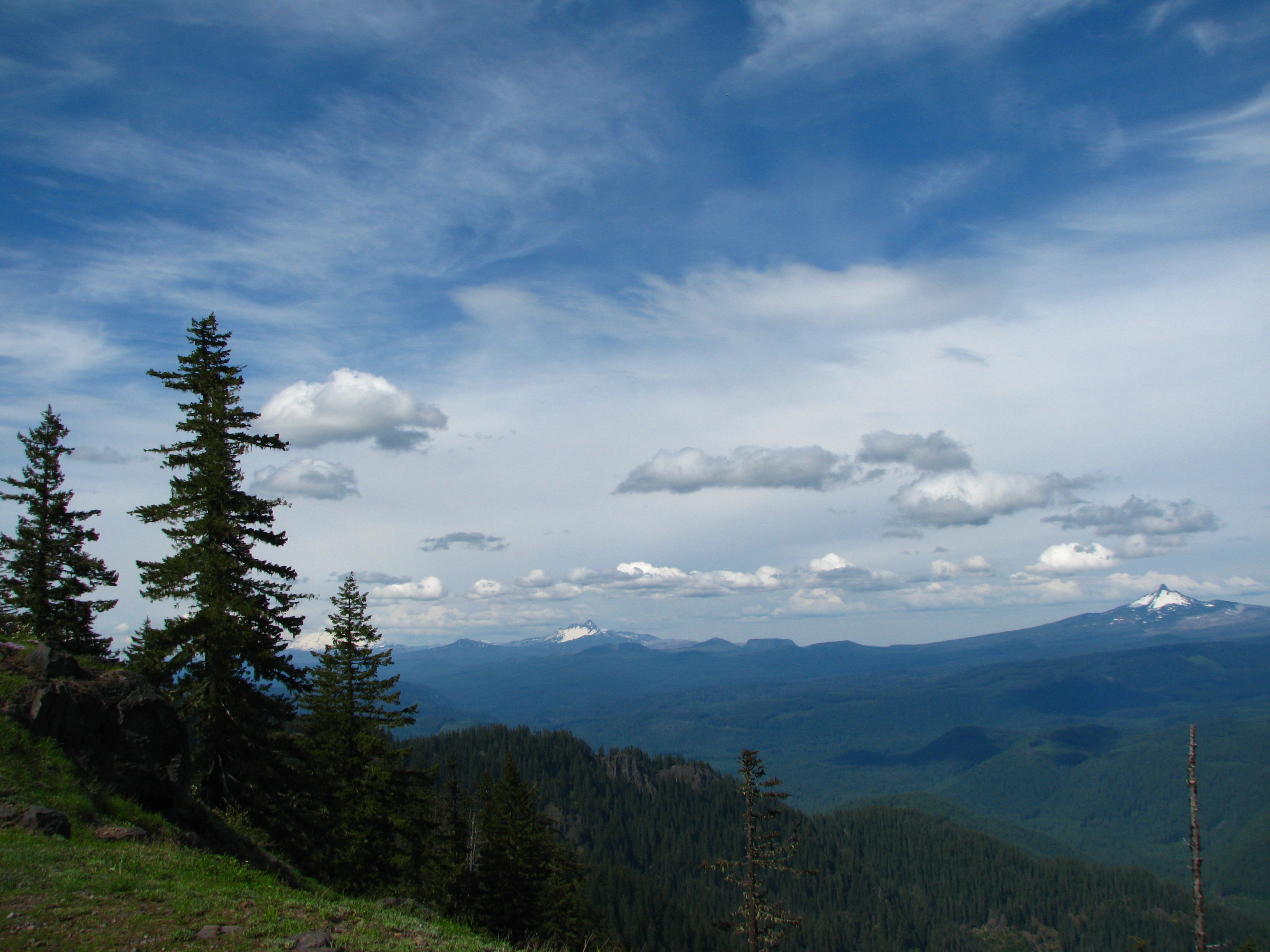
Ohio Winter

One winter Saturday, one of those cold Ohio days in late December or early January, my dad reads an article in the Akron Beacon Journal about bald eagles in Cuyahoga Valley National Park. We decide to find ourselves an eagle, an excuse to go outdoors. You need a purpose to go out in the winter in Ohio, there’s no going outside just for the sake of being outside. Without a reason, or once the reason is forgotten, the frigid bleakness soon saps your body heat and spirit, and ice starts to form in your veins.

We bundle up, Dad and my younger brother in their winter Carhartt jackets, dirty from splitting and stacking wood in the backyard. I wear my ski jacket, the one I got in high school when I learned to ski at Boston Mills. We grab our wool hats and binoculars, jump in the truck, and take the long way through the Valley to Ira Trailhead, one of our usual starting points along the Ohio and Erie Canal Towpath Trail. There is one other car in the parking lot.

On the trail we head south and within five minutes we see our first bald eagle, perched on a bare branch over the Cuyahoga River. The water is brown and sluggish-looking, the white foam along the edges frozen. After a few minutes of passing the two pairs of binoculars between the three of us the eagle flies away, heading downstream. We decide to continue on, to give chase. Bald eagles aren’t uncommon here, but we don’t always see one when we come. We’ve never seen one, let alone two, in such a short amount of time. I follow in Dad’s tracks, stepping in each footprint like I did when I was little, only now I can match his stride and our feet are nearly the same size.

Another five minutes and we find another eagle, probably the same one. It’s found a companion, and the two sit in adjacent trees, silently staring out at the world. When they eventually decide to fly away they head away from the river and the Towpath. We retrace our steps back to the promised warmth of the truck, walking along someone’s cross-country ski tracks. The muted sun is on its way down. We can barely see our breath in the dusk.

At home, we eat pizza in the family room, watching television. There is a fire in the wood stove and the pets gravitate towards the warmth, lying on the hardwood floor almost touching the stove itself. We linger on the couch, no one wanting to leave for colder beds. The snow is falling softly outside, turning the track-filled yard to a clean slate, a sparkling white canvas where the deer and songbirds will write their stories.

Right now there is nothing to see through the dark windows; they’ve turned to mirrors, reflecting the firelight and TV light, reflecting us on the couch sitting together on a cold winter night in Ohio.

If you have 18 hours in: Kuala Lumpur, Malaysia

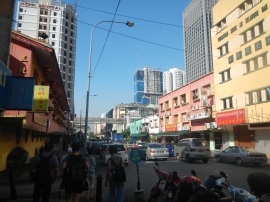
sketchy part of Kuala Lumpur

Kuala Lumpur, Malaysia

– spend 2 hours running after your friend (literally running, dodging and weaving through crowds of late-night shopping families and groups of Malaysian adolescents, and belatedly hoping that no one thinks you’re a purse-snatcher because getting arrested in Malaysia is not on your list of things to do today) around the malls (of which there are many more than one would have thought necessary for any one country, let alone one city) looking for a camera accessory that no one has and that you were pretty sure wouldn’t be available in stores yet anyway.

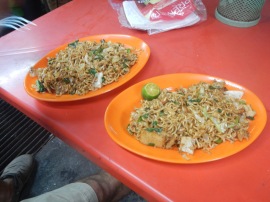
KL noodles

Noodles from a street vendor for dinner.

– spend 2 hours eating (dinner and breakfast).

– spend 8 hours sleeping in a cockroach hotel (there was a cockroach scurrying across the blankets on the bed when we checked in, and I’m not sure what happened/who was brutally murdered in the shower before we got there, but it was not properly cleaned afterward. Don’t be deceived by the pleasant-looking exterior- Hotel Mexico is not a good choice).

Kuala Lumpur, Malaysia

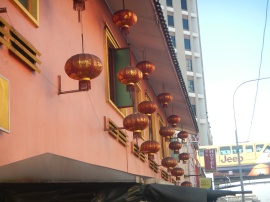
Lanterns in the street outside our hotel.

– spend 2 hours checking email and Facebook (priorities, and confirmation that those you left behind on the other side of the world do in fact still exist).

– spend 4 hours semi-patiently waiting, in transit to and from the airport, and for a departing flight to Thailand.

Max catching flies

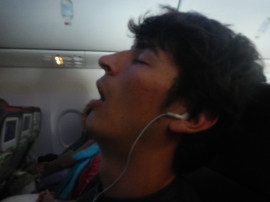
Despite what he might tell you, Max does in fact sleep on airplanes.

– spend at least 3.5 hours of transit and time waiting for flight to Thailand wondering: what the city of Kuala Lumpur is actually like; what it would be like to live here; why people live here; at the differences between Kathmandu, Nepal (where we had just been trekking) and KL; when I can go back to the Himalayas and see a yak; what Thailand will be like; what everyone is doing at home; how best to take a sneaky picture of Max sleeping in his seat with his mouth gaping open catching flies; wondering when you can next take a real shower and wear freshly laundered clothes.

– spend the remaining 1/2 hour waiting in line for the restroom, at least twice. 1 minute spend taking care of business, 29 minutes trying not to gag at the condition of the squatty potty.

A quick whine about toilets in Asia

I miss toilets. After 8 weeks of travel, I’m homesick for toilets. Nice ones, where the seat is attached (and stays attached for the duration of use), and ones that have seats. Ones that don’t spurt water from the pipe all over the floor when flushed. Ones that don’t bubble up on you while you’re sitting there, giving your nether regions a wash (luckily I was about to take a shower, which I promptly did). Ones that don’t require hovering, ones where your tush can safely land without threat of immediate infectious disease. Ones that aren’t cracked, and that are cleaned more than once a year (if that), and ones that don’t smell like half of Asia and his brother have peed all over them.

hotel bathroom in Nepal

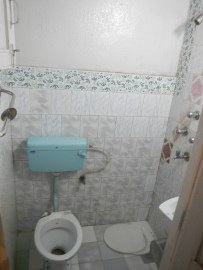
Kathmandu, Nepal. Note the detached toilet seat on the floor under the shower.

I miss not having to wear shoes in the bathroom because the floor is covered in a 1/2 inch deep puddle from the leaking toilet and the shower, which drains through a hole in the floor. I miss bathrooms where the toilet and shower are separated, where the shower is contained in a tub, and where you’re not bumping into the toilet and knocking the loose seat on the floor during your shower because the bathroom is that small. I miss not having to roll up my pant legs so they don’t get soggy as I drop my drawers. I miss being able to assume that every bathroom will have toilet paper, including hotels. I miss toilets that flush, and not having to pour a bucket of water down the hole, which works better than I imagined in some toilets and not at all in others. I miss being able to flush my used toilet paper. In some places here, I miss having a trashcan in the bathroom because I never remember to look until it’s too late, and then what do you do?

Please Toiled Paper Put in Bocket

Sign on the back of the bathroom door in Nepal.

There are many reasons to travel through Asia. However, the bathroom facilities are not one of them. Particularly the bathroom facilities you will be forced to utilize when traveling Asia with Max Seigal, the king of cheaper-than-cheap hotels (generally only marginally nicer than sleeping in the gutter). However, a quick thank you to the US government for successfully preparing me for Asian bathrooms (and hotel rooms) by putting me up in some very, shall we say, Nepalese/Thai-quality housing for various internships. You should put that on the SCA website as a perk- housing will prep you for international travel!

Countries visited: 5 (Vietnam, Singapore, Malaysia, Nepal, Thailand)
Number of decent toilets in said countries: 3

Lauren’s kayaking adventure in Thailand

Railey Beach Thailand kayakingI suppose the title is misleading, in a way. You’re probably now expecting some epic adventure account, a multi-day saga with pirates, no food, native Thai people and language barriers, some sort of heroic rescue, and then a celebratory bonfire and feast on the beach. No, sorry. I wish it involved all that. The truth, as usual, is much less glamorous. Anything that involves puke is generally unglamorous, I find. Throwing up is a universal leveler, brings us all down to the same miserable state of being. Though, of all the places I’ve thrown up in, emptying my stomach contents over the side of a kayak just off a beach on an island in Thailand in front of at least two restaurants of people enjoying their lunches is definitely the most exotic. My friend, who was a patron in one of the restaurants, said he thought we stopped to look at some fish, which gives me hope that I didn’t put anyone off their food. I would like to apologise to my other friend, who was in the kayak with me, politely adverting his gaze, covering his ears and humming loudly. Apparently the waves were a little rough, and his foot might have gotten splashed a little. I’m sorry, but it did wash all over my legs too, dangling off the side, if that makes you feel any better, and I was slightly preoccupied at the time so I wasn’t able to monitor the currents properly. I’ll try to do better next time. I’ve never thrown up in public before, nor in a kayak, so I’m unfamiliar with the proper protocols in these situations.

view from the kayak, Thailand

In the future, when I decide to jump in a kayak with someone who wants to paddle to a distant island a good hour away by constant paddling (one way) over choppy open water, I’ll try my best not to feel nauseous for the entire trip out and back. Also, I’ll try to void my stomach contents before almost making it back to the beach, keeping in mind the wave patterns, wind speed, and current so as to avoid any splashage. I’ll also work on being more discreet and trying to avoid such public stages for future barfing episodes, of which I fervently hope there are few (or none, none would be okay too). Now that I’ve ticked off throwing up from a kayak from my list of firsts, I’ve no desire to repeat the experience. Been there, done that, moving on (with the aid of Dramamine and some Pepto-Bismol).Railey Beach, Thailand

Oh yes, we are having a splendid time here in Thailand.

Max kayaking in Thailand