Arches

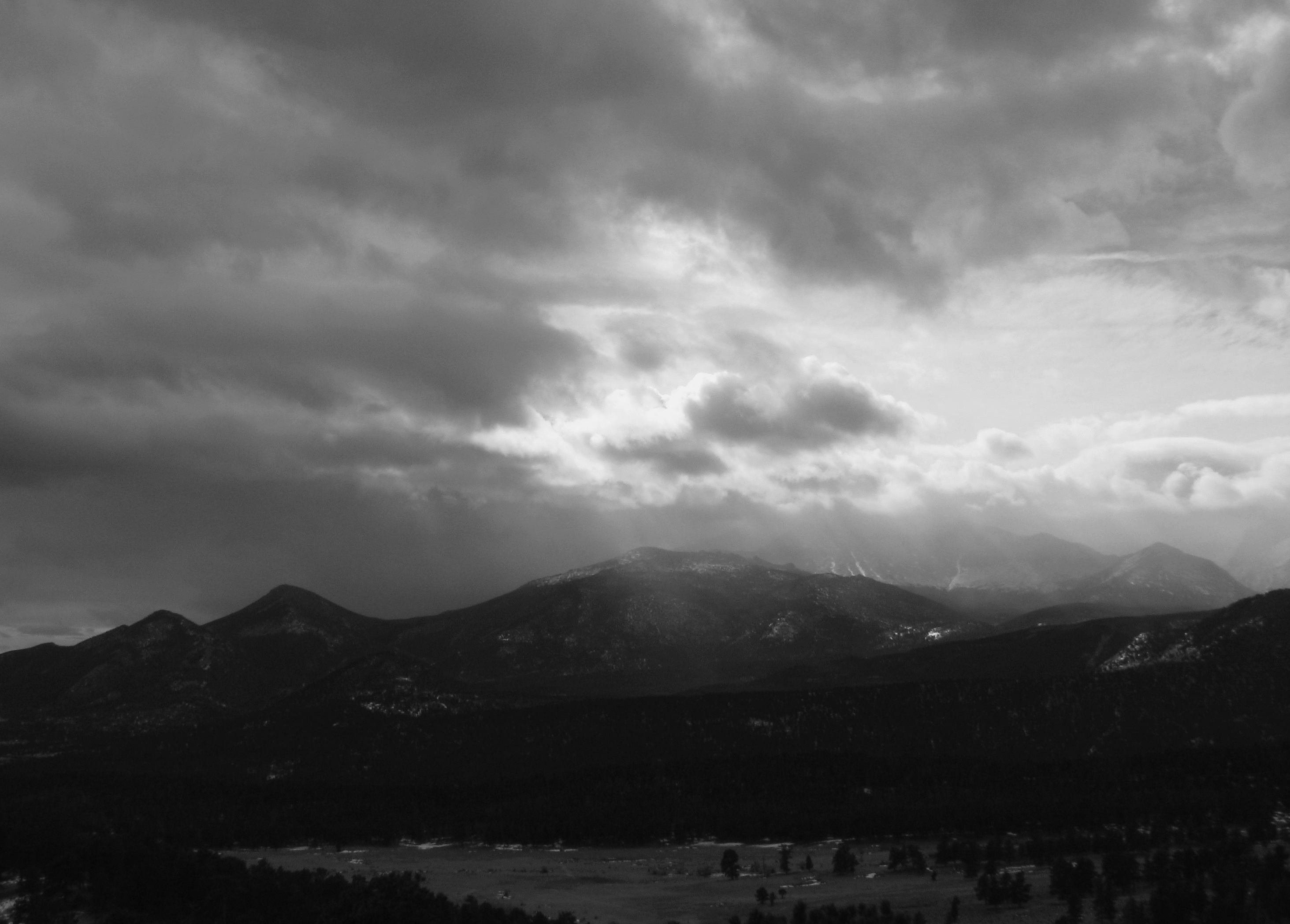
storm sky in arches

We are driving through Arches National Park, and it’s raining. There are big flashes of lightning here and there, but I can’t hear if there is any thunder. The car windows are rolled up against the rain. The gray clouds and sky make a different backdrop, one I like better than the normal clear blue skies. There is more emotion, more drama. This is what this place stirs in me, varied emotion, varied feelings, the gray mottled churning of the sky.

This place is not as simple as a cloudless bright blue sky.

Neither am I.

clouds in arches


Horseshoe Bend, Arizona

Horseshoe Bend AZ

Max getting ready for sunset by gazing into the sky, in the wrong direction. The sun sets over the bend in the river, straight across from where we stood on the rim.


We spent about a day in Page, Arizona, saluting the day both at its end and beginning from the rim of Horseshoe Bend, a “horseshoe-shaped meander of the Colorado River.” We made the mile-long trek to the edge of the canyon rim, overlooking the water below by about 1,000 feet. There are no railings, so you are left with only your own common sense to protect you from going over the edge.

Horseshoe Bend, AZ

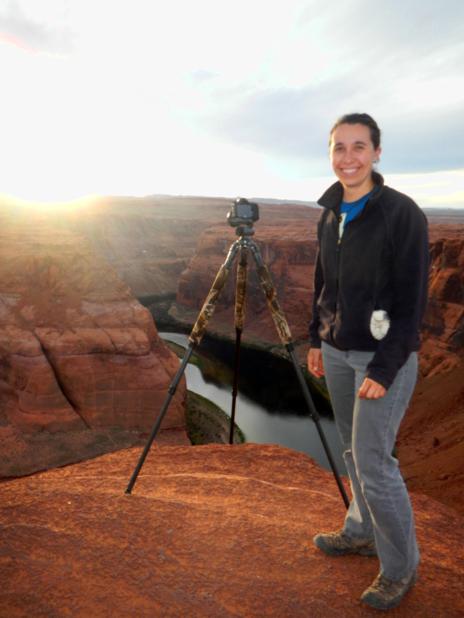
Pretending to be a photographer, and being very careful not to stumble and knock the tripod over the canyon rim.


It’s windy here on the rim of Horseshoe Canyon, and the wind blows sand in our faces, camera lenses, and down one thousand feet to the river below. I can see the wind ruffling the surface of the water. It’s not really cold, just when you’re sitting still the wind gets to you, blowing your warmth away across the desert. The sunset tonight was all a photographer could ask for, streaks of pink clouds, blues and purples, orange. I hear violet-green swallows flying below me along the canyon walls, and lower still I see a soaring raven, which from my perspective looks the size of an ant, an ant with a paraglider.


Horseshoe Bend, AZ

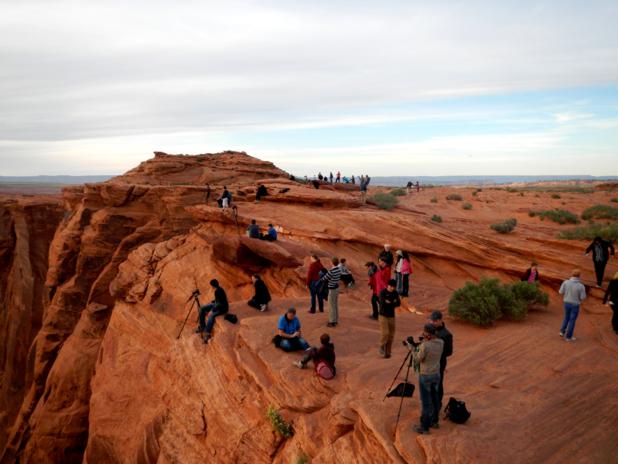
Some of the people who joined us to watch the sunset. After I took this picture, more people arrived, until there were at least 100 total loitering on the canyon rim.


I’m sitting on the edge, much closer than Mom would be comfortable with, my left foot braced parallel a few inches from the edge, the rest of me a couple feet back, no danger of losing my balance. The wind isn’t that strong. As the sun goes down, the people leave with the light. I try to eavesdrop, but most of them speak different languages and I don’t know what they say. They don’t seem to be speaking of the view though, because those who really look don’t say anything.


Horseshoe Bend, AZ

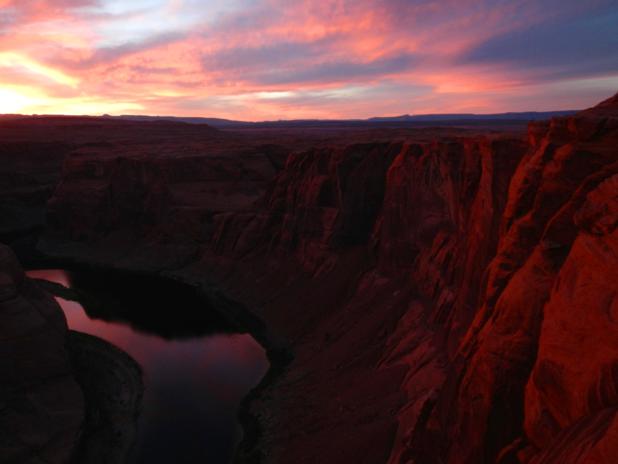
The canyon walls glowed a beautiful orangish/red in the vanishing sunlight, a living color that to me is the essence of this place.

Owachomo Natural Bridge, Utah

Natural Bridges National Monument

I am sitting in Natural Bridges National Monument, at Owachomo Natural Bridge, the last of three natural bridges in the Monument. It is after dark, and I’m waiting for the stars and my friend Max, who is photographing the night sky. In the distance, from their pools in the narrow rock canyon, I hear frogs that sound like sheep and chickens. Bats fly about in quick loops, swerving through the dusk.


Natural Bridges National Monument

The stars above and around Owachomo were visible first. The view through the bridge was cloudy for quite some time, the clouds trapped by the rock ceiling. The wind plays with my hair, and gradually dances my body heat away across the desert, through the bridge, out to the stars. I brought a cushion to sit on, and my sleeping bag to wrap around my shoulders. I have a book to read while I wait for Max to finish his pictures, painting the arch with light so it shows up in his shot.


Every few minutes I turn my headlamp off, let my eyes adjust to the dark, and look all around to the expansive sky of stars. I’d sit here and just watch the night, but I know it doesn’t take very long for me to fall asleep, lulled by the dark, the wind, the reassuring stars all around. I don’t want to fall asleep, not yet, so I read to keep myself awake, engaged, present, and yet not, with my surroundings.


This is the perfect place to read this book, The Soul of Nowhere, by Craig Childs. It is about these places, and blends with them. It gives me another way to connect with this space around me, through the words of someone else who has absorbed this place and knows how to articulate what it means.


Natural Bridges National Monument

… I am hoping to become the same, a person who is changed by the land, who puts a pen to paper and tells what I have seen of this land.”

– Craig Childs, from The Soul of Nowhere

Winter Nap

Because we just had more than a foot of snow dump on us here in Boulder (and I think there’s more coming), I thought I’d share this piece. It was written more than a few years ago while I was in college, while sitting in a coffee shop at a Kroger grocery store, watching the snow fall outside and my friend take a nap. 


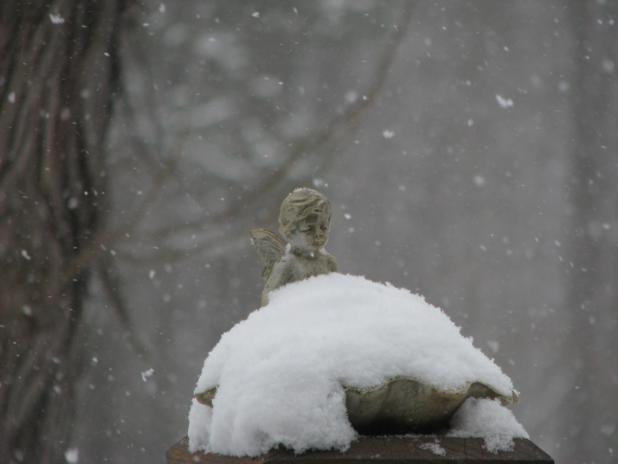
snow on a bird bath


The snow falls outside. A sleeping face. Gentle twitching in the grey light. Ruffled red feathers on the branch. The feeder sees good business on these days. Chickadees move from branch to branch to feeder. Still only long enough to select the perfect seed. Everything is covered in a white powder, white, lightly frozen air. White cold. White nothing.

The face turns. Eyes flicker, remain closed. Warm socks, hot tea. All still, save the feathers, the snow. Heat inside, cold out. Soothing breath, calm, peaceful. Dark lashes, like feathers, on a lighter face. Deep footprints, shallower, filling imperceptibly. Cold magic. Large hands folded, resting. The snow piles higher. Red, blue, brown jostle for space. Chickadees are polite, waiting their turn. Cardinals come and go as they please, leaving the others to their mess. The snow falls sideways. It sticks to the side of buildings.

black-capped chickadee at feeder

Brown eyes open to the grey, the white, the cold. They close, a more comfortable position. The foot moves, subdued by eventual rest. Footprints are gone, colors are gone, only grey, only white. On the lee side of the feeder, feathers huddle, warm air trapped tight to bodies. Steady warm breath thaws the heart, the soul. The snow falls. Birds feed. Sleeping gently as the snow whispers its way down.

Corrugated Hummingbirds

I’m almost wary to draw my hand away, as if, without me to hold it, the heft of the skies, heavy with stars and longings, would fall.

Belize

Written during my trip to Belize, July 2010. All pictures are from that trip. 

There is something about water, the sound of water, that is relaxing, almost numbing, but refreshing as well. The cleansing sound of water, reaching those places inside that even the sun cannot see.

I’m sitting on a raised deck on a tiny island off the coast of Belize, in the wind, in the dark. The surf and the wind in the palms behind me blend together into a wild, reckless sound that fills my soul with a deep longing, a restlessness of the spirit. I have a moment of profound loneliness, a deep ache echoed in the night sky.

The deck shakes a little, and the railing over the water is loose and shifting in the wind, causing vibrations that feel like footsteps, the footsteps of someone who isn’t coming. I can see out in the dark to the reef, to a light way out over the water, perhaps another caye. Behind me are palms dancing, and a bit of corrugated iron roofing that somehow manages to hold on to the deck bangs strenuously. The nails must be strong, tenacious, to defeat the continuous, mildly violent, wind.

Belize cayes

I could close my eyes and be a thousand miles from here, on the Florida panhandle, about to bed down for the night behind an abandoned motel, listening to the wind. That wind was more primeval and had more force, violence, to it. I could feel myself almost being blown away, swept off across the Gulf, like a ruby-throated hummingbird. This wind is not as strong, but there is still a restless aggression to it. I feel that it would sweep me back to the mainland if it could. The frigate birds and the pelicans glide it, soaring, holding their places in the sky. I wonder what effort it takes, to ride head-on into the wind, to glide smoothly side-to-side without flapping a wing.

Behind me also are lights of the other cabanas, the faint reminder of the rest of the human population. Looking up, I can see millions of stars in the night sky, fainter counterparts to these electric specks. I hold my hand up, fingers wide, to give infinity perspective. Here I sit, a speck of nothing, and yet galaxies span my palm. I hold nothing in my hand, and yet every molecule of air, every tiny pinprick of light, the essence of life, carries a weight, at times heavy enough that I can feel the pressure on my skin. I’m almost wary to draw my hand away, as if, without me to hold it, the heft of the skies, heavy with stars and longings, would fall.

When I looked up a while ago, throwing a thought to the stars and the wind, a shooting star streaked a short distance, beginning where my eyes first landed in the night sky. My thought given form, accepted into nature, my desire to ride the wind like the frigate birds now shooting across the heavens, between the gaps of my fingers, out into the everything-ness of the world.

Frigatebird in Belize

Sunset and frigate bird. Belize, 2010.

The Flight of the Albatross

Written in 2009, about my trip to the Galapagos Islands in 2008.

Waved Albatross Galapagos Islands

Waved albatross, Galapagos Islands, 2008

There is a place where the wind blows and lifts. Cliffs on the ocean, looking down on the rocks and marine iguanas, sunning, swimming. The rocks look sharp, young, fresh. Untouchable, distant. Albatrosses walk up, a side-to-side gait, comical with their serious eyes. They reach the edge, spread broad, long wings, longer than they looked, so light, just feather and hollow bone, but strong, so strong for flight. They fall up. The wings are a parachute, the wind a friend, the air comforts, supports, pushes and pulls, holds. The giant bird floats along, moves past the rocks, the shrubby grasses, past life, from the center of vision to the periphery, a distinct form to a small dark dot, moving, moving, gone.

To follow—the urge is there. Spread arms and legs, spread dreams, spread soul, and let go. To move away from everything known, into the unknown. To trust, to fly. Is it the flier moving and the word standing still? Or the world moving past in an eye-watering blur and the flier, the bird, held in place, held frozen for a time, measurement suspended? But which way is the fall—up or down? Towards the stars or the rocks—similar, similar; just a difference of distance and iguanas. There is the other choice; to stay. The least attractive, the least risky, perhaps, for the moment.

How long does the moment last until the next? A picture does no justice, cannot capture the vitality of the actuality, the breath of the moment. There is only an idea left, a memory of a feeling, a sense of the wonder and the wild, of the perfectly regulated space of time when albatrosses fly.

Galapagos Islands albatross

Waved albatross, Galapagos Islands, 2008

Rainstorm

Written during my field job at the H.J. Andrews Experimental Forest, near Blue River, Oregon, May-July 2010. All pictures were taken in the Forest. 

IMG_4492

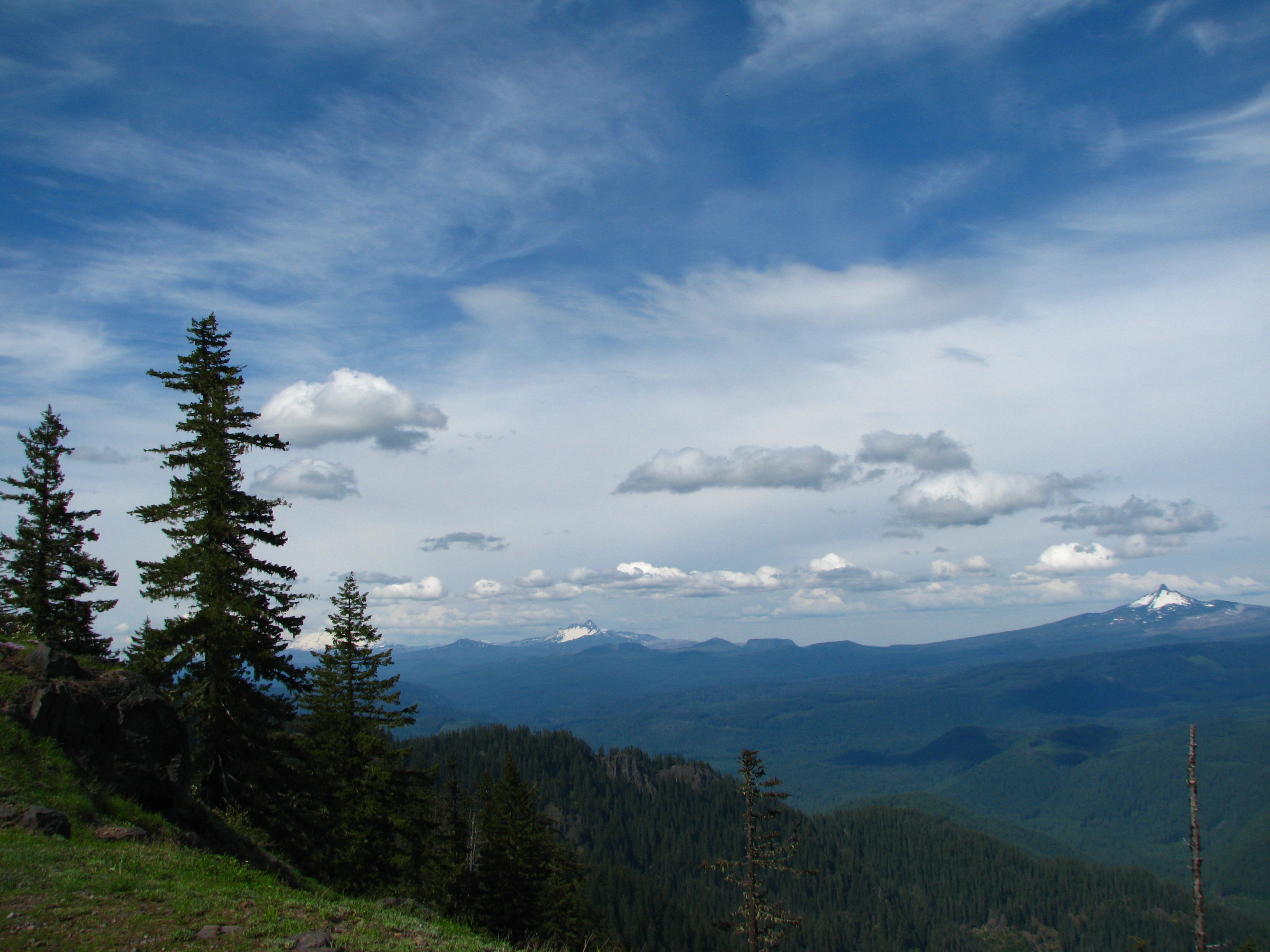
View from top of the ridge.

A thunderstorm brews in the mountains, and the air is a constant exhalation through the cedars and pines, keeping them on their toes. The sound is a mountain stream, glacial melt-waters rushing away to their destiny. The light is expectant, dim, setting the stage. Something mighty this way comes.

Clouds roll with gentle thunder, starting softly and picking up speed and sustenance, a small rock starting the avalanche. Now the rain, a fine mist that moves in sheets, drifting among the swaying trees. The agitated buzz of a rufous hummingbird zips away, seeking shelter. There is a nervous excitement to the air, a taste of expectation on the wind.

IMG_4007

Though there is violence about, an almost peaceful quality pervades. The trees sway gently but will not fall, not today. They are supple, mighty beings; they lean into the winds with their own definition of grace. The relentless grace of the mountain forests, of steady rain. An angry grace, defiant, compliant. A peaceful grace of trees who have weathered a thousand rains, who will weather thousands more. These trees, soothing movements among suspended droplets, silently dampening bark slowly darkening.

IMG_3683

A Stellar’s jay’s harsh clatter disrupts the hypnotic quality of the rain and the wind and the trees, and the storm flows on.  Wind and water, flowing through the sky, soaking the trees and making them dance, to the accompaniment of tympanis, low drum-rolls in the mountains.

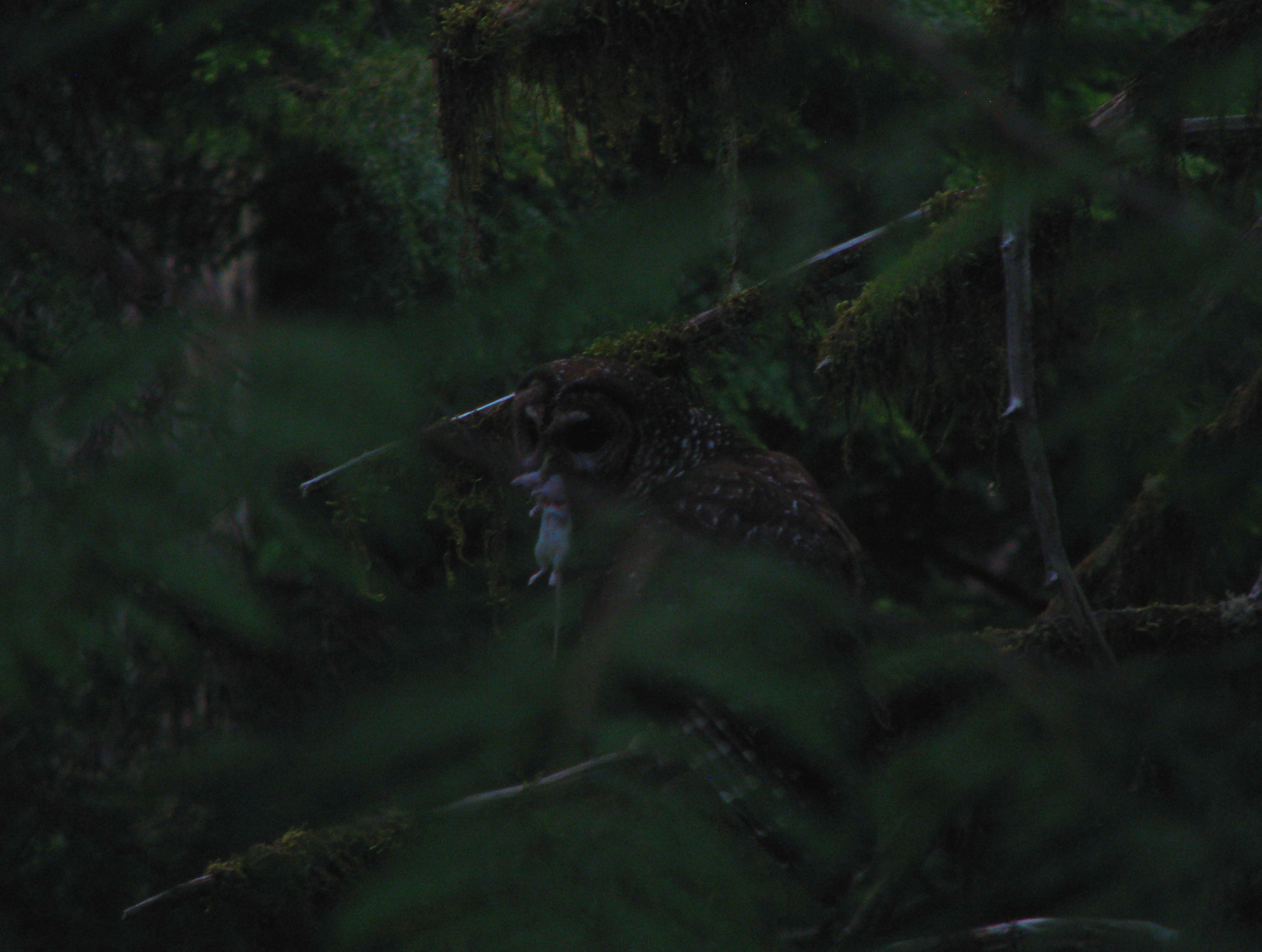
spotted owl with mouse

Don’t go back to sleep

I found this poem on the wall of the Denver Airport, just outside baggage claim, while I was on my way out after dropping off my sister for her flight back to Ohio. I stood there and read it twice through, the black letters stuck on the plain white wall, with people collecting their bags and waiting and moving all around me.

It’s a poem by the 13th century Persian Muslim poet named Rumi, who was also a jurist, theologian, and Sufi mystic (according to Wikipedia). I find it particularly meaningful at this moment in life, and I think it’s a wonderful way to exit into whatever awaits you in the world outside the airport.

light through the clouds

Walker Ranch Loop, Colorado, 2013.


The breeze at dawn has secrets to tell you.

Don’t go back to sleep.

You must ask for what you really want.

Don’t go back to sleep.

People are going back and forth across the doorsill where the two worlds touch.

The door is round and open.

Don’t go back to sleep.

~Rumi


pine by waterfall

Walker Ranch Loop, Colorado, 2013.


And, clearly, this poem is about hobbits, and is pretty much the entire plot line for The Hobbit: An Unexpected Journey.

“People are going back and forth across the doorsill where two worlds touch/ The door is round and open”– Obviously, this refers to when the dwarfs come to Bilbo’s hobbit hole to begin their quest.

“You must ask for what you really want”– when Thorin Oakenshield is reluctant to ask Elrond to read his map. Also when Bilbo finally comes to his senses and asks to come along with the dwarfs.

“Don’t go back to sleep”– telling Bilbo to sign the contract and go with the dwarfs and not to just stay asleep in his safe, cozy, boring hobbit hole. Movie quote: Bilbo- “I just need to sit quietly for a moment.” Gandalf- “You’ve been sitting quietly for far too long!”  Also could be a reference to when the dwarfs are sleeping in the mountains and are captured by the goblins.

“The breeze at dawn has secrets to tell you”– sounds like something Gandalf would say. Something he actually does say: “Home is now behind you. The world is ahead.”


I saw the new Hobbit movie with my brother and sister just before I came out to Boulder, which is why I’ve hobbits on the brain. And on that note I think Radagast’s sled is awesome. I would totally put up with birds nesting in my hair and pooping down my face if it meant I had a sweet sled pulled by giant rabbits. As long as the birds weren’t American Robins, or turd birds as we call them (their scientific name is Turdis migratorius, hence turd, from Turdis). Those things are gross, and they make a huge runny mess all over the place when you’re trying to band them. Wrens would be ok, or a small family of warblers, or hummingbirds. Those are all cuter, smaller, and seem neater.


squirrel on flagstaff

Walker Ranch Loop, Colorado 2013.


I now suggest a listen to “Into the West,” sung by Annie Lennox, from the soundtrack of The Return of the King. I find it fits quite well with this poem, and is a very lovely song. One of my favorites, along with “Concerning Hobbits” on the soundtrack for The Fellowship of the Ring. Howard Shore is brilliant, and the soundtracks make excellent work/study music.

Black Balsam

written in North Carolina, 2010. 

Memorial Day in the Mountains

It is listening that puts the world right again. When I listen to the wind, gently rustling the grasses, a feeling of peace pervades my being, as if I am absorbing the motes of tranquility that float in the air.  Occasional large flies and bees drone past, overlaying the background murmuring of grasses with percussive buzzes. An eastern towhee calls, moving further and further away, a penny-whistle of startling clarity. Crows caw dryly from among the mountains behind me, harsh sounds against the omnipresent breeze. They ride this wind, watching over places I’ll never see. But here, up on the top of the world, everything that I can see is enough.

I’m sitting on a rocky outcrop at the top of Black Balsam, a mountain just off the Blue Ridge Parkway in North Carolina. The rock under my hand is dark, shot through in some places with quartz, in others sprinkled with bits of mica that shine in the almost-setting sun. The rock is rough but worn, and I wonder how many years have passed since it first felt the warmth of daylight. More than I can fathom. Thousands of feet have passed this way, but this evening the perch and view are mine alone. My rock is an island surrounded by waves of bristling golden grasses, a bald above the tree line. Exposed to the world and the elements, I sit and breathe. The crickets have begun, their sounds the string section hidden among the dried grasses. The towhee still calls, now beyond the far ridge. It has found a partner and the two duet quietly, eventually fading into silence.

I like the mountains

I open my eyes and look up into the pure blue that is the sky. There are clouds, small puffs of cotton over distant mountains, too far away and wispy to be of concern. The moon is a translucent orb, suspended in the lightest blue above the darker mountain-defined horizon. All around me, as far as I can see, are mountains. Their smoothly rounded profiles deceptively hide distance and rock, making the world look soft. I imagine tracing their shapes with my hands, but it takes more than touch to know a mountain.

I glance up and a kestrel flies toward me, the only moving creature I can see. It disappears below the crest behind me, only to climb high again before eventually disappearing, a black speck absorbed into the sunlight and the blue of the sky. I wish to follow, but my mind is drawn back by the large, startling green katydid that lands on my bare leg. It takes a few hesitant steps on feet so small I can’t feel them before wiping its antenna and hopping clumsily away. It lands on the rock nearby, and as I watch it scrapes a wing against its back leg, beginning a solo not intended for my ears. I move closer but it leaps madly away, just out of reach. I don’t try to follow. I look back up at the moon and at my shadow on the grass, which remains still no matter how the grasses dance in the wind.

I sit and listen to the moon and the mountains, and, sometimes, I think I understand what they say.

I like the mountains

Monument Valley Morning

“Beyond the glittering street was darkness, and beyond the darkness the West. I had to go.”

— Jack Kerouac, On The Road

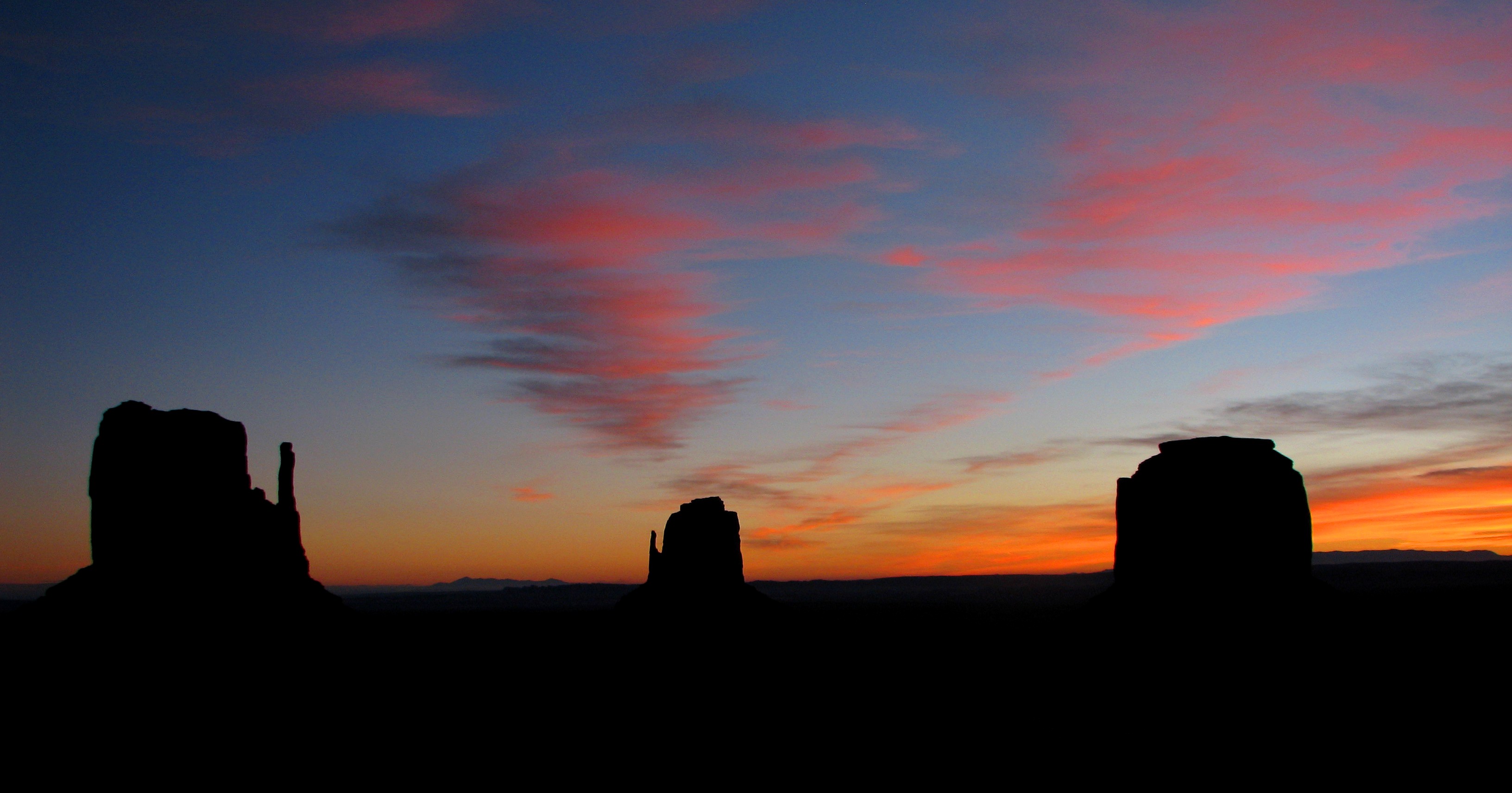
dawn mittens dec 2012

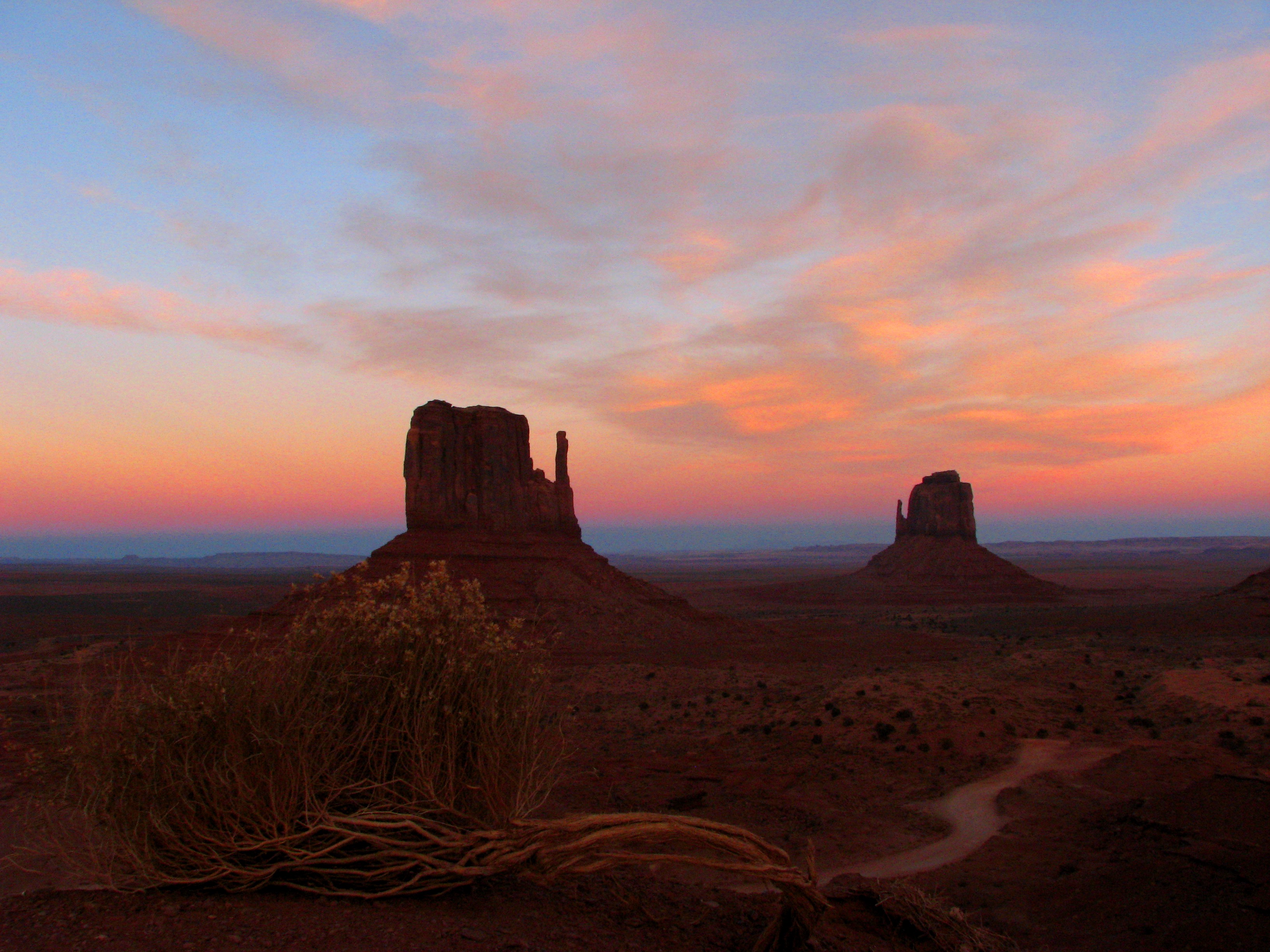
Mittens Formation, Monument Valley, AZ. December 2012.

I slept in the car last night, in spurts, bundled in my sleeping bag in the front seat while Max lay out on the ground next to the car. We were off the main paved road, on a dirt track that might have eventually led to someone’s house. The stars were brilliant, and sometime in the middle of the night I awoke to the moon shining brightly through the windshield, just below the rear-view mirror, incredibly glowing and bright for such a medium-sized sliver, just barely bigger than skinny.
sunrise mittens dec 2012

Monument Valley, AZ. December 2012.

I don’t know where the moon is now, the street lights in the parking lot befuddle and seemingly keep the natural world at bay. We are sitting outside of the the hotel/restaurant/gift shop run by the Navajo tribe, who own this land around us, Monument Valley.

There is light now on the horizon, bringing the Mittens into dark profile. A grayish burnt orange that fades gradually into blue that gets darker and darker to merge into the stary night, the transition. There are charcoal smears of clouds, like the artist rubbed the sky with a dirty hand, smearing part of the dark outline of rock into the new start of day.

Max has his camera set up at the overlook, taking long shots of the stars fading away and the sky gaining color. I’m sitting in the car, mostly still in the sleeping bag, swaddled in my yak wool shawl, writing by light of the parking lot lights and watching out the window. I haven’t decided yet if I need to experience this outside the comfort of the car. It’s cold out there, not conducive to writing since I can’t manipulate a pen properly while wearing my thick ski gloves.

mesa arch dec 2012

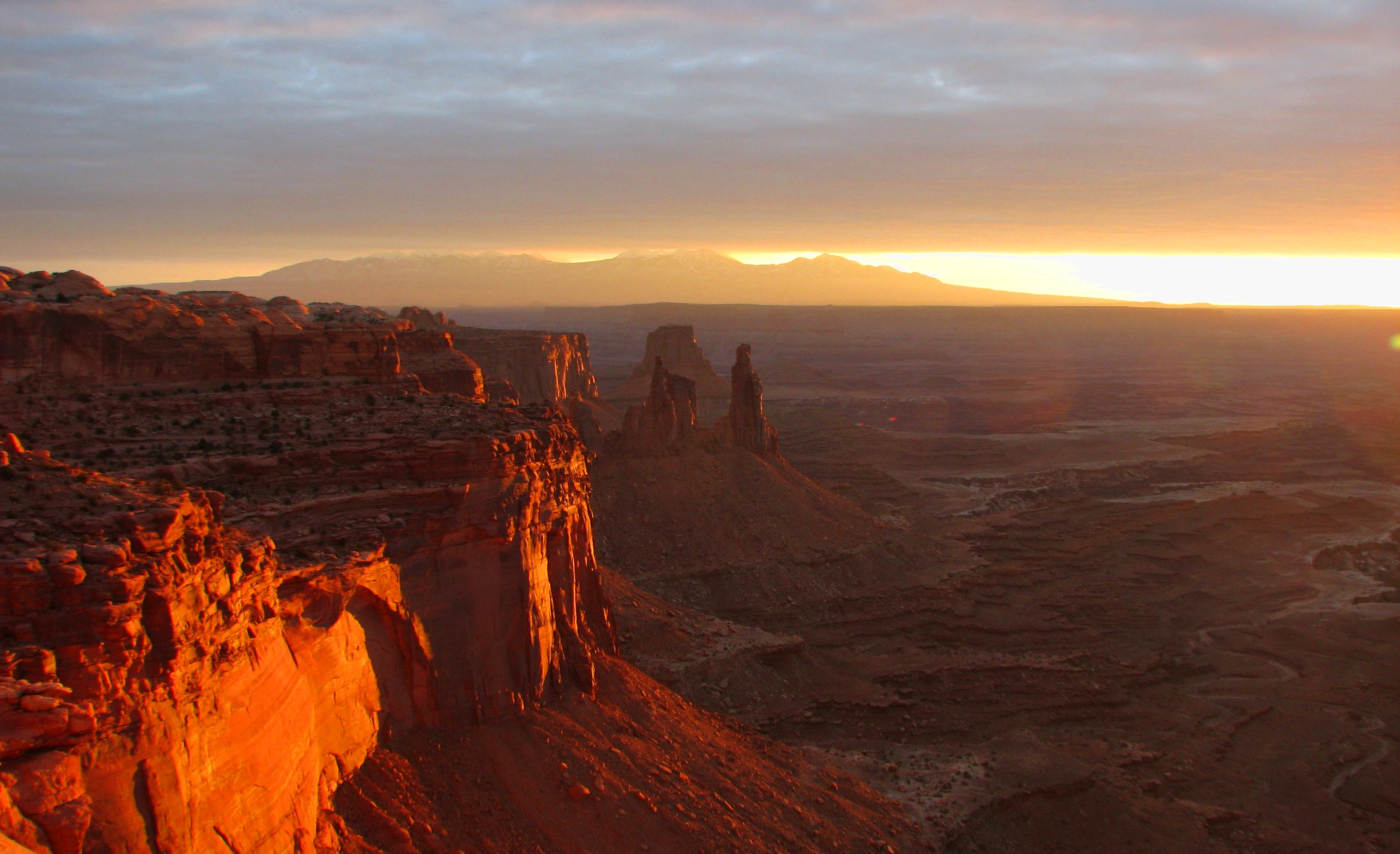
Mesa Arch, Canyonlands National Park, Utah. December 2012.

Now, stretching out from the initial orange peeking over the horizon, the distant mountains and horizon are a soft, deep purple with touches of a lighter pink nearest the sun. Minute by minute the light and colors seem to change, or the clouds move just slight enough to be noticed. Almost imperceptible when watched, but every time I look up after writing a sentence or two I can see just that much further, just that much more color.

Now there is no doubt that day is on the way. The whole sky is lighter, not just the horizon in the east, the stars faded back into the unseen. It’s just about light enough to see, to be able to navigate without stumbling over an unseen rock or bush. It’s the transition, when one should be sitting with a warm thermos of coffee, bundled in flannel and wool and thick denim, standing beside a dusty beat-up truck, savoring the first meditative sips of day, the quiet-still cold before the sun rises completely to shine down on everything that needs to be done or fixed or attended to.

This time of day is full of the best promises, the ones about to be fulfilled. Dusk is also full of promise, but of the promise of tomorrow, of the future, because the stars and moon are too distant to give anything real or immediate. But the sun rising in the morning brings the promise of life, of warmth and light, of food and sight.
sunrise mesa arch

Mesa Arch, Canyonlands National Park, Utah. December 2012.

It is officially day now, light enough to see everywhere, and light enough to realize I’m hungry, and for my thoughts to begin to spread out in all directions, tracing around and over the rock formations, settling among scraggly juniper bushes, burrowing in the soft reddish dirt. It’s harder to see things, to see things equally, when the light comes up and shines on everything. It gives you the chance to focus, to choose. When the dark chooses for you, it’s easier.
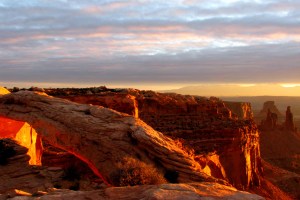
mesa arch sunrise

Mesa Arch, Canyonlands National Park, Utah. December 2012.