
A few weeks ago I took some videos of birds at Merritt Island NWR. Here they are!
This first one is of black skimmers skimming along one of the impoundments. I took this while we were searching for the cinnamon teal. I love watching skimmers as they fly back and forth along the surface of the water, leaving a delicate line where their bill has passed through. Sometimes when I ride my bike along the dike roads I see them flying along next to me over the water and I pretend I can fly too, that I’m skimming along with them in the dusk, writing my story with theirs in straight lines on the water. Then they turn and go out, disappearing into the sunset, and I’m left on the road with a sense that I just witnessed magic.
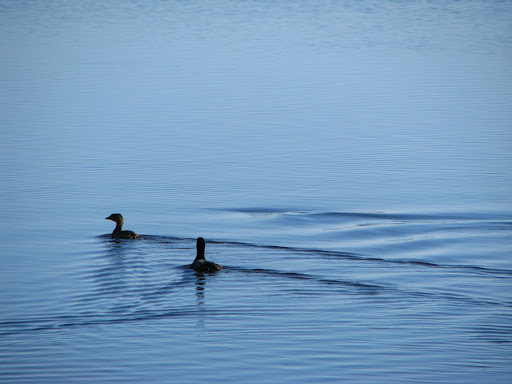
This second one is of a horned grebe in winter plumage. I was driving along Black Point Wildlife Drive and spotted him in the water next to the road. One of the volunteers told me that while horned grebes aren’t especially uncommon here in the winter, typically they spend their time out in deeper water. This year they are bucking tradition and coming in close, to the delight of many a birdwatcher. I’m not sure if you can tell, but look for the beady red eyes in its black and white plumage. If it wasn’t a grebe, and therefore cute, the red eyes would be somewhat creepy. I love watching grebes dive– they either dive the typical way, arching their necks and going down head-first, or they lower down like mini-submarines on covert missions to recover fish and other small aquatic life.
Interesting fact(s) of the day: horned grebes regularly eat their own feathers so that there is a matted plug of them in their stomachs. This plug probably acts as a filter, or to hold fish bones in the stomach until they are digested. Parent horned grebes feed feathers to their chicks to get the plug started. The babies are downy and active when they burst from the egg, and can swim and dive within a day. They are also incredibly cute, with little striped downy faces. I’d love to someday watch tiny grebes frolicking in a lake, learning to swim and dive and how to plug up their stomachs with feathers, everything you need to know to be a perfect little grebe.


 Tales From A Wandering Albatross