Climbing Obed

“Yet what struck me all at once was how breath-taking and bizarre climbing was. You could never stay bored: the risk alone keeps your synapses jangling. It was not simply that most non-climbers would be freaked out of their minds to find themselves where I was standing on the edges of my big toes 150 feet off the ground. It was that there was something special about the sport, some intricacy of deed that takes hold of the spirit and asks it fundamental questions. All climbers are ambivalent about climbing; yet we all find it hard to quit, and it is impossible to forget the surpassing joy of our good days in the mountains.”
~David Roberts, from Moments of Doubt
This past weekend I met up with two friends, Lucas and Blake, and went climbing at a place called Obed Wild and Scenic River, which is in Tennessee. It is an amazing place, with lots of rocks, brilliant green plants and trees, and winding rivers and stream beds. There are lots of things to do there other than climbing, not that I partook. I hope I can go back sometime soon and spend more time in the area (and climb some more rocks!)
I hadn’t climbed since just before Christmas, so my climbing muscles had gotten much wimpier than I liked (or pretended they were. In my head I can climb all day with arms of steel). Turns out that if you want to climb spending the winter in Florida is not the best place to be.  Go figure. So when I had the chance to go climbing in Tennessee, I jumped in the car and rode like the wind (if the wind goes a consistent 65 mph down the highway). I spent Saturday and Sunday at Obed, mostly just hanging out and watching Blake and Lucas, but I had a wonderful time. It was so nice to be around climbers again, people who use words like “crimpers,” “slopers,” “red-point,” “pumped” in pretty much any conversation, and spend inordinate amounts of time discussing climbing shoes, ropes, and routes. I haven’t been around serious climbers in a long time, so it was fun to be immersed in the climbing jargon again. I felt like I was in another universe, one that I’d been away from for too long. It was great.
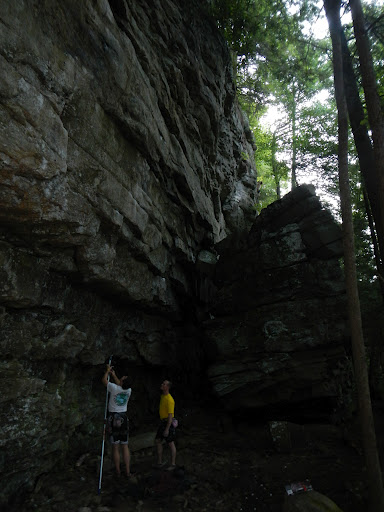
Blake and Lucas getting ready to climb.
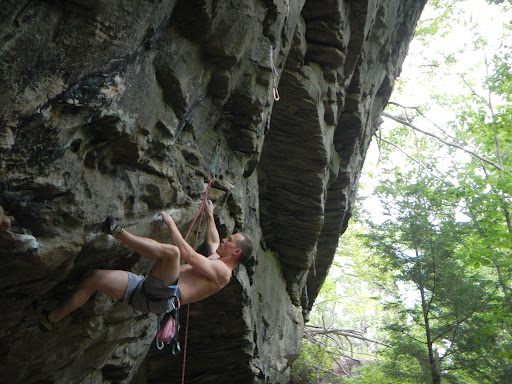
Lucas climbing.
One of the areas where we climbed. All of these routes were too hard for me, so I just took pictures and belayed.
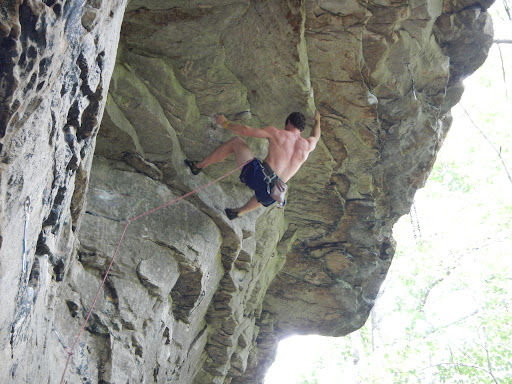
Blake, almost at the end of the climbing route (the edge of the overhang).
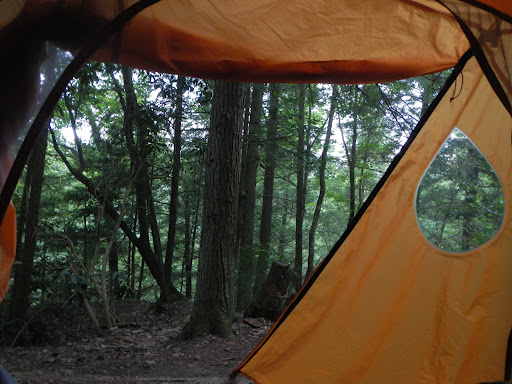
The view from my tent.
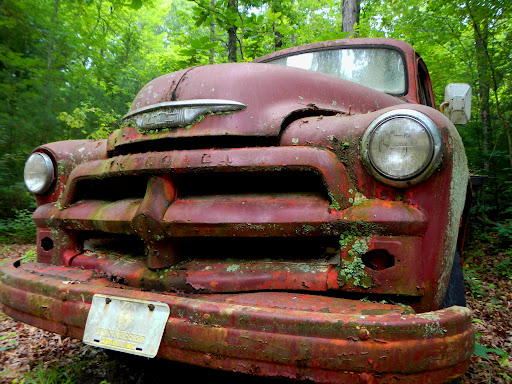
Neat old truck at the campsite.
A cute dog from a nearby campsite that helped me pack up my tent  and then played fetch with me. Afterwards he decided we were inseparable and jumped right in the front seat of my car. He was ready to go back to South Carolina, though he maybe wouldn’t have been so eager had he known about the 6 hour drive.
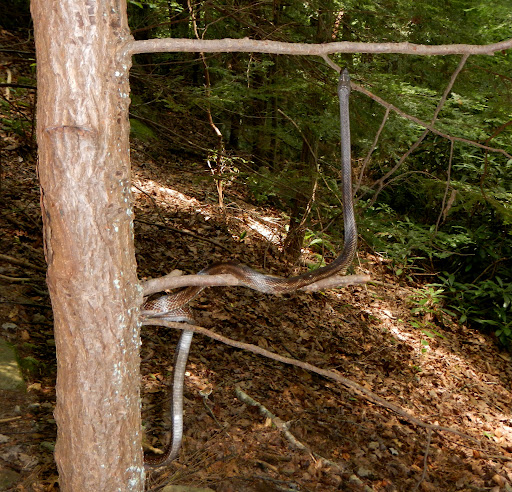
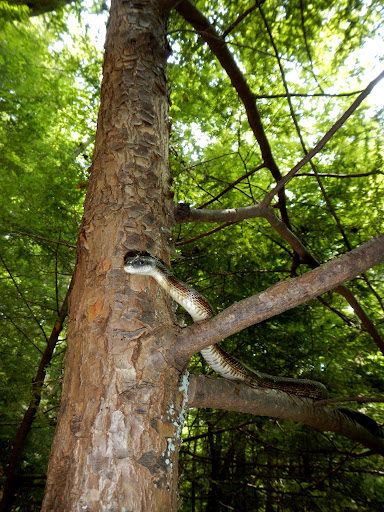
I wish I could climb trees like this snake can, it would make climbing trees to band RCW chicks much easier!
Why hello up there Mr. Snake.

I had a fantastic time climbing this past weekend, and hopefully it won’t be another five months before I can climb again!

More RCW Banding

The red-cockaded woodpecker nesting season is dying down, and all the babies are starting to fly away. Here are some pictures, taken by myself, fellow intern Ashley and high school intern Katie, of the climbing/banding process.

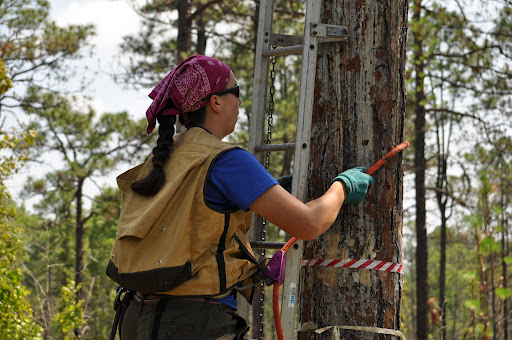
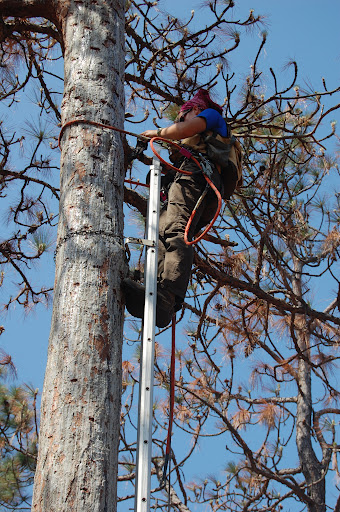
Here I am starting to climb up the tree. I’ll go up another rung to where I can reach the bracket (just above my head on the ladder, against the tree) and then I’ll wrap a chain around the tree to secure the ladder. The ladders are in 10ft and 5ft segments, and have tongues on the ends to attach them together to whatever height we need. The highest I’ve ever had to climb was 30ft, or 3 10ft ladders.

At the cavity, getting ready to remove the chicks. The rubber tubing is my noose, which I stick in the cavity and use to grab the nestlings.

Hanging out 30ft above the ground. The view is generally pretty nice from up there.

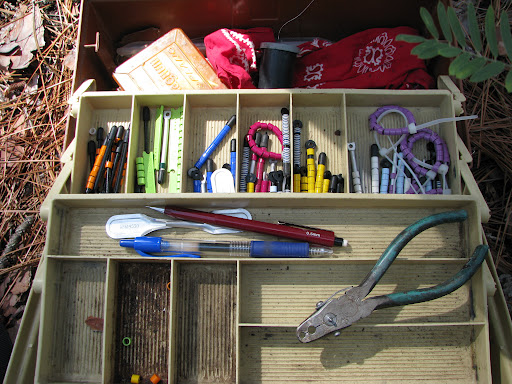
Our banding kit. We put aluminum bands with unique numbers on each nestling, and also a unique combination of colored plastic bands. This is so we can later identify the birds without having to catch them again to read the tiny numbers on their legs. With binoculars or a spotting scope, you can sometimes (if the birds cooperate and permit you a good view of their legs) read the color combination.

This nestling has color bands yellow/white/yellow on its left leg, and an aluminum band/light green (which you can’t really see in this picture) on its right.

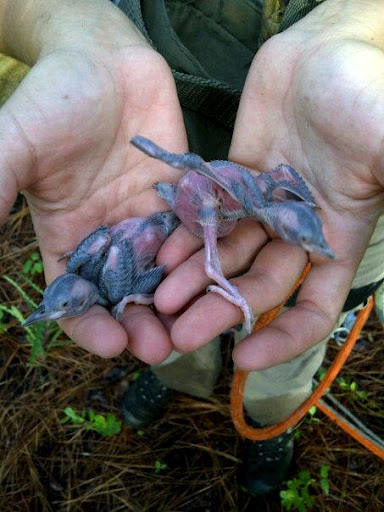
Two RCW nestlings, about 9 or 10 days old. Their eyes have just opened, and their feathers are starting to poke out along their wings and tails. The one on the right was feisty, and liked showing off his legs.

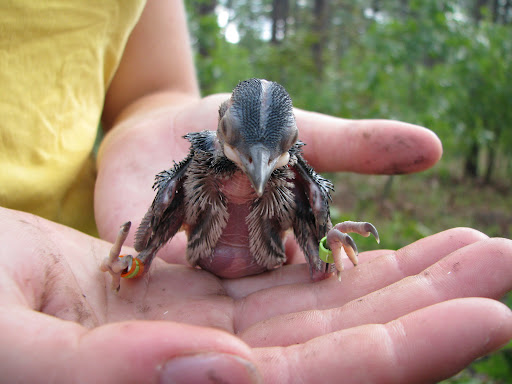
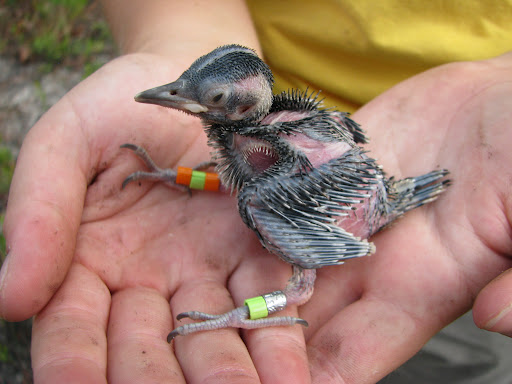
This chick was old, probably 11 or 12 days old. We generally try to band them between 7 and 11 days old, because they don’t have so many feathers for us to accidentally pull out. Also, it’s generally easier to get them before their eyes are open, because they’re not quite as aware of what’s going on and can’t see the noose and try to get out of the way.

Right leg: orange/light green/orange.
Left leg: aluminum/light green.

I like banding older chicks because their legs are bigger and it’s easier to get all the bands on, but, being older, they’ve figured out how to use all their body parts and with more actively struggle. This guy here has mastered his feet, and would grab our fingers. The younger birds, especially before their eyes are open, can barely stay upright in your hand.

Since most of our birds have finished nesting (we have about 128 nests) we are now starting our early morning cluster checks. This means we station ourselves by trees we think may be active (which means the woodpeckers are using them) before sunrise and wait to see if any RCW’s come out. We do this to see if the cluster has a potential breeding pair which just didn’t nest. Typically the birds will come out and then chat a little with their mate, who roosts in a different cavity, before heading out to look for breakfast. The real fun part (other than getting up at 5 a.m. to be in the woods before sunrise) is then following them around for an hour or so, to see if they lead us to nestlings or a new nesting cavity. We have spotting scopes (telescopes on tripods) that we use to see the colored bands, and we carry those around with us as we traipse around after the birds. It’s not too bad, if you don’t mind waking up really early and then chasing after birds in the woods. Which I don’t. Birds are one of the only things I’ll wake up before sunrise for. The others are traveling and rock climbing. Sometimes.

I like the mountains

I like watching the cloud shadows move across the mountains. I like seeing only mountains for hundreds of miles in all directions. I like the baking sun and the cooling wind, making me cold and hot alternating. I like this rock that I sit on, an exposed bit of mountain skeleton, rough beneath my arms and legs.

I like listening to the birds; towhees, warblers, thrushes, claiming their own small section of the world. I like that I can hear waterfalls, hidden in the valley crevice somewhere before me. I like the ravens riding the air, circling and diving. I like imagining what it would be like to leap from this rock to join them, soaring from one mountain to the next, a scrap of dark dancing in the sky.

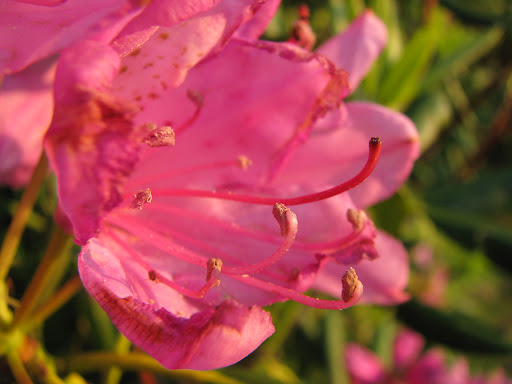
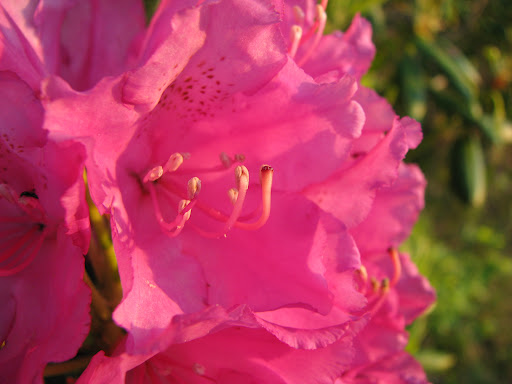
I like the blooming rhododendron, their fuchsia flowers beacons of color in the verdant undulations of mountain. I like the flies that look like bees, gently probing the sweat on my arm. I like sitting here, silent, knowing that all is right with the world.

I like how as soon as I step out of my car I feel again that joyful peace of the mountains. I like knowing that whenever I come back all this will be here. The rock and the birds and the flies and the sun and the water and the wind will never leave this place. I like that even when I leave I take the essence of this place with me in my soul.

Memorial Day in the Mountains

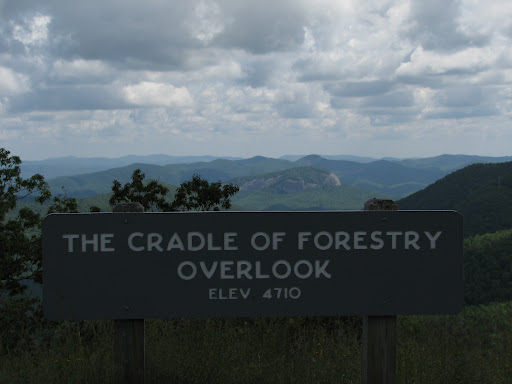
For the long weekend (last weekend, it took me a while to go through all my pictures) I went up to North Carolina, to the Blue Ridge Parkway and Pisgah National Forest. Two years ago I had an internship at The Cradle of Forestry, which is just off the Parkway. It was about a three and a half hour drive from South Carolina, but worth every minute.

I spent most of the time during my internship wishing I could climb Looking Glass Rock. One of these days I will. Hopefully.

I spent many hours hiking around and exploring the area during my internship, and I wanted to go back and see if it was as beautiful as I remembered. I also needed to get my altitude fix, as I’ve spent the past 6 months in flat flat Florida and semi-flat South Carolina. It’s good for running and biking (because I don’t do hills on my bike) but I miss being able to see into the distance.

I drove up on Saturday and spent two nights camping up near Black Balsam, which is just off the parkway. Sunday morning I got up and reveled in the misty mountain view. The rest of the morning I spent hiking along the mountain ridge and getting sun burnt. After a leisurely lunch with a spectacular view I drove south along the Blue Ridge Parkway to Great Smoky Mountains National Park. After I called home and talked to not only my mother, sister, father and brother but also my two grandmothers (and all at the same time, too. Ah, the wonders of speaker phone). Then I made my way back to Black Balsam for a second night of camping in my new favorite camping place in Pisgah Forest.

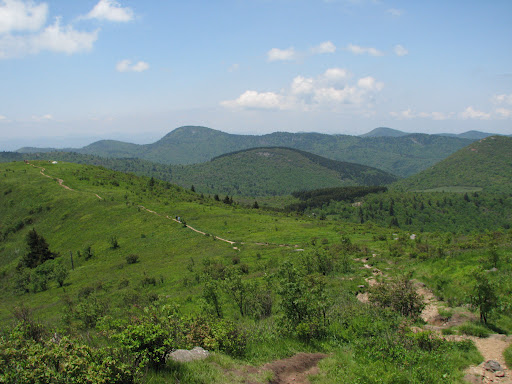
The trail along the mountain ridge. One of my favorite places to hike in the area.
Art Loeb Spur, one of my favorite trails.

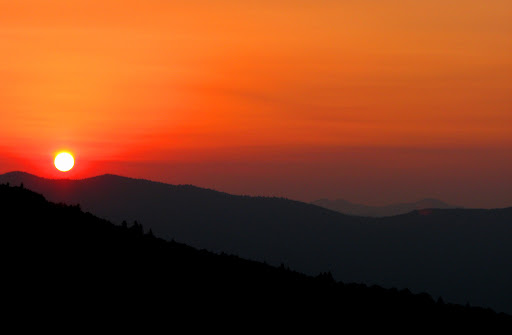
Sunset in the mountains is beautiful, and I was very tempted to just stay up there forever (or at least another few days, until my food ran out) and become a mountain woman. I had half a loaf of bread, half a chunk of cheese, and a hard-boiled egg. Definitely could have lasted at least another few days.

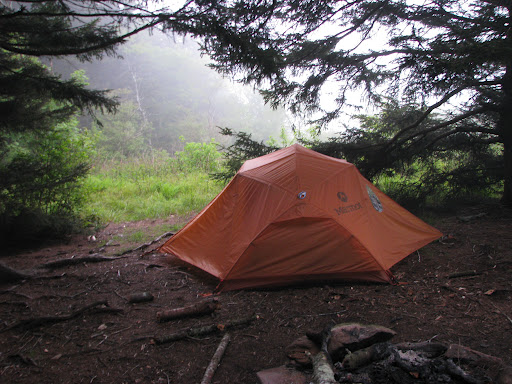
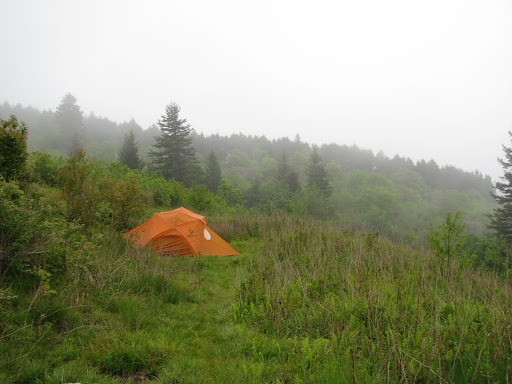
Campsite the first night, on the mountain side. I took this picture in the morning, when everything was misty and covered in dew.
View from my tent (taken later in the morning, after the fog burned off).

Sunday night I drove back to my new favorite camping spot up on Black Balsam, this time setting up camp on the edge of some pines, which was a little more protected from the wind (and turned out to be much less dewy). Monday morning I drove down into Brevard to buy postcards and check out the White Squirrel Festival. I missed any white squirrel-related activities, but I did have some excellent gelato and a nice conversation with the New Zealander who owns the gelato shop. On my way back up to the parkway I stopped at Slick Rock Falls.

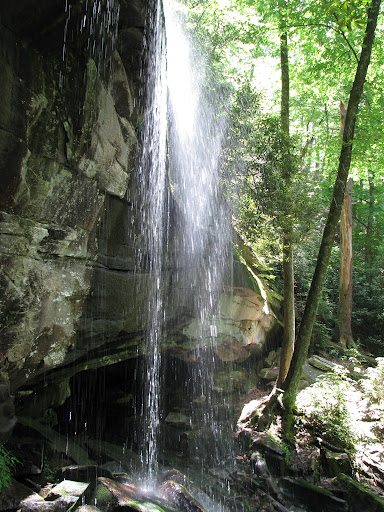
Slick Rock Falls
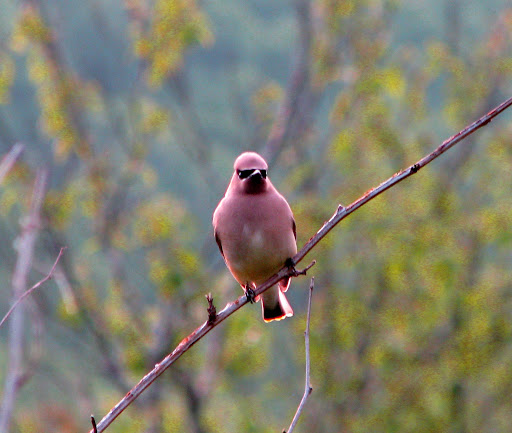
Cedar Waxwing

After Brevard, I headed north along the Blue Ridge Parkway to Asheville, where I stopped for lunch. After that it was a straight shot south to South Carolina and Carolina Sandhills National Wildlife Refuge.

My campsite the second night.

I was very tempted to stay in the mountains, but the red-cockaded woodpeckers were calling and so I had to head south again. Hopefully it won’t be so long before I can visit the mountains again.

Festival Fun in South Carolina

Last weekend was exciting. Instead of spending all my time in the bunkhouse baking bread (what I did the weekend before), Whitney (fellow intern), Jake (her boyfriend), and I hit up two local festivals: the Pine Straw Festival  in Patrick and the Strawberry Festival at McLeods Farm just outside of McBee.
First up was the Pine Straw Festival. We drove all the way to Patrick, 20 minutes away, for this.
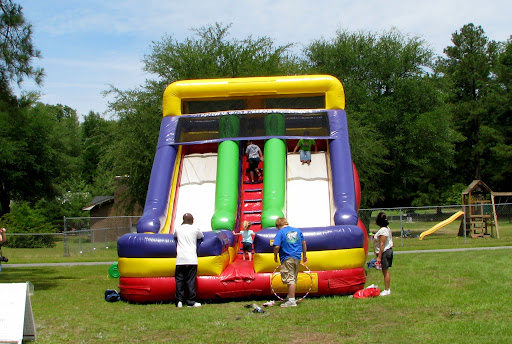
The Pine Straw Festival did have a bouncy slide, which I suppose was pretty exciting.  I don’t know they would have let us on, though. Maybe if we had a small child they would have, but there weren’t any around we could borrow.
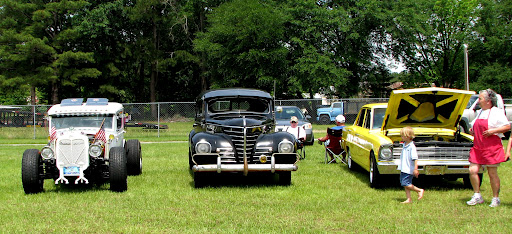
Small line-up of old cars and some people I don’t know.
Don’t have booths like this at home in Ohio…
We spent about four minutes walking around because I wanted to take pictures of pine straw (of which there was none). Pine straw is fallen pine needles that are gathered up and used as mulch. You would think that if the festival was named after pine straw there would be some there, an informational booth or something at least. But no. I was disappointed.
I soon got over my disappointment when we headed back to McBee and McLeod’s Strawberry Festival. A much better festival, primarily because we ate peach enchiladas and ice cream (makes my mouth water now just thinking about it) and they also had a booth for Carolina Sandhills Refuge, wagon rides, cornhole, and kids crafts. And strawberries, peaches, and other fresh produce.
I bought a basket of these delicious strawberries, some of the best I’ve ever had. And now I have a sweet white plastic basket that says Mac’s Pride.
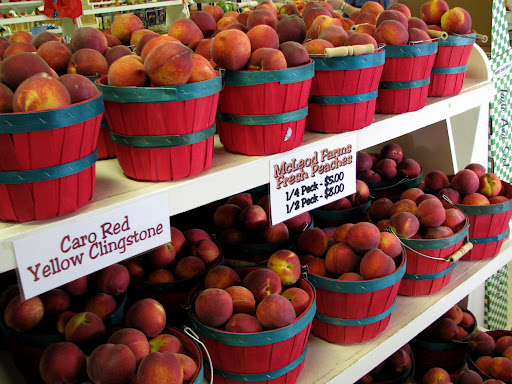
Yummy-looking peaches. Haven’t had any yet, but the peach ice cream was good.
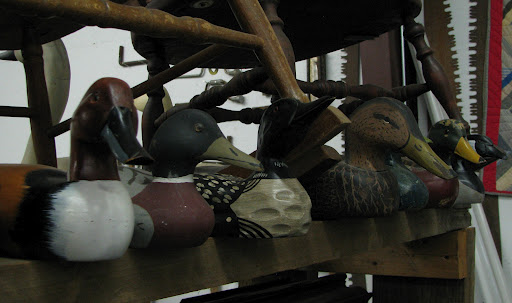
They also have a small museum with all sorts of neat random old stuff, including cars, artwork, cash registers, cases of old knives, a row of rocking chairs, and these decoys.
Wall of tools and things.
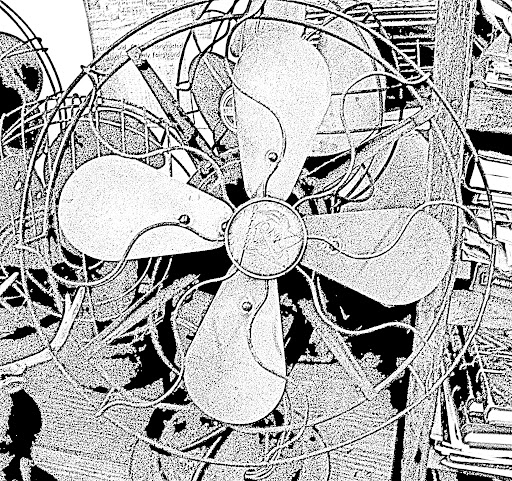
One of the collection of old fans sitting next to the collection of cash registers.
Whitney and I went to the small McLeod’s produce stand just down the road from the refuge one day after work for peach ice cream. Not a good idea. Now that I know there is homemade peach ice cream so close,   I’m going to be there everyday after work. My entire weekly stipend is going to be spent on peach ice cream.
If you’re interested, here’s the McLeod’s website: http://www.macspride.com
It says they deliver peaches, but I’m not sure how far (as probably most of the people reading this are not in South Carolina). I plan on personally sampling a large variety of their produce, baked goods and deserts in the next few months, so I’ll let you know how everything is.

This is Patrick

This may be slightly mind-boggling, but Patrick is both a place AND a person.

This Patrick (the place) is located in South Carolina, roughly 17 miles from McBee, which is slightly left of the middle of nowhere South Carolina.

This Patrick (the person) is currently located in Florida, somewhere on Merritt Island National Wildlife Refuge, probably doing something fun like spraying invasive plants.
He can both talk the talk and walk the walk, and is an expert cogon grass eradicator. Don’t let his mild-mannered appearance fool you, he’ll kill him some cogon grass or old world climbing fern before you can say Bazinga! Although it’s much more exciting if he does it while you say Bazinga!

This Patrick has seen better days.

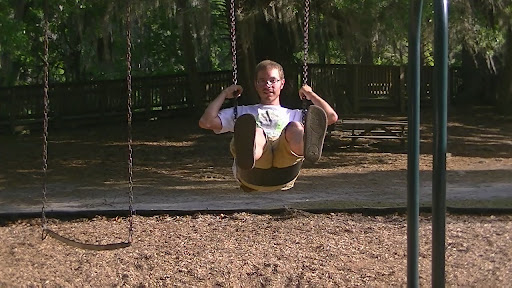
This Patrick is better days.

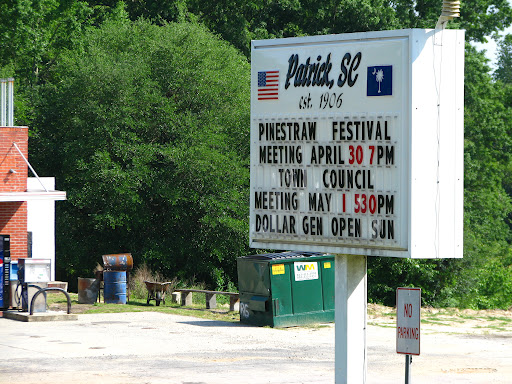
The most exciting thing about this Patrick is that the Dollar General is now open on Sunday.
Though I do hear that the Pine Straw Festival is a good time.

This Patrick mingles with NASA astronaut cut-outs. And touches lightning bare-handed. Even the astronaut has to wear gloves. This Patrick is basically a superhero.  Pine straw just can’t compete.
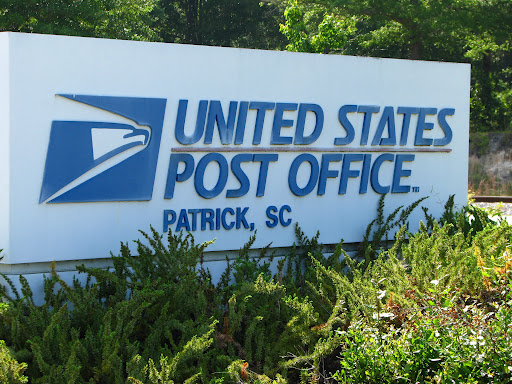
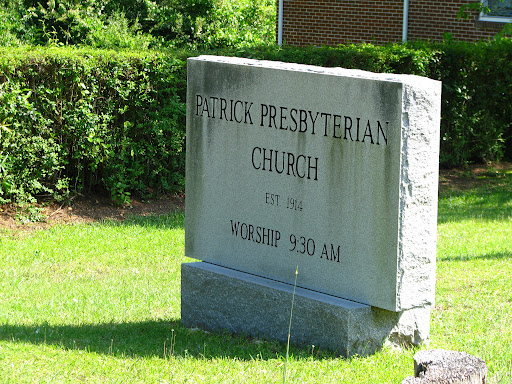
This Patrick has a post office and a church (one of each),

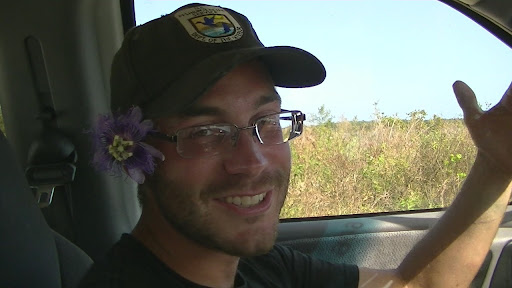
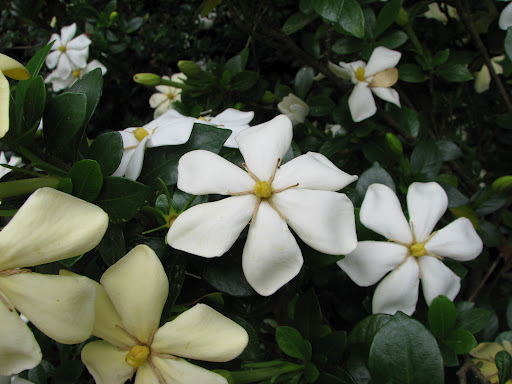
but this Patrick has a USFWS hat (jealous) and a pretty purple passion fruit flower. Pretty purple passion flowers are always preferable to post offices.
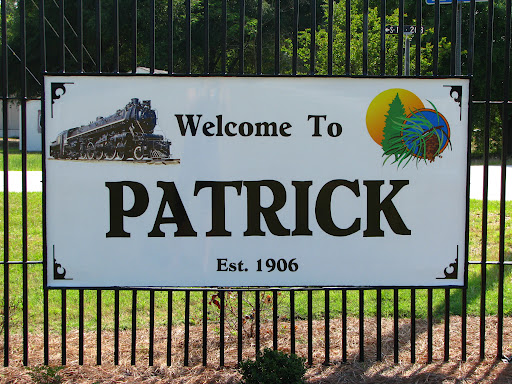
The people of Patrick probably think I’m nuts because I pulled over to take pictures of signs around town (which consists basically of what you see here, a few houses, and a gas station). I also get the impression out-of-state plates are not welcome, probably especially when those plates are attached to a car with a Skunk Ape bumper sticker. I received several hostile looks.
I know this Patrick thinks I’m nuts (especially after writing this blog). However, his looks are something less than hostile. (And none of his used parts are for sale).

This blog post is what happens on weekends when you’re slightly left of the middle of nowhere South Carolina, looking through pictures from your last internship in Florida.

Thank you to Meghan for supplying some of the Patrick photographs. This blog would not have been possible without your assistance.

My heart belongs to the desert

My heart belongs to the desert; land of sun, dirt, rock.
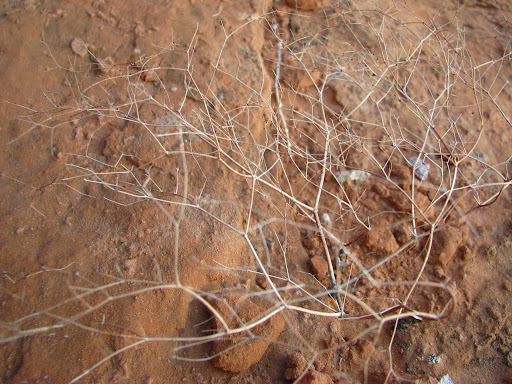
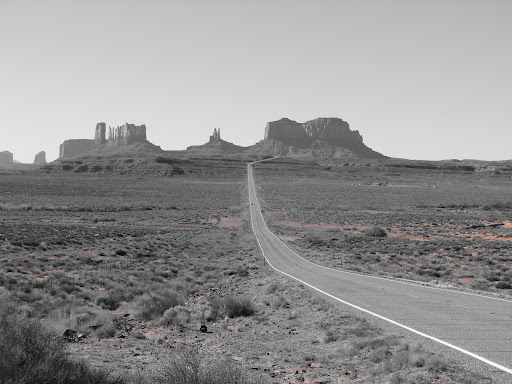
I am the raven, dark shadow on the red rock wall. I am the sage, slowly crinkling in the sun. I am the rock pinnacle, rising out of the flat. I am the sun, browning rows of fence. I am the road, pavement stretching on into the horizon. I am the hawk on the fence post, waiting. I am the jackrabbit, listening. I am the bone-thin horse, running. I am the wind, touching every grass, every particle of dust.  I am the hard-baked earth, cracked and parched.  I am the tree, twisted by life without. I am the beetle, crawling. I am the coyote, spilling secrets to the stars. I am the bright moon, giving light to those who cannot see. I am the traveler, sleeping in the night-cold, peaceful.
I am the one standing on the rise, greeting the rising sun with my own spirit-light, the light within merging with the light without.
All pictures were taken in Utah (2011) during a road trip taken with my friend Max from Ohio to Colorado, via all sorts of interesting places like the Red River Gorge in Kentucky, New Orleans, the freeway system of Texas (not really), New Mexico, and Utah. This piece was written during that same trip. 

Kalmia Gardens

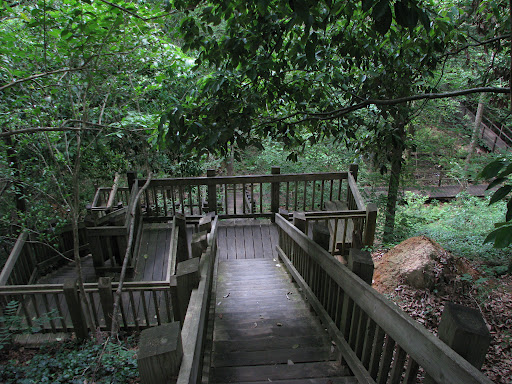
Yesterday I journeyed to a beautiful quiet part of Hartsville called Kalmia Gardens. I’d driven past it a few times on my way into town for supplies (conveniently, it’s just down the street from Bi-Lo, the local grocery store). After driving past the intricately wrought gates a few times, I knew I had to explore. The drive into the gardens is narrow and easy to miss, hidden behind dense foliage. As with many truly beautiful things, one needs to look deeper in order to see.
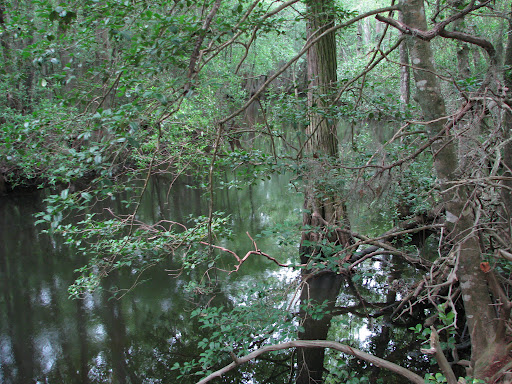
Kalmia Gardens are quite unlike Carolina Sandhills. Here we have pines, tall and open, the soil sandy and covered with a thick layer of browned needles. The gardens are another place entirely, reminding me strongly of the tropics. Thick layers all around, the sunlight filtered through dark green leaves, vines holding all the trees together, growing over and in and on top of everything.
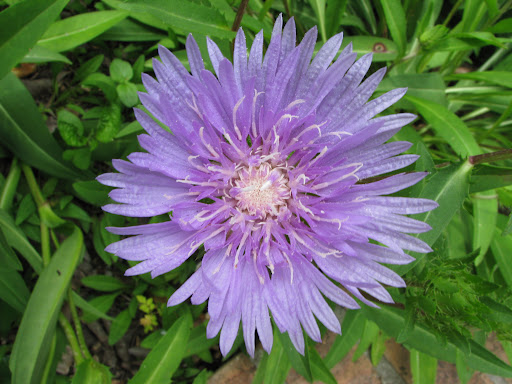
There is also water here, streams, rivers, the soil is dark with water. With water comes lush life, bursts of colored flowers growing everywhere they can.
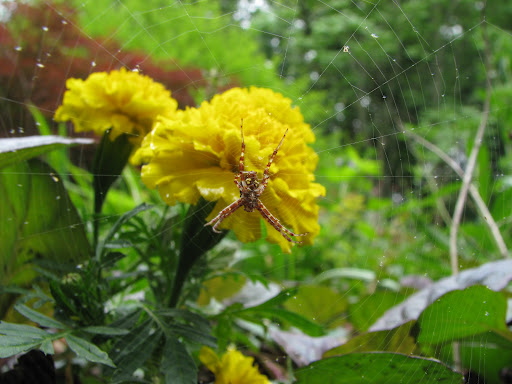
I’ve always liked marigolds, their scent and their sturdiness. Their yellow petals remind me of the ruffles on a dress of a little girl, running in the bright sun after dandelion fluff, in her hair a yellow bow that perfectly matches the ruffles on her dress and tiny socks. The brightness of her joy hides any grass stains on her knees and skirt, the dirt on her face disappearing as she grins and shrieks with happiness.
The gardens have a slightly disorderly feel to them, which I love. In a place like Kalmia Gardens, one can imagine the spirits of the plants, wood sprites and water nymphs, peering from behind the lilies or having a merry picnic on the banks of the pond, cavorting and singing with the robins. The wrens, nimble in the mountain laurel, let loose a tumble of liquid sound before diving away into the shadows, perhaps to find a meal for their young in the nest.
If you’re interested in the history of the gardens, there is the Kalmia gardens website: http://www.kalmiagardens.org
Happy Mother’s Day Mom!
Every flower I see reminds me of you and all of the wonderful ways you have made my life beautiful. Thank you for showing me the beauty in every living thing, and for teaching me how to properly dead-head. Without you, my marigold-self would be scraggly, with all sorts of ugly bits hanging here and there. Thanks for keeping me dead-headed and helping me to grown into myself.
I love you Mommy! You’re the best Mom I’ve ever had 🙂

How to Band a Red-Cockaded Woodpecker

First, peep the cavity to make sure the young woodpeckers are in fact still in there, and have not had some horrible fate befall them, like being eaten by a snake. They will probably think that what you are about to do to them will be pretty horrible, but they’ll get over it.

You’re about to snatch them from their home, the only place they have ever seen in their entire lives, jostle them around, pull them out into the bright light and put some colored bits of plastic and aluminum on their tiny legs. You will then put them back into their cavity without eating them, but they don’t know that yet.

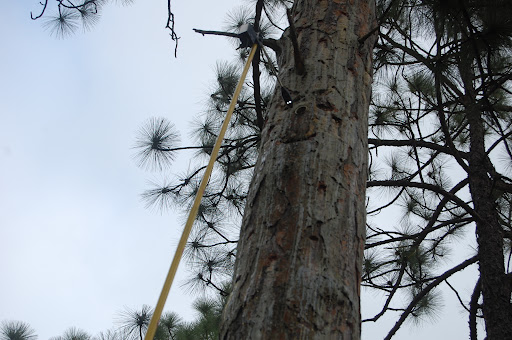
Peeping the cavity with the peeper, a camera on a telescoping pole. 


Next, you assemble your equipment: a climbing harness, short lengths of rope (to go around the tree), ladders, and your banding vest with a nestling pouch, gloves (to keep your hands from becoming encrusted with sap during the climb up), and corn starch (to de-stickify your hands so the baby RCW’s don’t adhere to your fingers). A hat or bandanna to keep the sap out of your hair is also a good idea.
Set the ladder against the tree, put your rope around the tree and attach it to your harness, and begin climbing. If the cavity is taller than 10 feet (the height of one ladder) you will have to use multiple ladders. This can be done by climbing to the top of the first ladder, and then having your ground crew (or your boss, who is watching you from the ground to make sure you don’t mess up) pass you up the second, which attaches to the top of the first. Each ladder has a chain that is wrapped around the tree and secured, so there is no danger of the ladders getting tired and deciding to head down to the ground without you.
Climbing up the tree.


The rope is attached to your harness and is wrapped around the tree. As you climb the ladder, move the rope up the tree with you.
At the cavity, getting ready to take out the nestlings.


Climb to the cavity and remove the nestlings (easier said than done. Let’s just say it’s like blind fishing). Put them in the nestling pouch around your neck. Be sure to sling it over your shoulder for the climb down so you don’t accidentally bump the nestlings against the ladder.
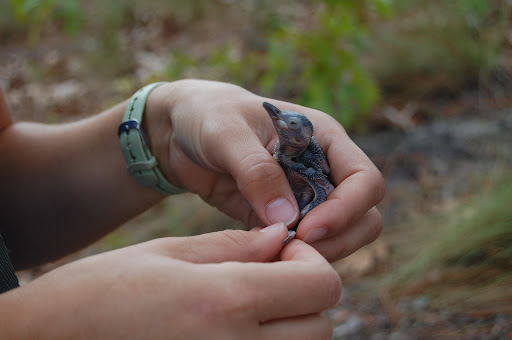
8 day old red-cockaded woodpecker nestling. 

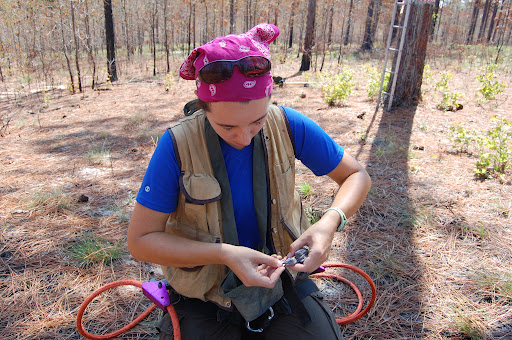
Once safely on the ground, let the banding commence! On the left leg, each bird gets an aluminum band with a unique number and a colored plastic band. On the right leg, each bird gets a unique color combination of plastic bands (such as striped, dark green, orange– not a combination I’ve used so far, but I’m sure it’ll be used someday). This allows for identification of the individual without having to catch the bird and read the tiny number off the aluminum band. It’s much easier for both observer and observee if the biologist can use a spotting scope to read the color combinations from a distance.

Making sure to put the correct combination of bands on the chick is important, because those bands are not exactly easy to remove if they’re on in the wrong order.
Putting on the colored bands.
Banding. 
Climb back up the tree and plop the nestlings back into the cavity. Then climb back down, un-chaining the ladder as you do. Then gather up everything, put it in the truck, and head off to the next tree to climb.
Left leg with dark green colored band and aluminum band. 
Putting the babies safely back into their cavity. 
Oh yes, and don’t forget to have someone take lots of pictures of you during the whole process. That’s the whole point of this process, to have pictures of you doing something cool. Studying an endangered species is just a minor detail. 

Getting Buzzed by Common Nighthawks

Common Nighthawks are all over the place here at Carolina Sandhills National Wildlife Refuge, and I see them just about every day while I’m out peeping RCW cavities. They’re neat birds to see, and they have a fairly distinct, simple call:

Contrary to their name, Common Nighthawks are not hawks, but instead are in the same family as Whip-poor-wills (another really neat bird). These birds are generally most active at dusk and dawn, flying around snapping up insects while on the wing. I find that quite impressive, as my hand-mouth coordination isn’t always very good. Sometimes I have problems getting food to my mouth while seated at a table, and my stir-fry isn’t trying to fly away from me. I think I would starve if my broccoli and quinoa made me chase them down every day for dinner.

However, the males make another, much more unusual sound (as males are wont to do). It’s part of a display they perform during the breeding season, which is going on right now. Instead of having fancy plumes like a peacock or doing a special little moonwalk dance like red-capped manakins, Common Nighthawk males impress the ladies with aerial exploits, or by diving. Starting from what Cornell’s All About Birds refers to as “a moderate height,” the males dive straight for the ground, pulling up when they are about 2 meters, or 6-ish feet, off the ground. That’s pretty close to the ground, if you think about it. I’m 5’9″, which would put that just above my head. If one was diving at me, I would definitely cover my head and duck.

Not content with just an impressive dive, the males also have to make a weird noise, described as a buzzing or booming sound. This noise comes at the bottom of the dive, and is actually made by the air rushing through the male’s wingtips. Male nighthawks dive to impress the ladies and youngsters and to be macho and threatening to intruders, be they avian or human.

Most of the time the nighthawks are diving far enough away from me that I don’t mind or notice, but I’ll admit the other day one did make me jump. It was fairly close, though I couldn’t see exactly where because of the pines all around. Being startled while holding a very expensive piece of field equipment is never a good idea, especially when that field equipment is extended up 20+ feet in the air as you are pulling the camera out of a woodpecker cavity… However, this story ends well and nothing bad happened, except I decided to write a blog post about it. Which I tend to think is good instead of bad, though you are entitled to your own opinion.

Here are some cool videos I found on YouTube, after much time spent in diligent research. There are actually more nighthawk videos than I thought there would be, and of all those videos I chose two that I thought were quite good.

Enjoy!
This video doesn’t show the Common Nighthawks in diving action, but it does have excellent pictures and recordings of their calls. (The video is from Cornell Lab of Ornithology, so what do you expect?)
And here’s another video that someone took of a Common Nighthawk buzzing by.
It got pretty close!
Aren’t birds awesome?